History
The fruit of the avocado tree (Persea americana), which belongs to the laurel family, the avocado is probably native to the tropical forests of Mexico. The word avocado comes from the Spanish aguacate, itself derived from the Aztec Nahuatl word ahuacatl, meaning testicle, in reference to the fruit’s shape.
According to archaeological findings, the avocado existed more than 8,000 years before our era. The Maya and Aztecs consumed it regularly and are said to have offered it as a gift to the explorer Cortez. The avocado was also brought back to the Spanish Court at the beginning of the 17th century. Cultivated in the Caribbean as early as 1750 and later in California, it was then introduced to Africa, Australia, and Israel.
At first, the fruit remained for a long time a food reserved for the aristocracy and the upper bourgeoisie. It was not until Americans began cultivating it on a large scale at the beginning of the 20th century that it became popular.
Varieties
There are many varieties of avocados. The best known are:
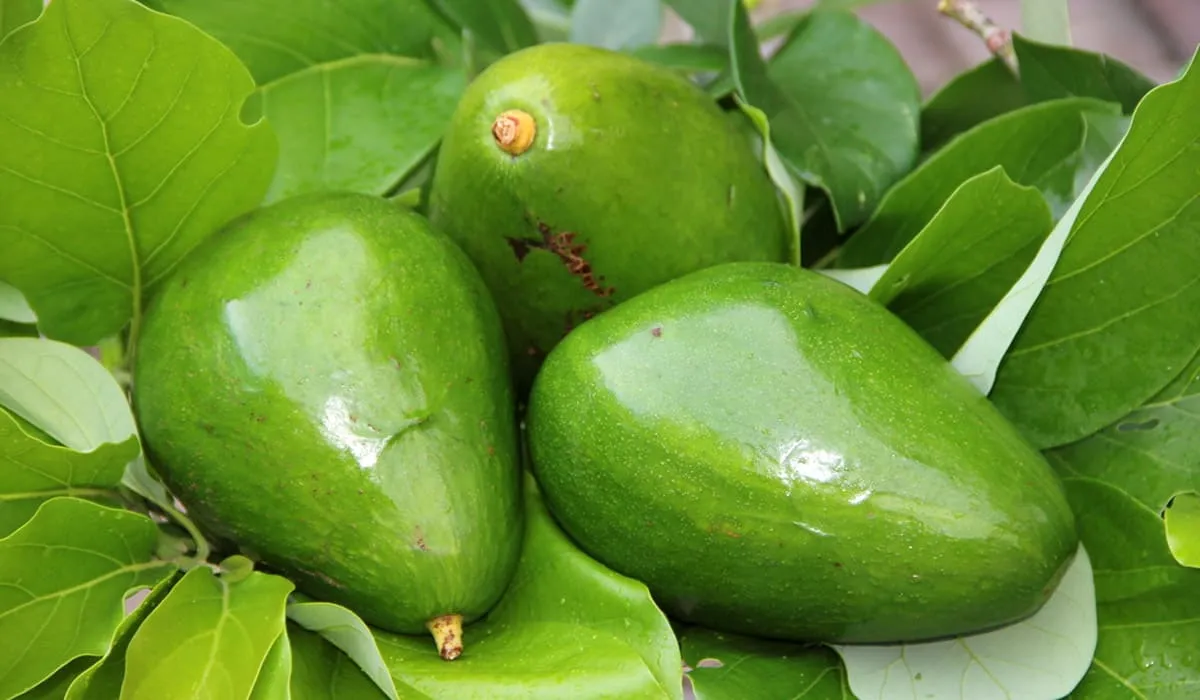
- “Lula” (photo opposite): a large avocado, swollen at the base, with tender yellow and green flesh and a smooth, glossy green or purple skin. The flesh becomes very soft when ripe. This variety is generally found in the Caribbean between August and November.
- “Hass”: A small fruit with thick, fairly rigid, pebbled skin that turns brownish-purple when ripe. Its pale flesh (with green areas near the skin) is fairly firm and very flavorful. Its average weight is 250 to 350 g. It is believed to originate from Peru. It can be found in South America from May to September, in Spain from September to April, in Mexico from September to December, in South Africa from May to September, and in Israel from February to April.
- “Fuerte”: A fruit with the typical pear shape, thin matte dark green skin, and smooth, tender green flesh with a pleasantly pronounced flavor. Its average weight is 250 to 400 g. It is believed to originate from Israel (harvest from November to April) but is also found in Spain (harvest from October to April) and South Africa (harvest from April to September).
- “Ettinger”: The most elongated of the avocados, with thin, light green, smooth skin and pale, delicately flavored flesh. It is believed to originate from Israel, where it is harvested from late September to April, and in South Africa from May to September.
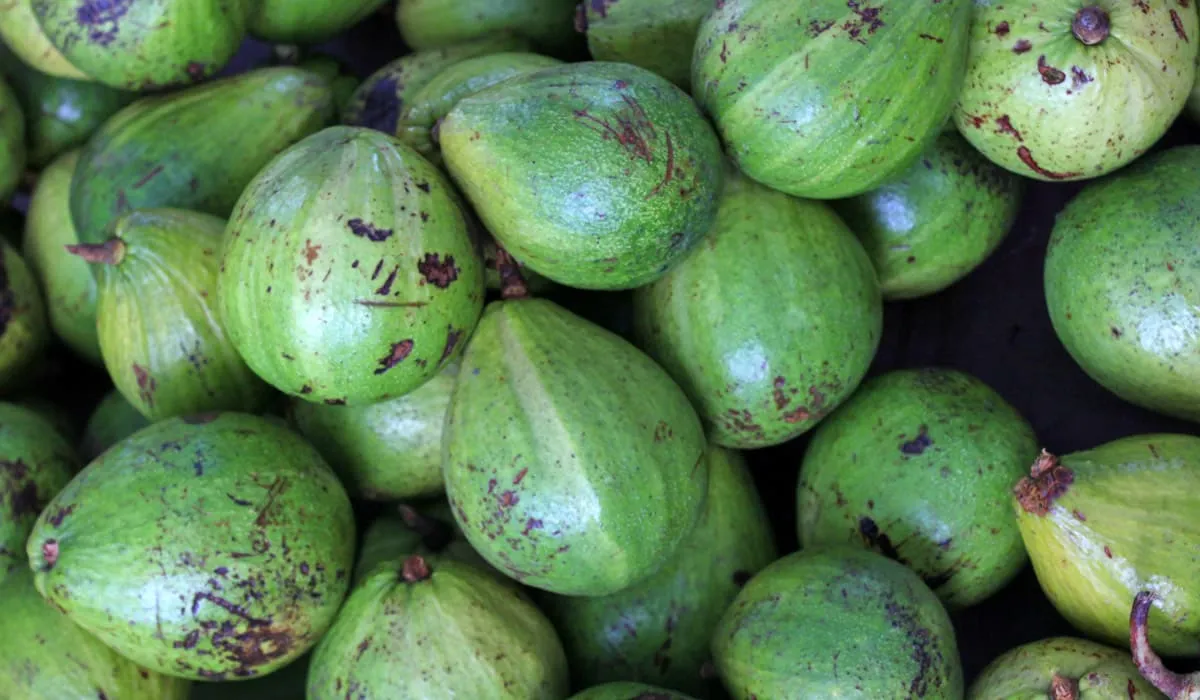
- “Nabal”: An almost round avocado with smooth dark green skin streaked with black. Its firm, richly colored flesh holds up well to cooking. It originates from Israel (harvest from January to March).
The avocado tree is a medium-sized tree that can reach 15 meters in height, though it generally measures around 10 meters.
Its alternate leaves, 12 to 25 cm long, are simple, oval, and dark green. They fall every year, but only after the tree has already produced its new annual foliage, so the tree remains green year-round.
Its flowers measure 5 to 10 mm.
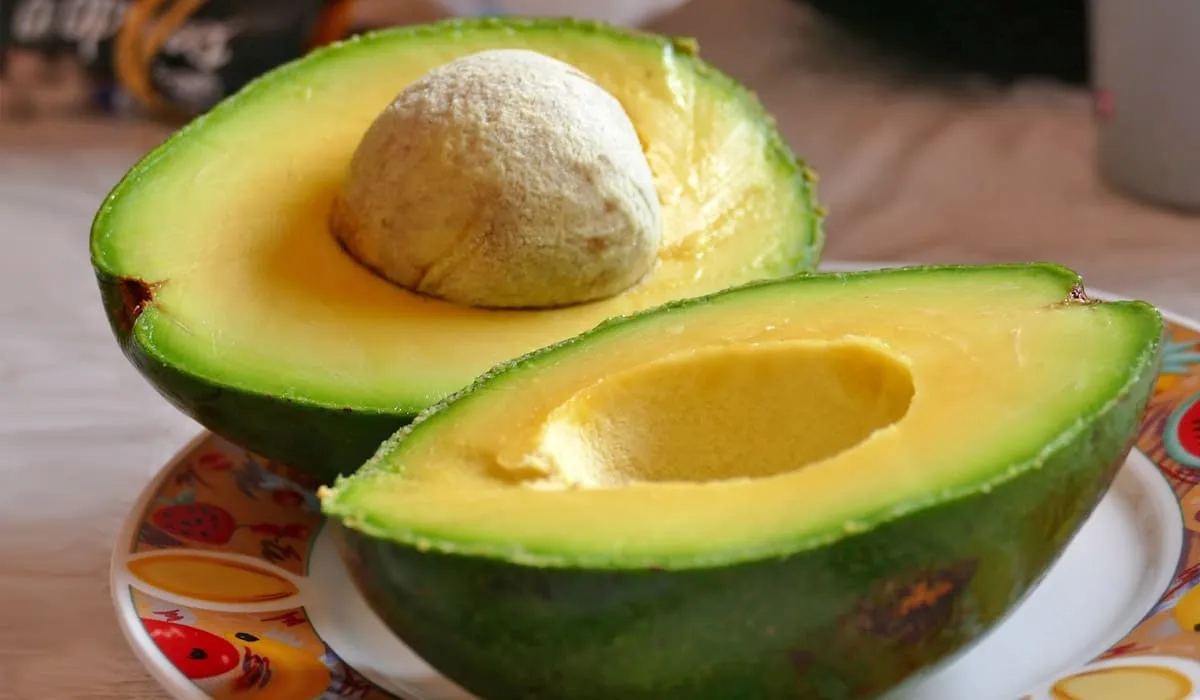
The fruit is pear-shaped (piriform), ovoid, or round, 7 to 20 cm long, weighing between 100 g and 1 kg. It contains a large central oval seed, 3 to 5 cm long.
Medicinal properties
The avocado contains natural fibers that promote satiety, as well as oleic acid, a fatty compound that triggers the sensation of fullness in the brain. Its fibers also help combat constipation. It is rich in nutrients and heart-healthy compounds, and it helps lower levels of bad cholesterol.
It is a natural moisturizer. Rich in antioxidants, particularly lutein, it protects eyesight. Containing carotenoids, it is also a fruit that reduces the risk of prostate cancer.
It may also help lower diabetes levels (type 2 diabetes).
Be careful: avocado leaves and bark can be harmful to animals (cats, dogs, horses, cattle, goats, rabbits, rats, birds). The leaves contain persin, a toxic fatty acid that can cause diarrhea, vomiting, congestion, and even respiratory distress.
Uses
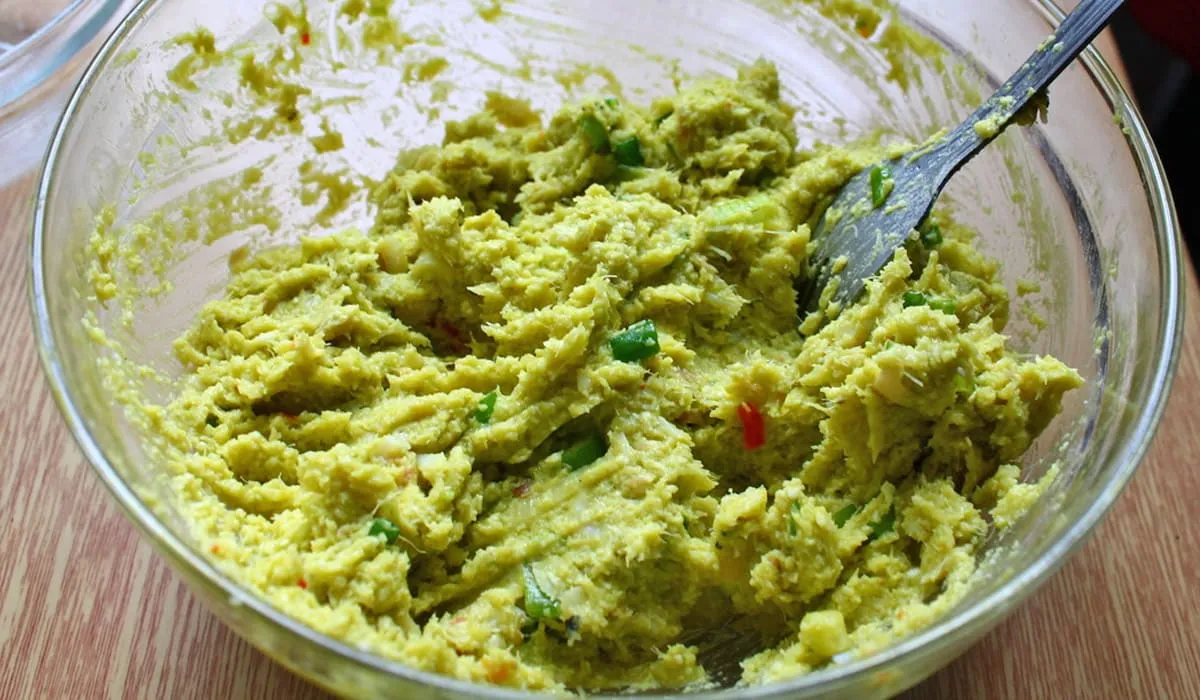
In Martinique, the avocado is eaten raw and plain, but it can also be used in salads or in many dishes, including the traditional féroce d’avocat (see photo opposite).
It frequently accompanies dishes made with local root vegetables and starchy produce (breadfruit, yams, ti-nain bananas, yellow bananas, Chinese cabbage, sweet potatoes, etc.).
Elsewhere in the world, the famous Mexican guacamole has further popularized the avocado.