History
The sapote, whose scientific name is Calocarpum sapota, is believed to originate from Central America, particularly from a region stretching from Mexico to Costa Rica, and was likely introduced to the Caribbean during colonization. Today, it is found throughout tropical America.
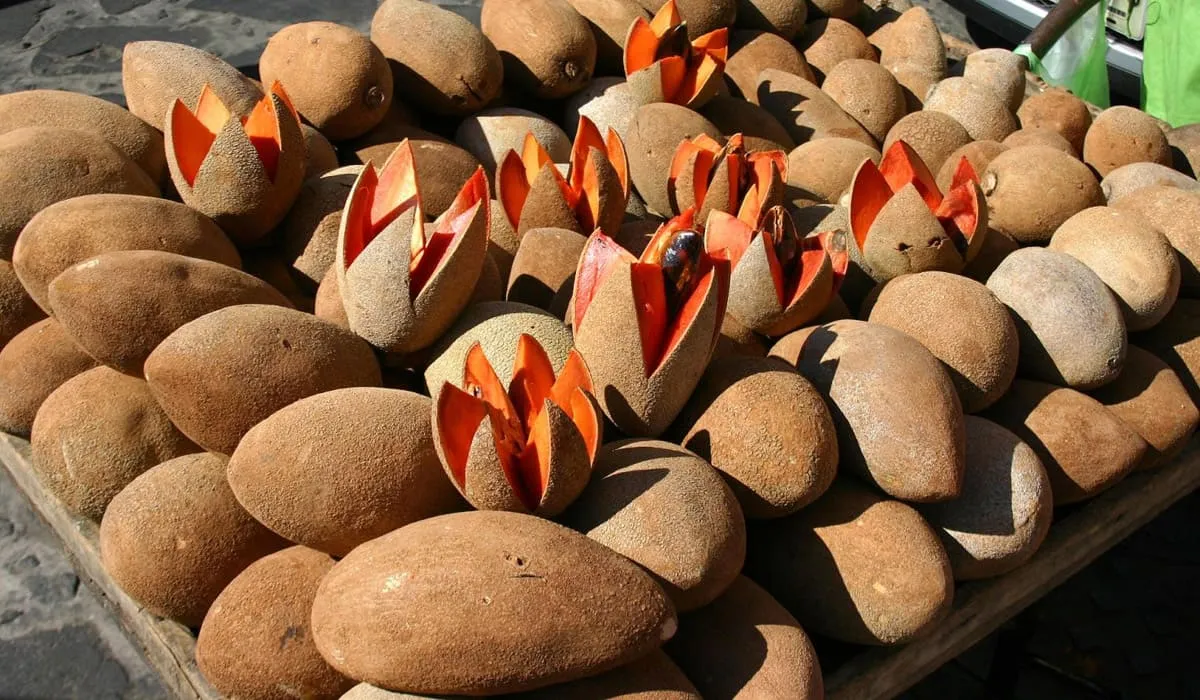
It is widely consumed in the Spanish‑speaking Caribbean (Cuba, the Dominican Republic) but remains less popular in the French Antilles, where people tend to prefer sapodilla.
Varieties
Sapote, or mamey sapote, is very (too) often confused with sapodilla because both have orange flesh. It is also unrelated to black sapote or white sapote. It is a distinct type of sapote in its own right. Sapote has a more limited distribution than sapodilla because it is sensitive to cold.
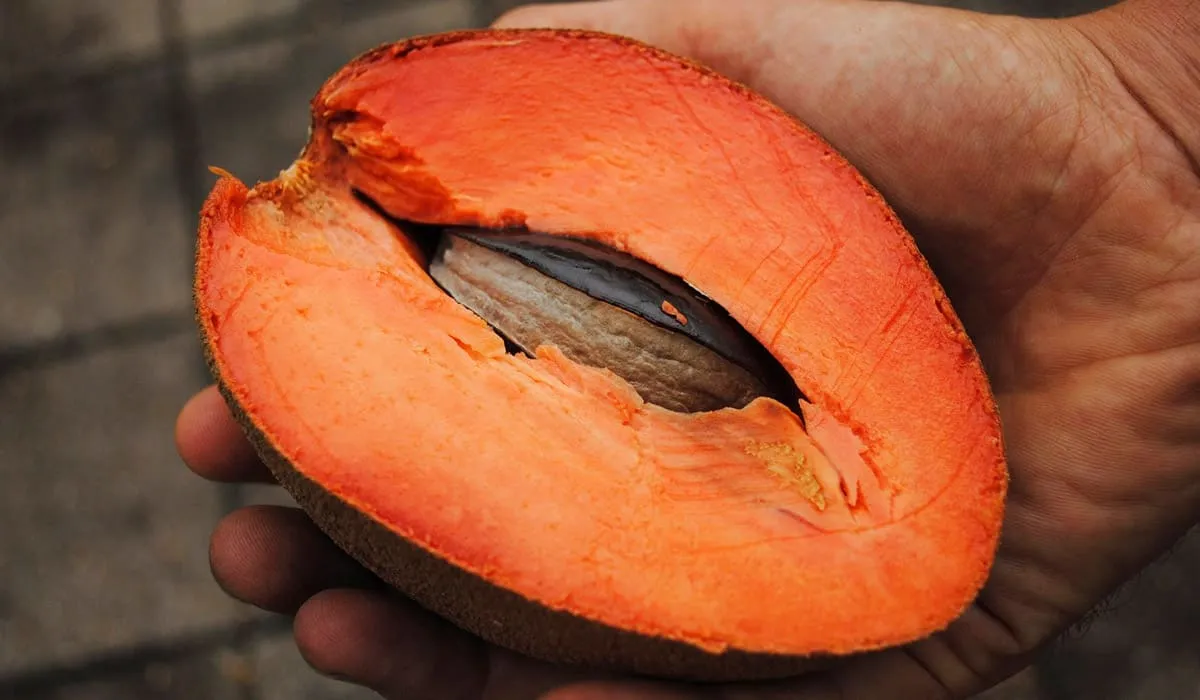
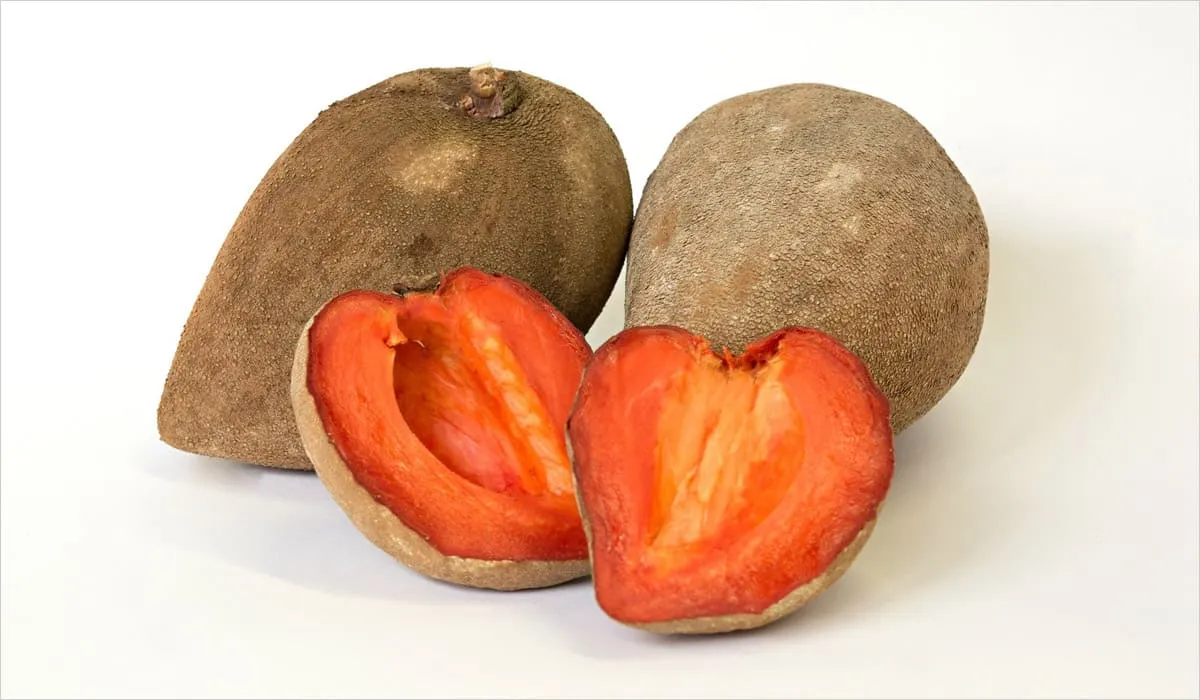
The sapote tree has broad leaves resembling those of the guava tree. The fruit measures 10 to 25 cm in length and 8 to 12 cm in width. Its creamy, sweet flesh is orange‑red and has a texture similar to avocado.
Medicinal properties
Sapote contains carbohydrates that support better weight management and improved heart health.
The fruit is an excellent source of vitamin B6, vitamin C, riboflavin, niacin, vitamin E, manganese, potassium, and dietary fiber. Research has also identified several new carotenoids in the ripe fruit.
Uses
Sweet and very sugary, sapote is eaten raw after removing the seed. It can also be used to make ice creams, milkshakes, smoothies, or fruit pastes. Its grated seed adds a lovely aroma to cakes.
It can also be used to make skincare products, particularly body oil. According to some unverified claims, it may have aphrodisiac effects.