History
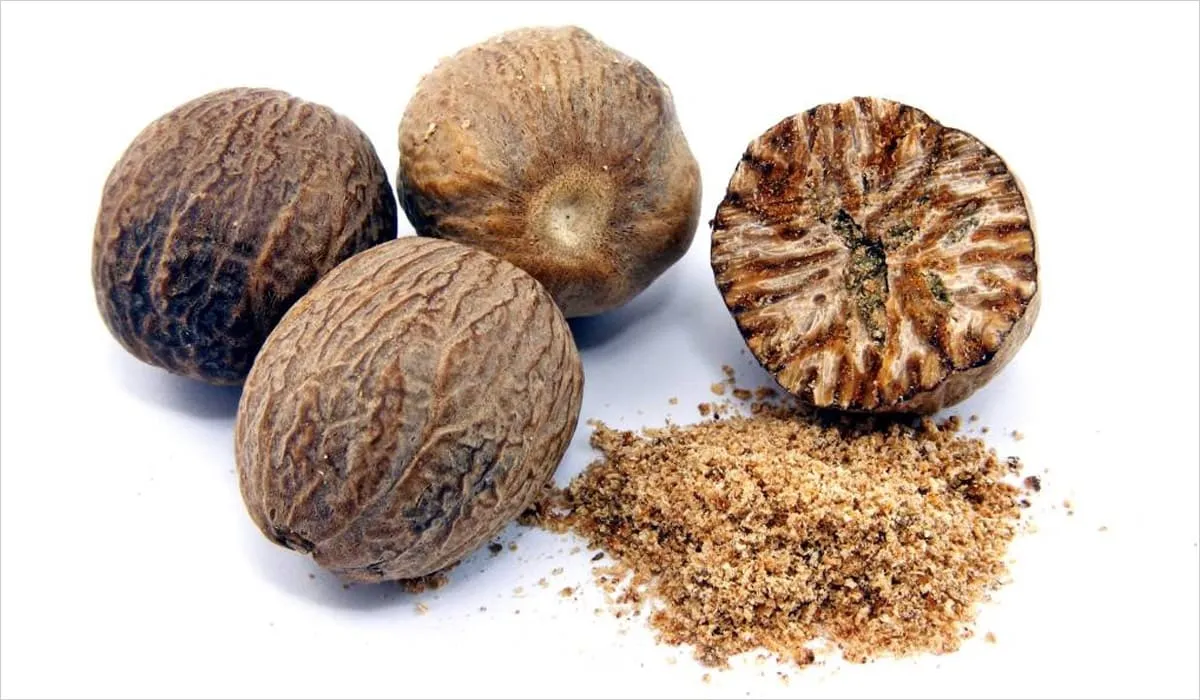
Nutmeg is the albumen (a type of nutrient‑storage tissue) of the seed found inside the ovoid fruit of the nutmeg tree, whose scientific name is Myristica fragrans. The nutmeg tree originates from the Banda Islands in the Moluccas archipelago of Indonesia.
In the 15th century, Europeans sought direct access to the spice‑producing islands in order to obtain spices at a lower cost than the price paid to Arab traders, who themselves purchased them from Asian merchants. After an initial attempt by the Portuguese, it was ultimately the Dutch, through the Dutch East India Company, who succeeded in establishing a monopoly.
The nutmeg tree was later exported to the Caribbean and to Grenada for cultivation. It is believed to have been introduced to Martinique during the colonial period.
Varieties
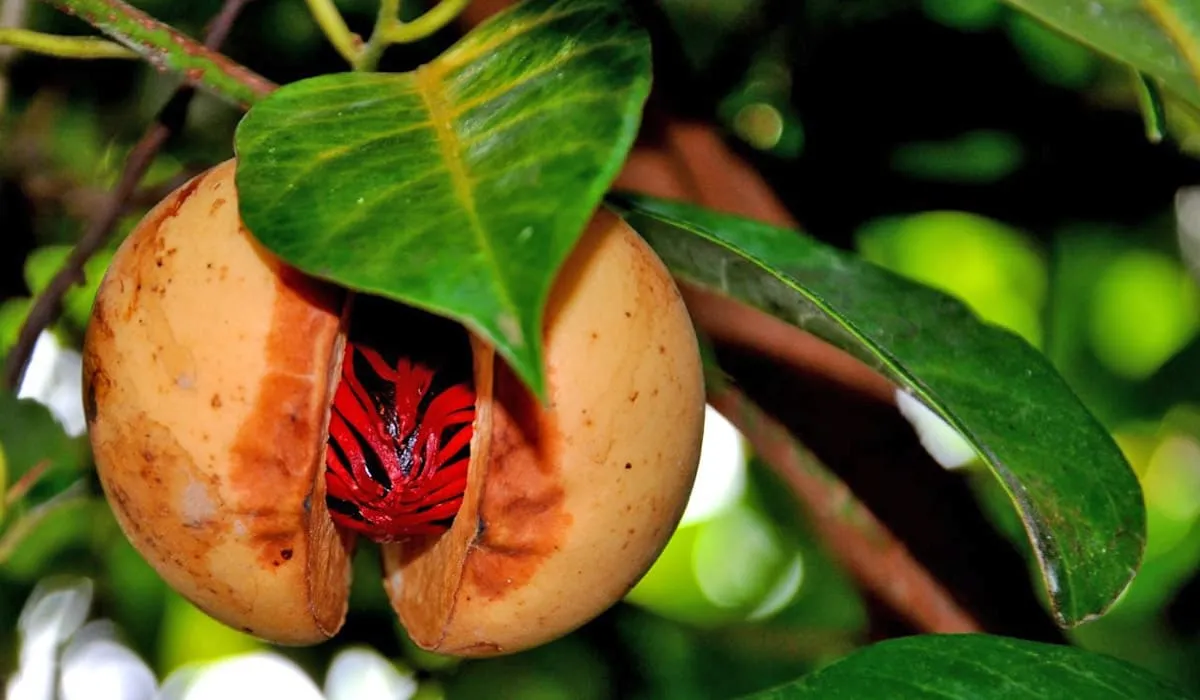
The number of varieties is unknown. The nutmeg tree is an evergreen with aromatic leaves and small yellow flowers arranged in clusters. It can reach 12 meters in height and live for over a century. It takes about eight years before it begins to bear fruit, but once it does, it will continue producing for more than sixty years.
The fruit is an ovoid capsule. It contains a thick, fleshy pulp that is locally eaten as candied fruit, and a seed. The seed is surrounded by a lacy aril, which yields the spice known as mace. Mace, or “nutmeg flower”, is the spice obtained from the tissue surrounding the nutmeg seed.
Medicinal properties
Nutmeg has traditionally been used to treat respiratory and rheumatic problems. It aids digestion and acts as a general and intestinal antiseptic. It is recommended for neuralgia and disorders of the nervous system.
It can also be used to treat digestive issues such as gastroenteritis, bloating, and intestinal parasites.
Nutmeg is recommended for relieving back pain and nervous disorders.
Uses
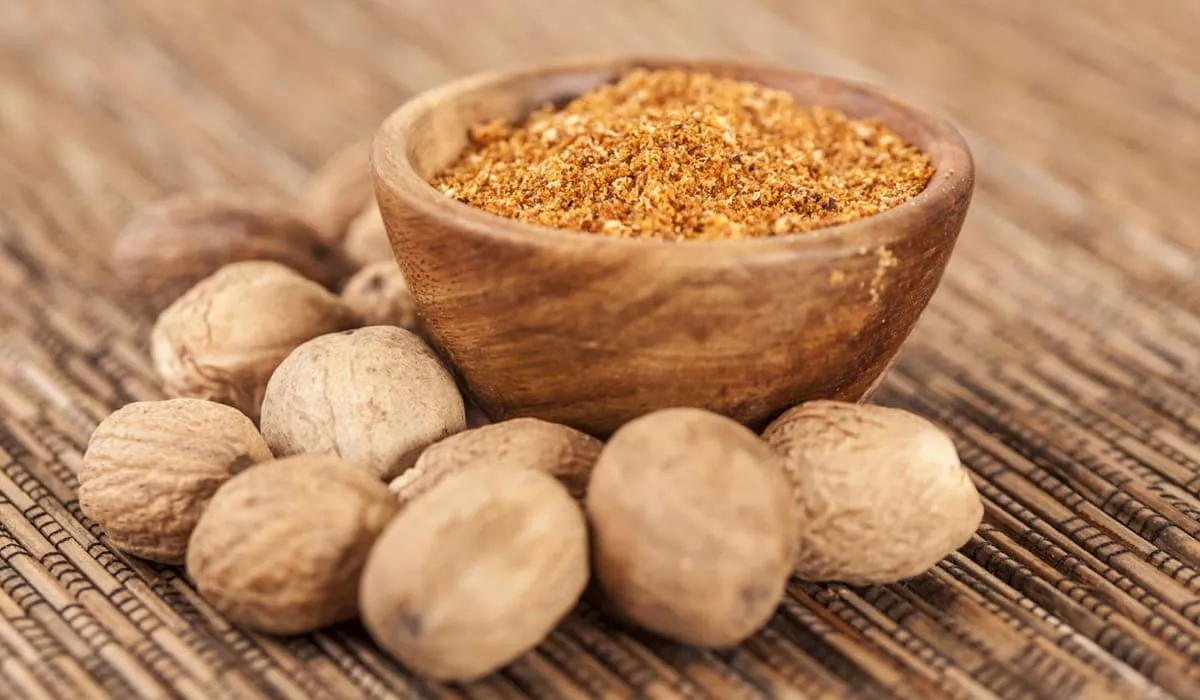
Nutmeg is widely used to flavor dishes made with potatoes or other vegetables (as in the cauliflower gratin shown in the photo), as well as pasta, vegetables, and béchamel sauce. It is also found in English cakes, lemon tarts, and certain pastries such as gingerbread. To maximize its flavor, it is best grated and added at the end of cooking.
It is also used to make infusions and essential oils.