
History
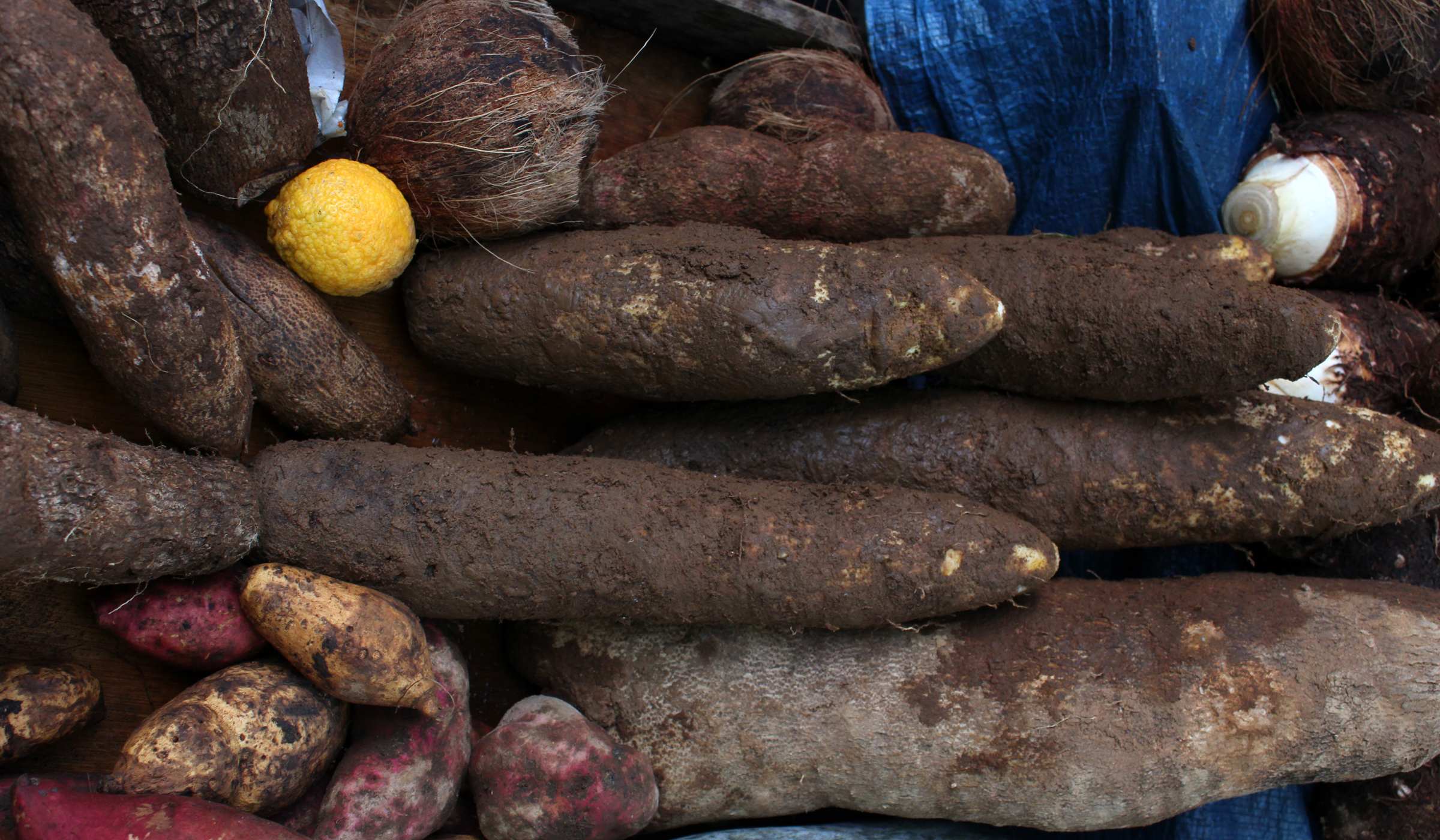
Yam is an ambiguous name referring to several plant species belonging to the genus Dioscorea in the Dioscoreaceae family, cultivated throughout tropical regions of the world for their starchy tubers. The term refers both to the tuber itself and to the root system.
The word igname comes from the African root nyam, meaning “to eat.” The term igname refers only to species whose tubers are edible. When a species is toxic, it is not designated by this name.
Two yam species originate from Southeast Asia, two others from Africa, and one from South America. However, yam never became established in South America the way sweet potato, potato, and cassava did, even though all three are native to that continent.
The species found in Africa were domesticated there more than 6,000 years before our era. Yam is believed to have arrived in the Caribbean archipelago toward the end of the 16th century on slave ships. It was an essential part of enslaved people’s diet and was grown in garden plots dedicated to their food supply.
Varieties
The number of yam varieties is unknown. However, the varieties cultivated in Martinique include:
- Dioscorea alata: Plimbite, Belep, Pacala, Boutou, etc.
- Dioscorea cayenensis: Portugaise, Igname poule, Igname jaune…
- Dioscorea trifida: Cousse‑couche (white or purple)
These are climbing, twining plants, often dioecious. The leaves are petiolate and heart‑shaped, alternate or opposite depending on the species. Small bulbils develop in the leaf axils; they can be used to propagate the plant and are sometimes edible.
The tubers vary in shape, from ovoid to oblong, sometimes flattened or club‑shaped. They can reach up to 1 meter in length, and while they generally weigh 3 to 5 kg, they can reach up to 15 kg. The skin may be yellow, white, or darker, brown to almost black.
The flesh is usually white but can also be yellow.
Medicinal properties
Few studies exist on the medicinal properties of yams, and most have been conducted on animals.
In women, daily consumption of yams is known to reduce total blood cholesterol.
It also helps lower blood pressure. Thanks to its antioxidant properties, yam appears to act on the brains of mice and improve their learning and memory abilities.
It also helps reduce diabetes by improving the regulation of glucose and insulin levels.
Yam may also protect the liver and kidneys from damage caused by high doses of acetaminophen or alcohol.
It may also be used to alleviate menopausal symptoms in animals. However, this has not been verified in humans, so it cannot be recommended for hot flashes.
Uses
Yam is very present in Martinican cuisine. Locally, it is eaten several times a week and has become fully integrated into Antillean gastronomy.
In the past, it was mostly eaten boiled for several minutes in water. Over time, new recipes featuring yam as the main ingredient have transformed its image, from a simple food for enslaved people to a valued ingredient. This tuber was not served on colonists’ tables, as they preferred to import potatoes from Europe.
However, with time, yam evolved from a “poor man’s tuber” to a valued food, especially thanks to new ways of preparing it beyond simple boiling. It eventually became part of the Christmas and New Year holiday meals.
Today, yam is eaten in gratins and in many other forms. It is part of what is locally called “légjim‑péi” (local vegetables), alongside Chinese cabbage, cooking bananas (ti‑nain and plantain), breadfruit, and sweet potatoes.
Yam is produced in large quantities in Martinique to feed the local population. It is also exported to mainland France, though not in large volumes.


