History
The mombin plum, or simply mombin, whose scientific name is Spondias mombin, is believed to originate from a region stretching from southern Mexico to northern Peru and Brazil. It may also be native to the Caribbean, meaning it is not an introduced plant on the island.
Varieties
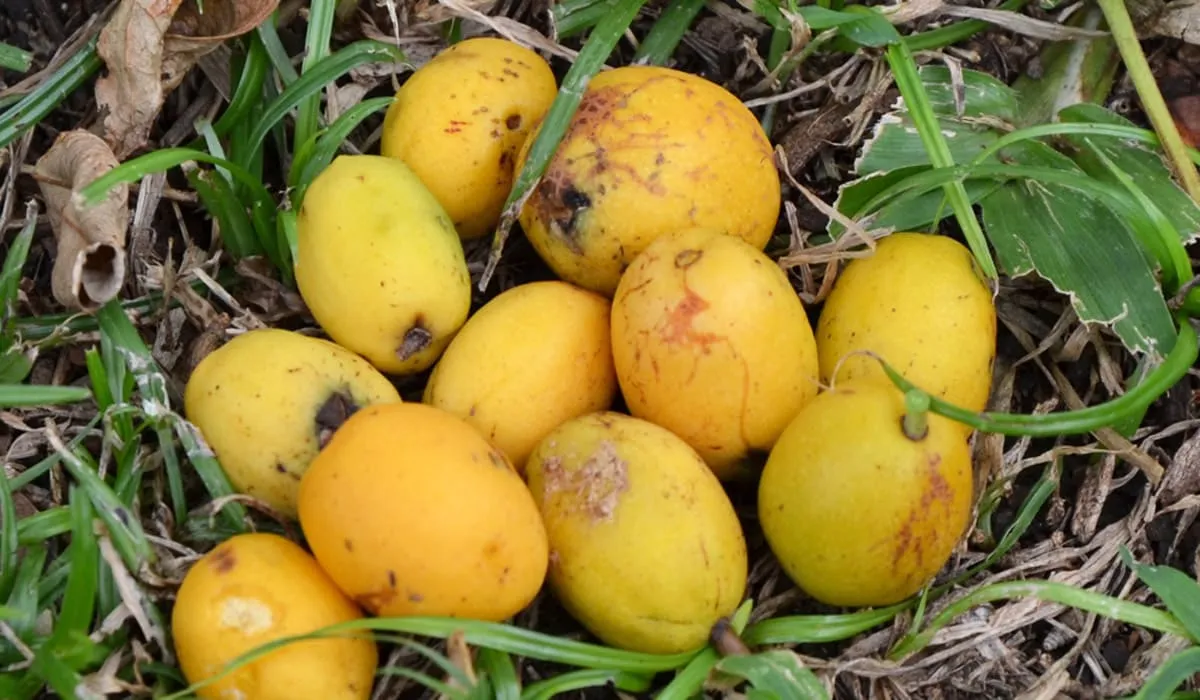
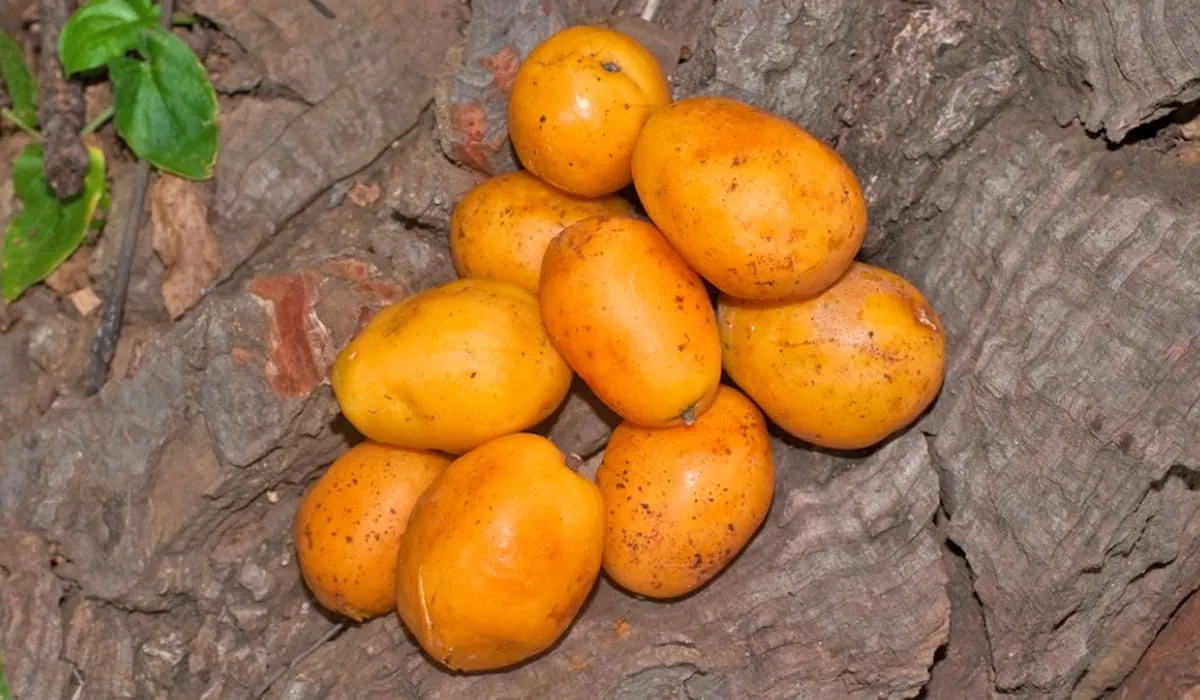
The mombin plum is different from the Spanish plum or prune chenille (Spondias purpurea). It is the fruit of a shrub that rarely exceeds 10 meters in height. Purple flowers appear on the trunk just before the leaves. The cylindrical, bumpy fruit is red or yellow (the “lutea” variety).
It contains a large pit surrounded by yellow, fragrant, juicy, and tangy flesh. The fruit is harvested from July to November. It measures about 3–4 cm long and 1–2 cm wide.
Medicinal properties
The fruit pulp is astringent and somewhat acidic. It is used to make jams and jellies. When distilled, it produces a highly appreciated alcohol. A decoction of the leaves and buds can be used to wash and cleanse wounds and ulcers. The fruit juice is used as a febrifuge and diuretic. The roots also have febrifuge properties. The seed contains about 31.5% oil. Crushed leaves are also astringent.
Women after childbirth may use them in warm baths because of their soothing effects on vaginal mucous membranes. Crushed leaves are also astringent, and postpartum women may use them in warm baths for their calming properties.
Rich in vitamin A, 100 grams of mombins per day provides about 37% of the recommended daily intake of vitamin A.
Uses
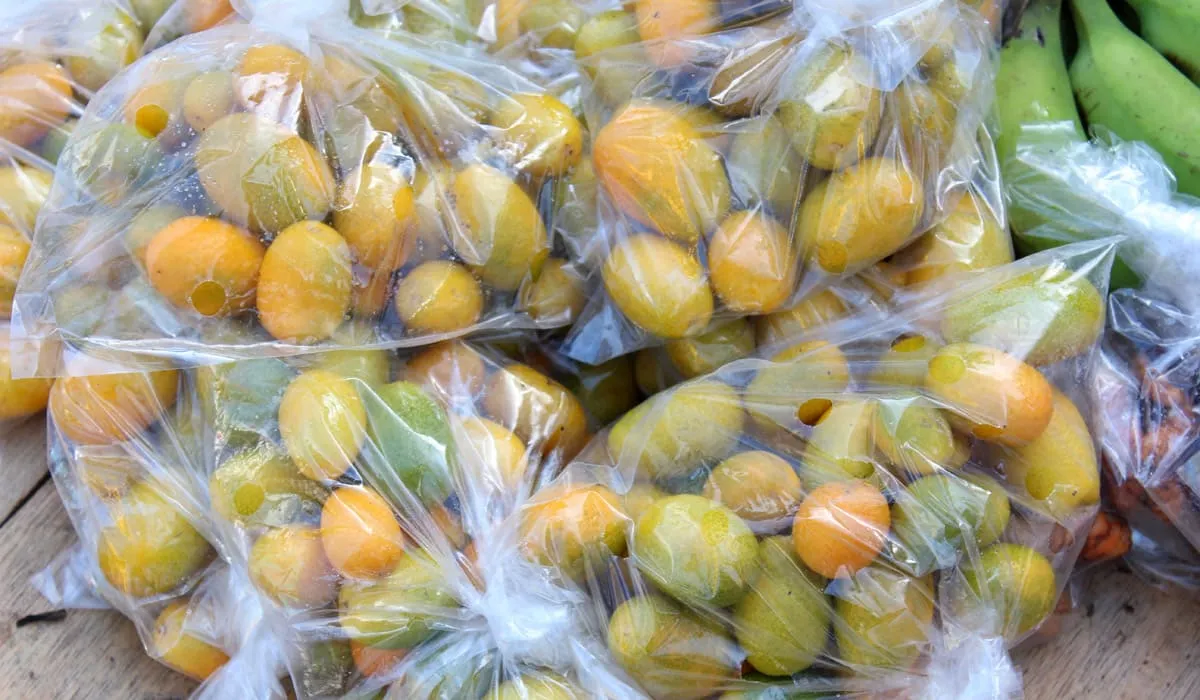
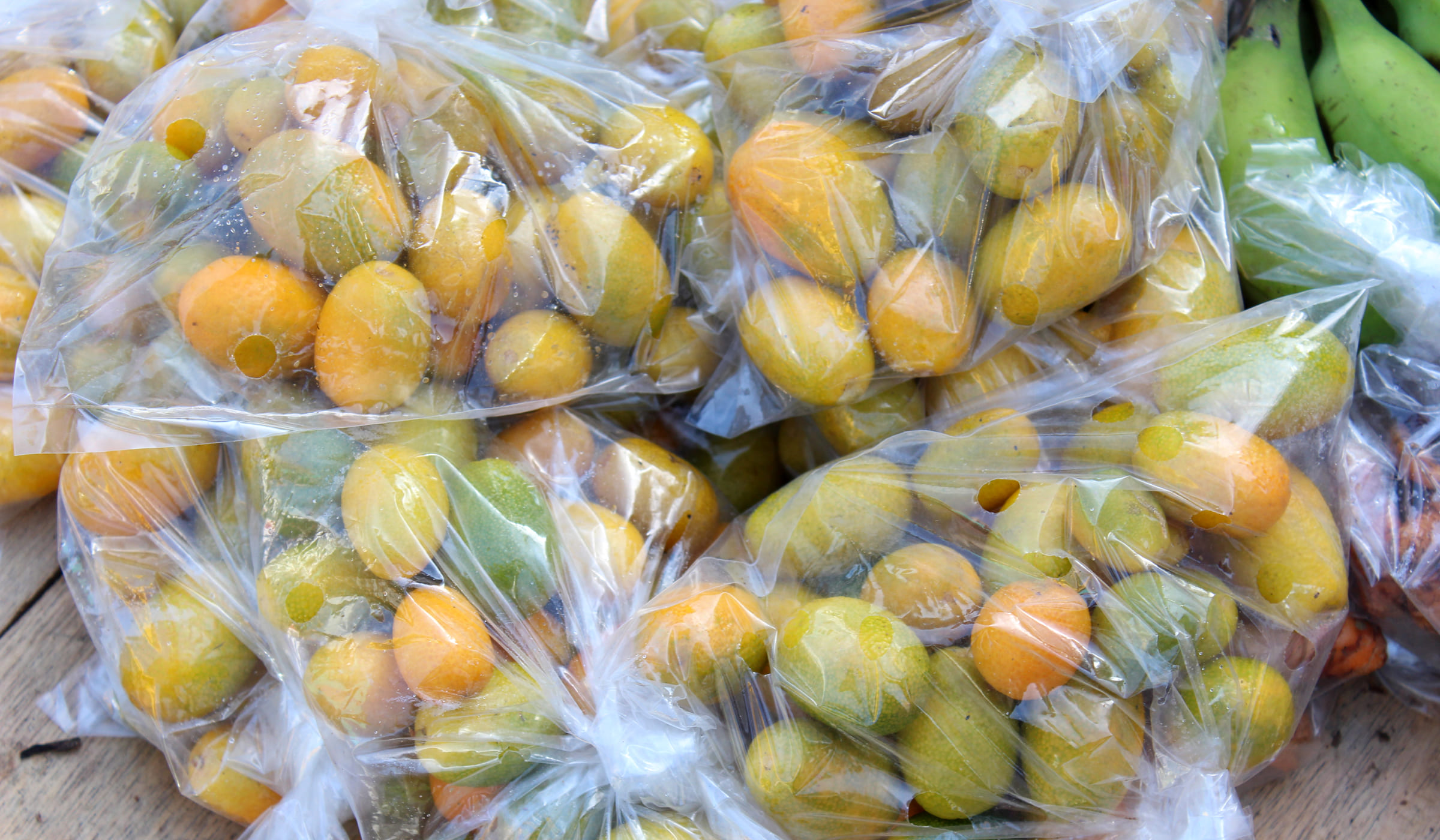
Mombin plums are mainly eaten raw, but they can also be made into fruit juice, jam, punch, or sorbets. Only the skin and the pulp are edible, representing just 15–25% of the fruit.