History
The breadnut, whose scientific name is Artocarpus altilis, is believed to originate from a region stretching from New Guinea to Indonesia and the Philippines. It was brought to the French West Indies from Polynesia by Pierre Sonnerat, a French explorer, in 1772.
Varieties
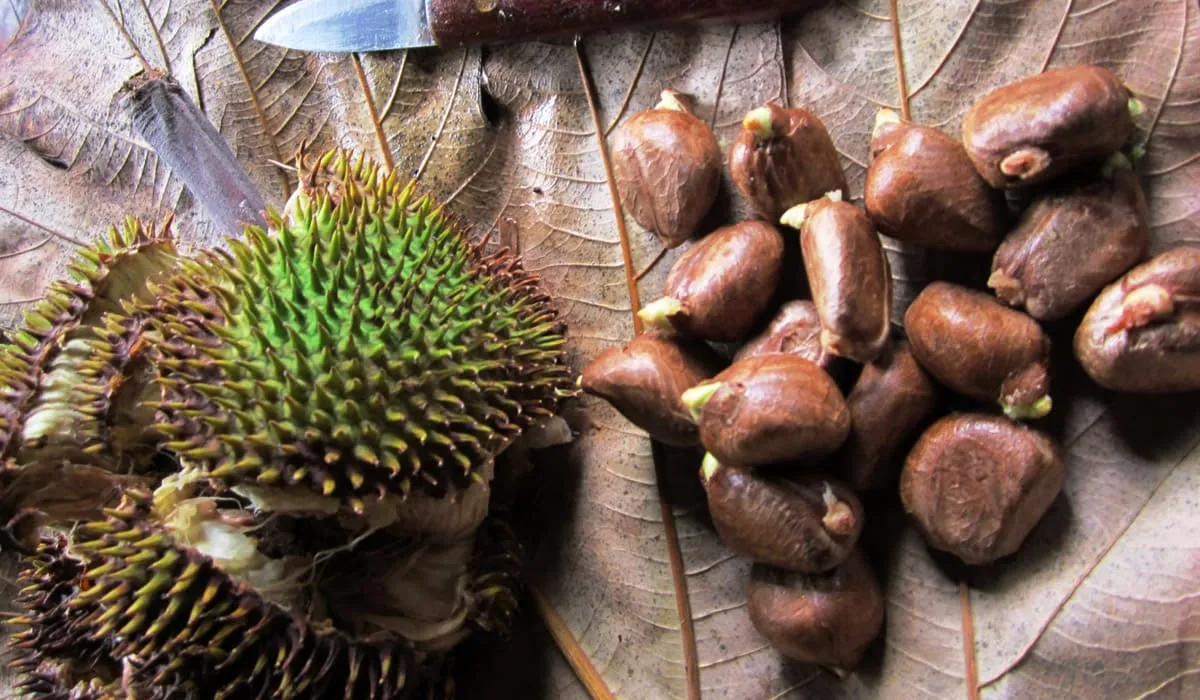
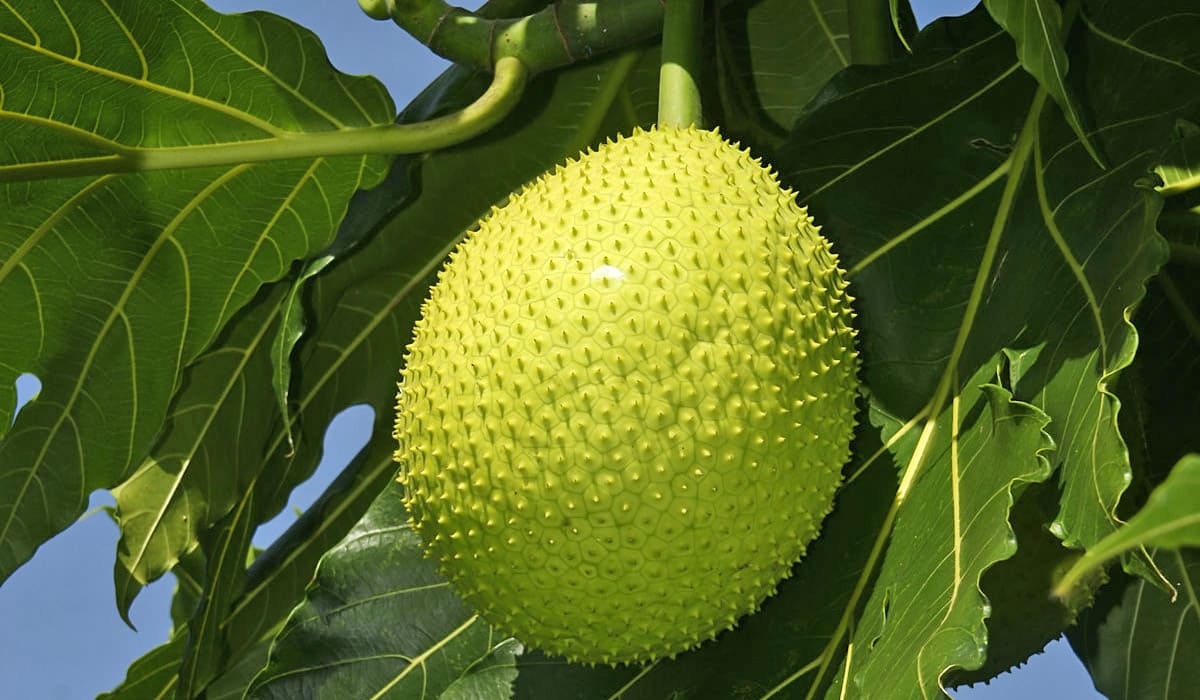
The breadnut is considered a variety of breadfruit. Both are two varieties of the same species: Artocarpus altilis. The two trees are very similar, making it easy to confuse them and their fruits. The châtaignier pays (breadnut tree) is the seeded variety of breadfruit. It differs by having a less elegant shape, leaves that are less deeply lobed, and a fruit covered with soft spines.
The breadnut has a green rind and weighs around 800 grams. Its diameter is about 20 cm. A single tree can produce between 600 and 800 fruits per year. The breadnut tree can only grow in tropical regions, as it cannot tolerate temperatures below –15°C. Ideally, it grows in temperatures between 15°C and 40°C.
Medicinal properties
Breadnut seeds are rich in protein. Breadnut is also a good source of amino acids, including histidine, which is considered important for libido.
It helps fight arthritis; the histidine in breadnut seeds dilates blood vessels, helping reduce the risk of heart problems. Breadnut also strengthens the immune system and lowers blood glucose levels.
Uses
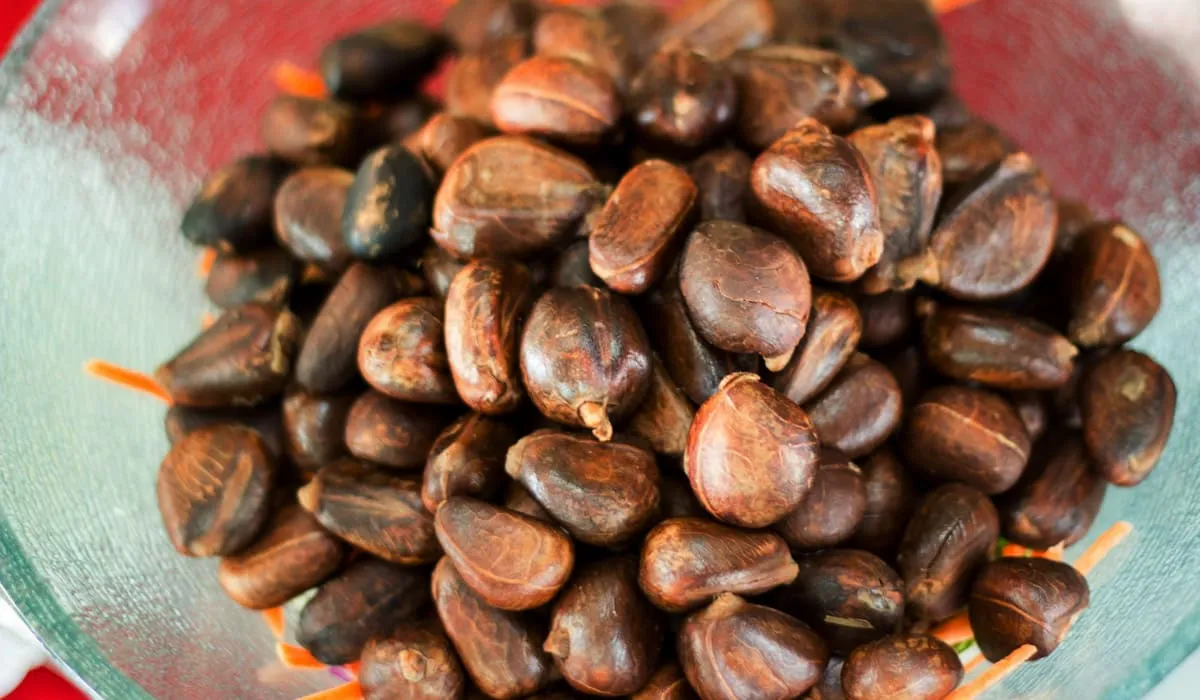
The brown, elongated seeds are enjoyed once boiled. They are also used to stuff a Christmas turkey or to enhance a pork stew.