
History
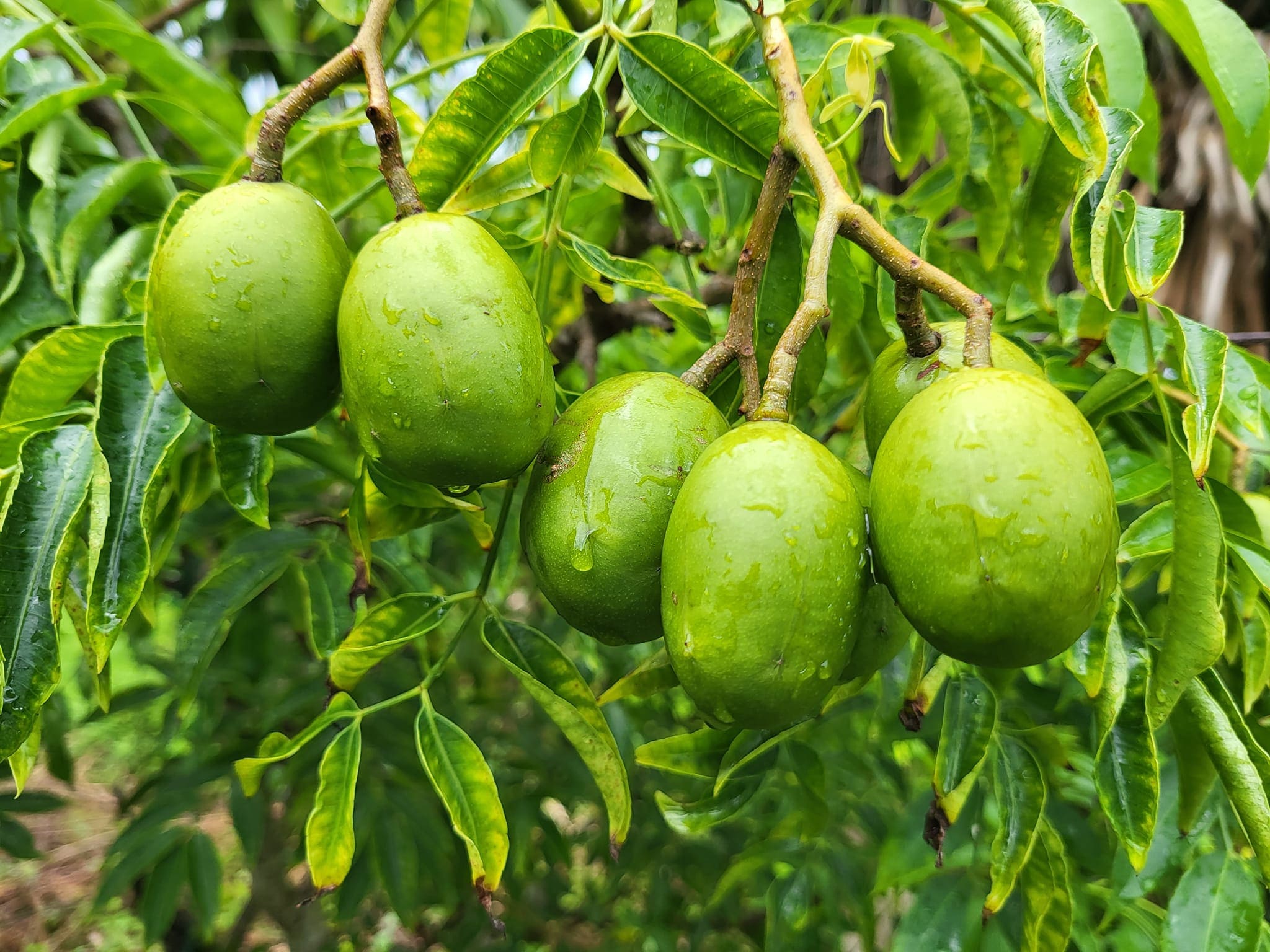
Native to Melanesia and Polynesia (Tahiti), ambarella, whose scientific name is Spondias dulcis Foste, is very common in Southeast Asia. It arrived in the Caribbean and tropical America in the 18th century.
Varieties
No information is available regarding the number of ambarella varieties. Contrary to what one might think, ambarella does not belong to the same family as plums but rather to the mango family.
This beautiful ornamental tree grows rapidly and can reach up to 20 meters in height. The trees produce clusters of oval fruits with long stems. Their skin is green, turning yellow when ripe. Inside, a fibrous, spiny pit clings tightly to the juicy flesh.
Medicinal properties
In Asia, the young acidic leaves are eaten as a vegetable. Before ripening, ambarella is used to treat liver ailments and intestinal discomfort. It has properties that support blood coagulation, muscle contraction, bone and dental strength, immune defenses, tissue renewal, cardiovascular protection, and it is anti‑anemic, anti‑stress, and beneficial for digestion.
Uses
In Asia, the crisp, tart green fruit is preserved in vinegar or used as a condiment. In Martinique, it is made into a popular green juice with a herbal flavor, as well as a lightly alcoholic beverage made from green fruits, similar to cider. It can also be used to make sorbet.
The slightly ripe fruit is cooked with sugar and preserved in its syrup or made into jam. The fully ripe yellow fruit, soft and musky in flavor, is enjoyed fresh.


