History
Originally from the Caribbean, the cachiman, whose scientific name is Annona reticulata and which is also known as bull’s‑heart, was traditionally cultivated from Mexico to Brazil. It later spread to Africa, Asia, and Australia during the 17th century.
Varieties
In the Caribbean, two varieties can be found: the “cachiman cochon” (Annona glabra) and the “cachiman montagne” (Annona montana). Both species have a bland, not particularly appreciated flesh.
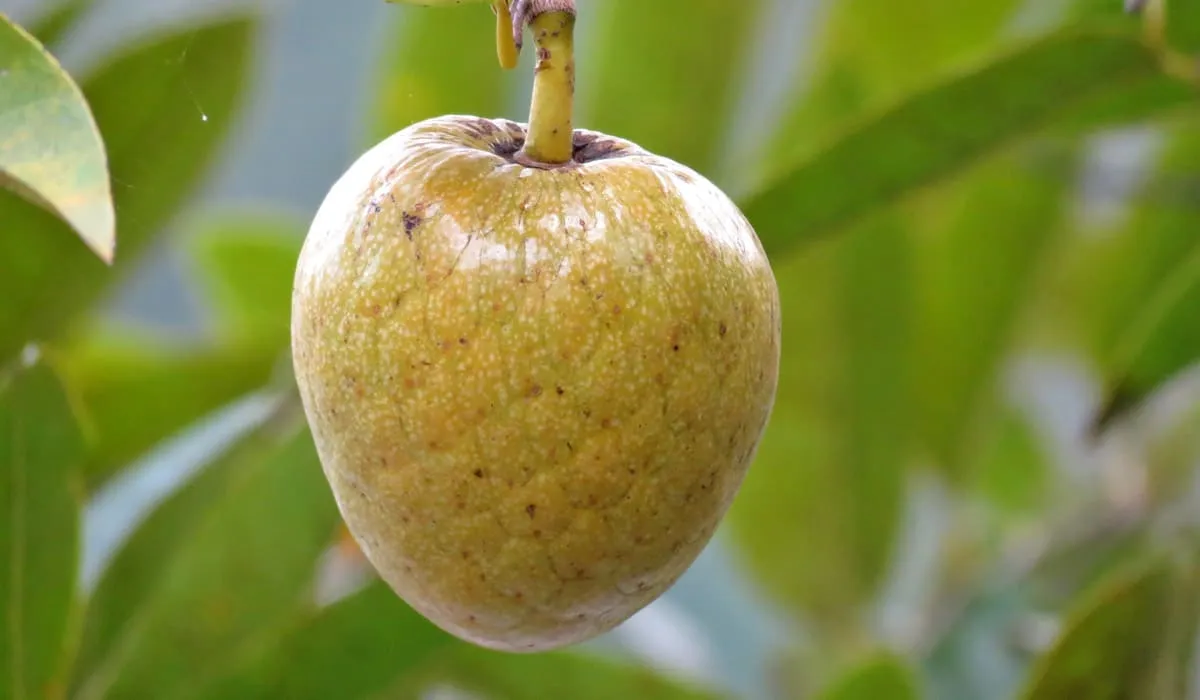
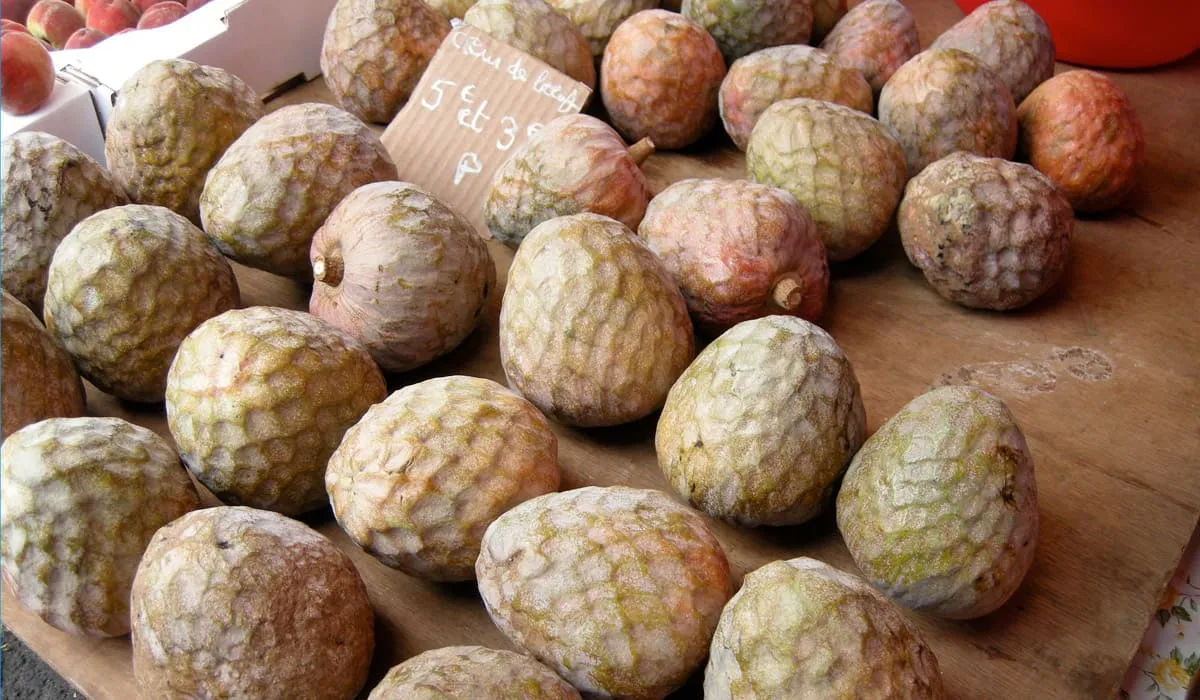
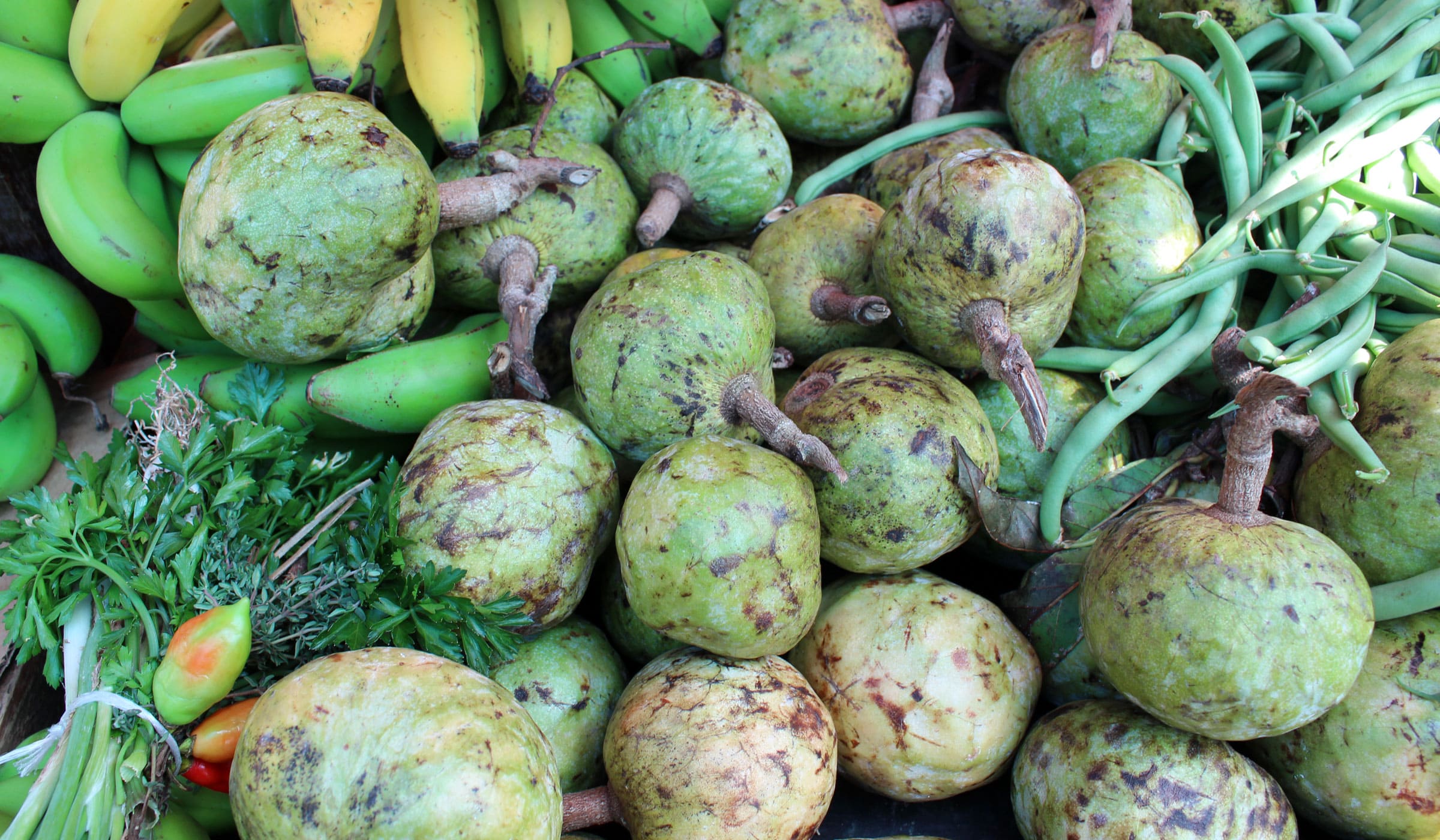
The fruit has a brown skin, and its shape resembles that of an ox heart, which explains the name “bull’s‑heart.” Its skin is smooth and thin, showing shades of yellow to brown, sometimes reddish when ripe.
The cachiman does not change color as it ripens, but it softens. The fruit ripens easily, even when picked green. It is best consumed without refrigeration.
Medicinal Properties
The leaves can be used as an anti‑diarrheal. A decoction or infusion of the leaves helps stop diarrhea and dysentery. Applied as a poultice, the bull’s‑heart fruit effectively treats boils, abscesses, and ulcers.
Cachiman is also used as an analgesic recommended for toothaches, migraines, rheumatism, and sprains. It also has antibacterial properties.
Its main therapeutic use is for treating gastric problems. Leaf decoctions are also recommended as a vermifuge.
Uses
It is eaten raw. Its flavor is similar to that of soursop or sugar apple. The flesh can also be used to make juices and sorbets.