History
The Malay apple, known as pomme malacca or malaka in Guadeloupe, pomme d’amour in French Guiana, and red jambose in Indonesia, has the scientific name Syzygium malaccense. Native to Southeast Asia, it reached Jamaica in 1793 before spreading through the Lesser Antilles during the 19th century. It was most likely during this period that it arrived in Martinique.
Varieties
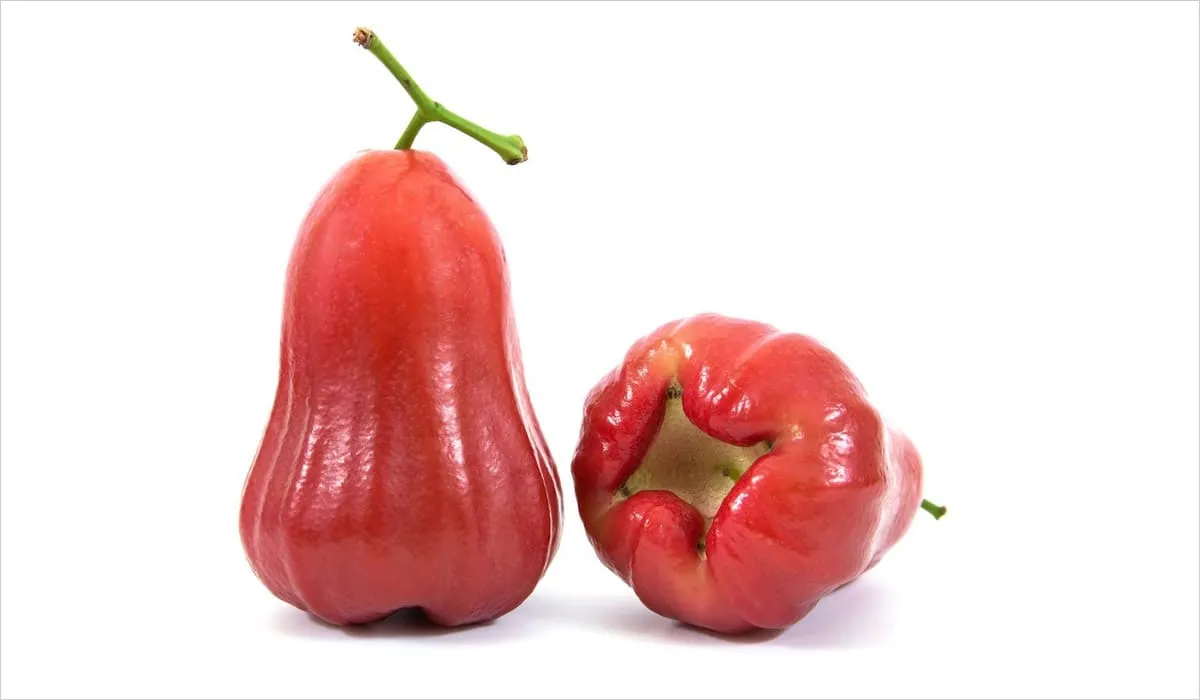
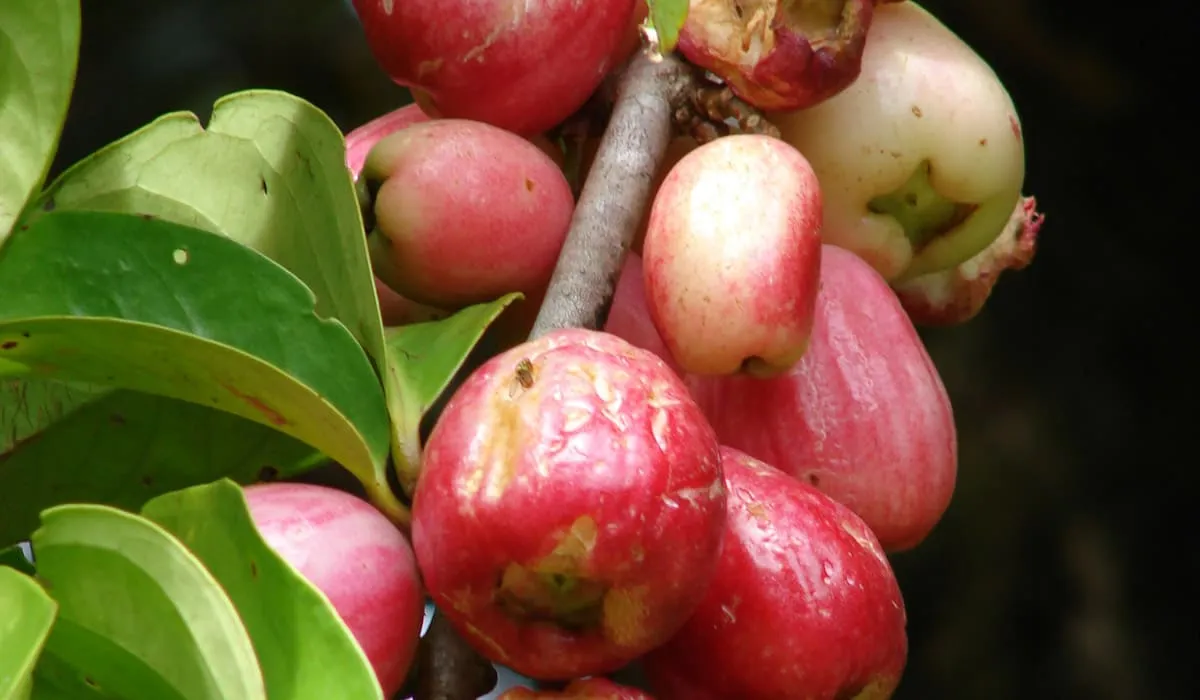
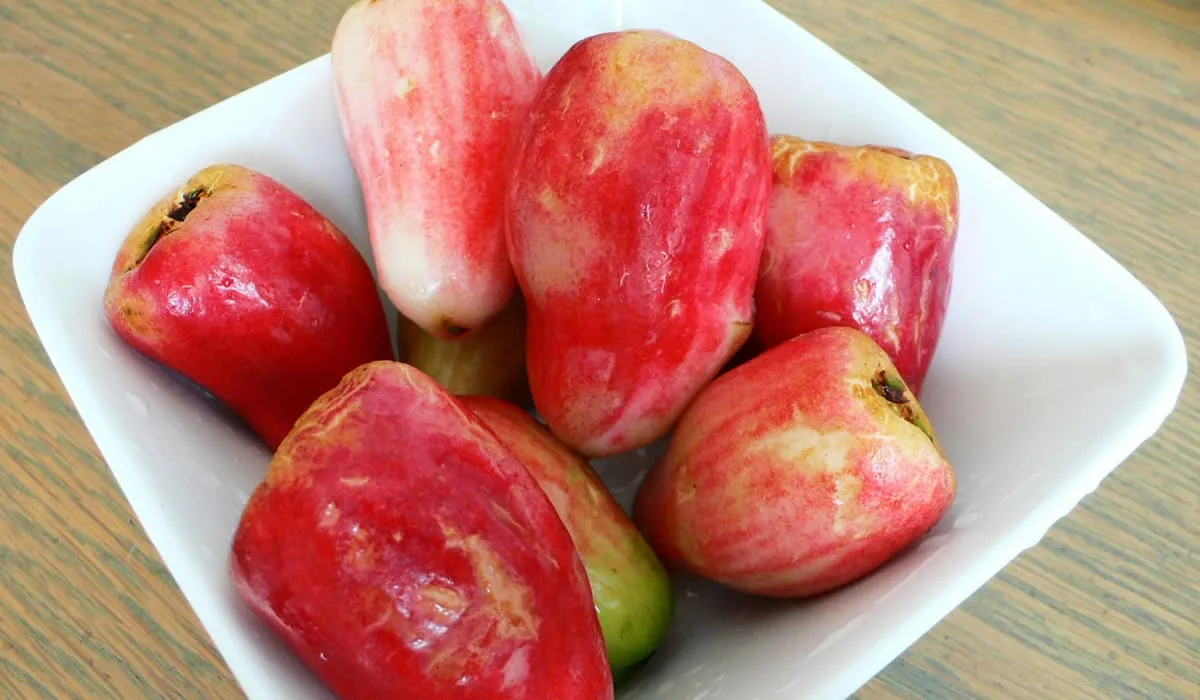
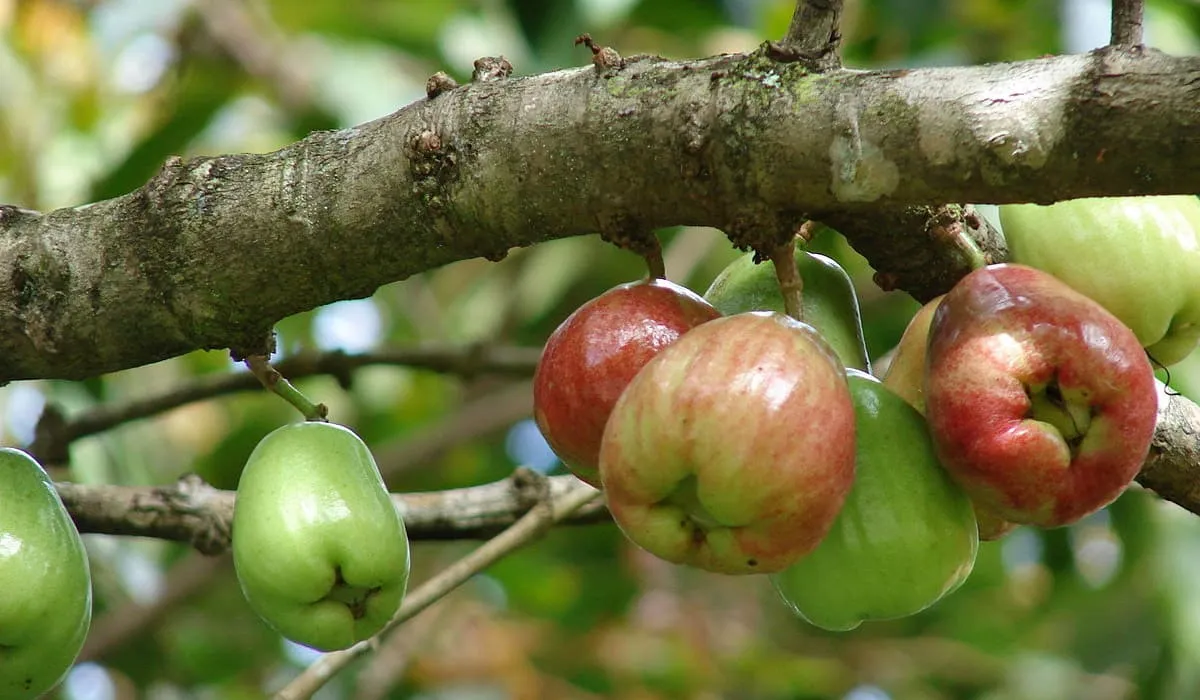
There are several varieties of Malay apple, differing in shape and color (red, white, or green). This ornamental tree is striking for its pyramidal silhouette, its flowers, and its fruits. It can reach up to 20 meters in height. Its horizontal branches bear large, leathery, elliptic‑oblong, opposite leaves.
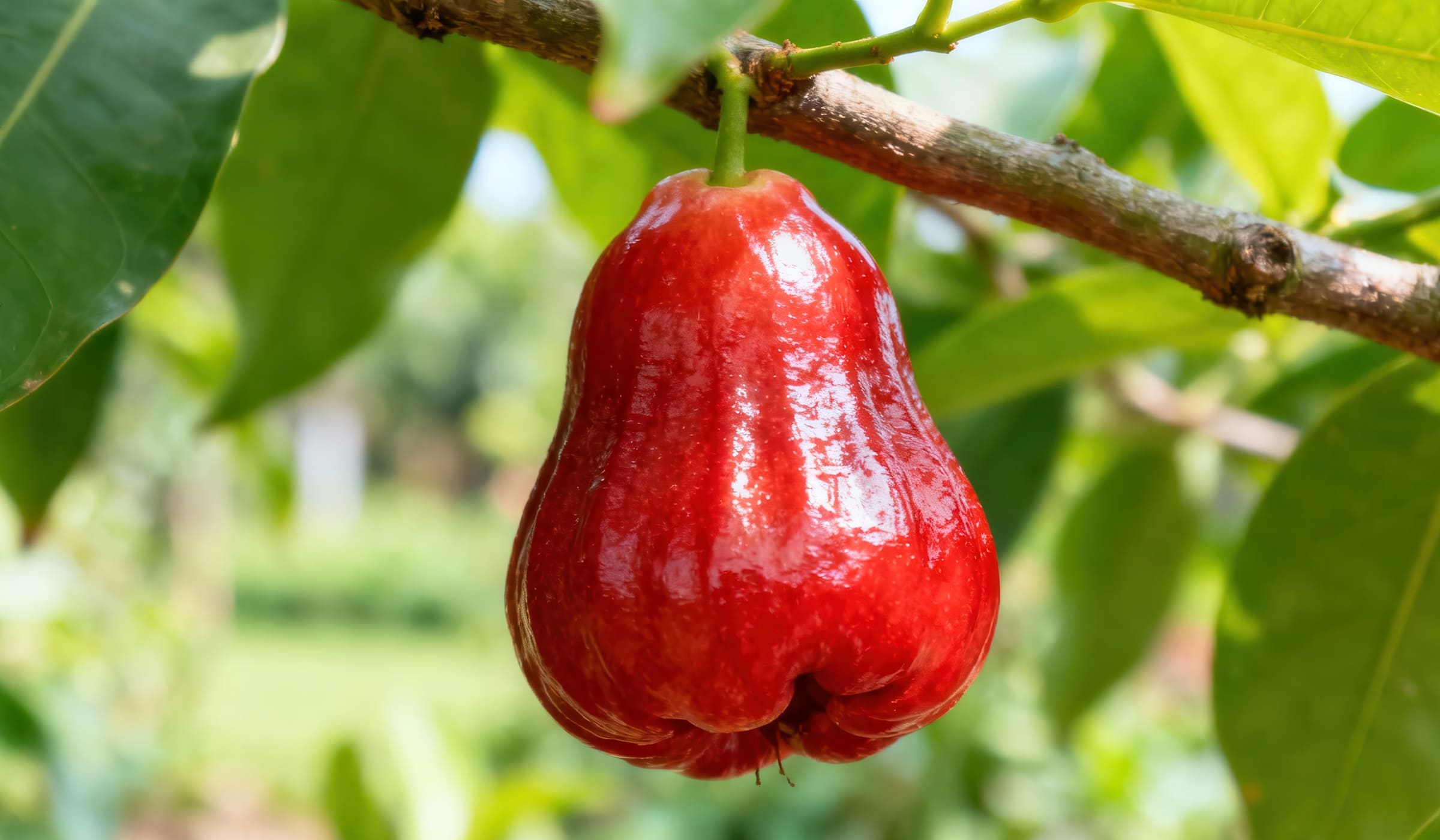
Its edible flowers, about 6 cm wide, resemble small pom‑poms or bright fuchsia fireworks. The fruit has dark red skin and fine white flesh.
This oblong to pear‑shaped fruit is generally eaten fresh. It contains a large, inedible brown seed. The tree is strictly tropical and cannot tolerate frost or the winter temperatures of temperate regions.
Flowering usually occurs from July to November, and fruiting from March to June.
Medicinal properties
Malay apple aids digestion and helps protect against infections. It also provides energy. Its astringent flowers are used to treat diarrhea.
Malay apple is believed to reduce inflammation, help prevent certain types of cancer, improve skin health, stimulate circulation, strengthen bones, prevent the development or worsening of diabetes, improve vision, strengthen and enhance hair quality, and prevent cataracts.
Uses
In Martinique, Malay apple is eaten raw. The flesh is very crisp and juicy. Its flavor is very mild, only slightly sweet, and therefore refreshing. In Asia, it is used to make jellies and coulis. In Puerto Rico, it is used to make wine. Cooked with other fruits, it reduces their acidity. The edible flowers add color to salads.