Maison d'Aimé Césaire

The maison d'Aimé Césaire (Aimé Césaire's house) is the place where you can learn the most about the poet during your stay on the island. Acquired in the 1960s to live there with his family, it still contains many objects that belonged to the writer as well as memories that he had treasured during his lifetime.

Today, the place is a space for exchanges, meetings and cultural events linked to the memory of Aimé Césaire.

The poet after becoming Mayor of Fort de France from 1946 until 2001.

Aimé Césaire died on April 17, 2008, at the age of 94.

Located in a residential area at 131 route de Redoute in Fort de France, the site is classified as a historic monument. This label concerns the dwelling house, the outbuildings, the garden, the enclosure walls and the ground of the plot.

The house of Aimé Césaire is today an integral part of the Martinican heritage.

Photo gallery
Maison d'Aimé Césaire
Maison d'Aimé Césaire panneau à l'entrée
Maison d'Aimé Césaire

Habitation Beauséjour

Habitation Beauséjour is located at the northern tip of Martinique, in the commune of Grand-Rivière. Built in the 18th century, the estate witnessed the evolution of various crops during the period of slavery. Cacao, sugarcane, banana, and later sugarcane again were cultivated successively on its lands.

Around the main house, which dates from 1820, stand two additional buildings: the “Senator’s Pavilion,” built as the office of Amédée Knight, senator of Martinique who lived there, and another structure that served as a storage area, water house, and stable. Much farther downhill lies the “rue cases-nègres,” which was the living area for enslaved people and later for agricultural workers.

The first owner of the estate was Chambert Anthoine, known as La Rivière, originally from Agde (Hérault), according to documents from 1671. At that time, the property covered about 150 hectares. In 1680, the estate was home to the master, his wife, their two children, and 80 enslaved Africans. Until 1928, nine different owners succeeded one another, including the Knight family, whose patriarch Amédée Alexis Augustin Knight was a descendant of a Black man born in Martinique. Knight, an engineer trained at the École Centrale de Paris, became senator of Martinique in 1899.

A planter and distiller in Saint-Pierre, he acquired the land in the early 20th century, at a time when the sugar industry was in crisis and plantation bankruptcies were common. Despite this, the estate experienced remarkable prosperity under his management. Its surface area expanded from 136 to 285 hectares, and he established a distillery that produced a high‑quality rum, “H.B.S. rum,” which won a gold medal at the Colonial Exhibition in Paris in 1932.

It was also during this period, between 1900 and 1912, that the estate took the name Beauséjour. When Amédée Knight’s heirs sold the property in 1928 to the “béké” Pierre François Honoré Louis de Lucy de Fossarieu, it had grown by another 50 hectares. Sugarcane cultivation and rum production continued, while cacao declined in favor of secondary crops such as corn, beans, and sweet potato. After the Second World War, banana cultivation took over, and rum production ceased in 1958.

For several years, banana was the estate’s main crop, until sugarcane once again became predominant in more recent times.

The estate was listed in the French Register of Historic Monuments in September 1996. It now produces a high‑quality rum that visitors can taste during the tour.

To reach the estate from Fort‑de‑France, follow the N3 to Ajoupa‑Bouillon, then take the N1 toward Basse‑Pointe, Macouba, and Grand‑Rivière. Before entering the village, turn left.

Ruins of Saint-Pierre

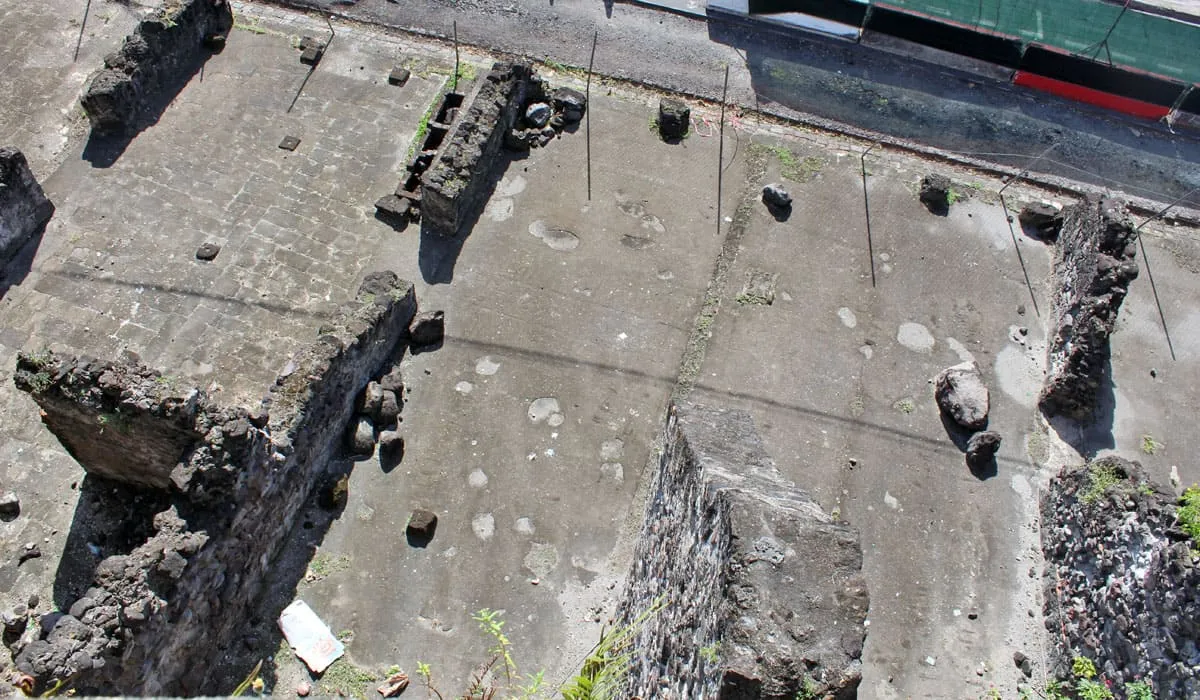
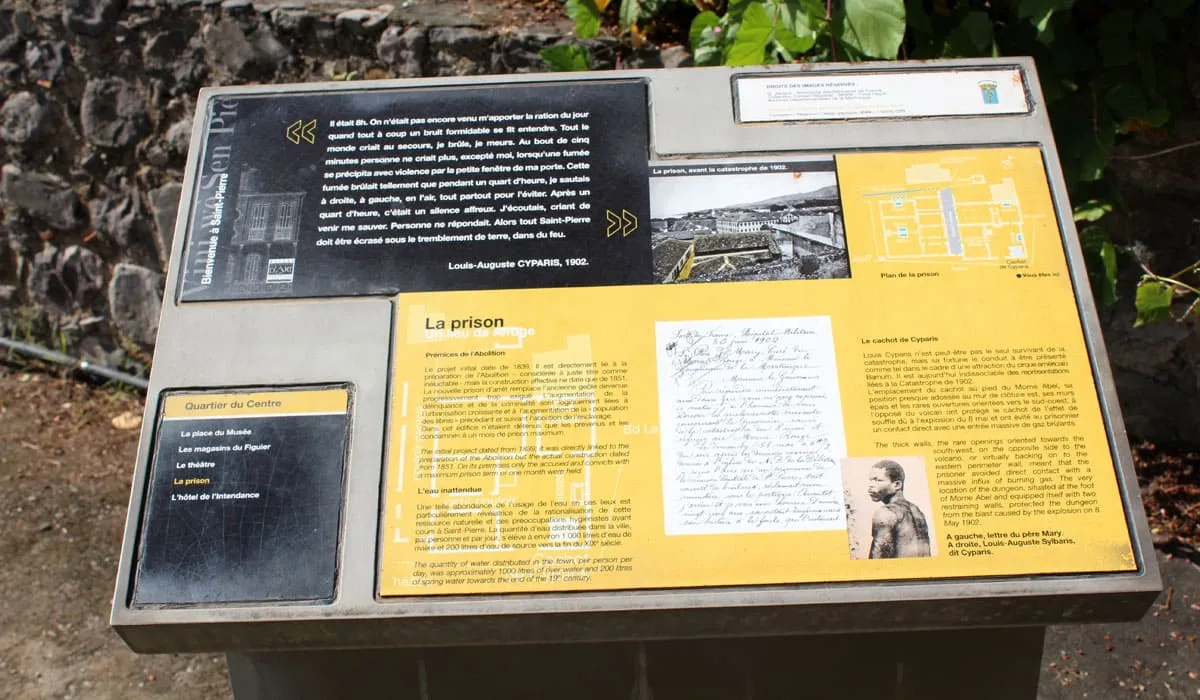
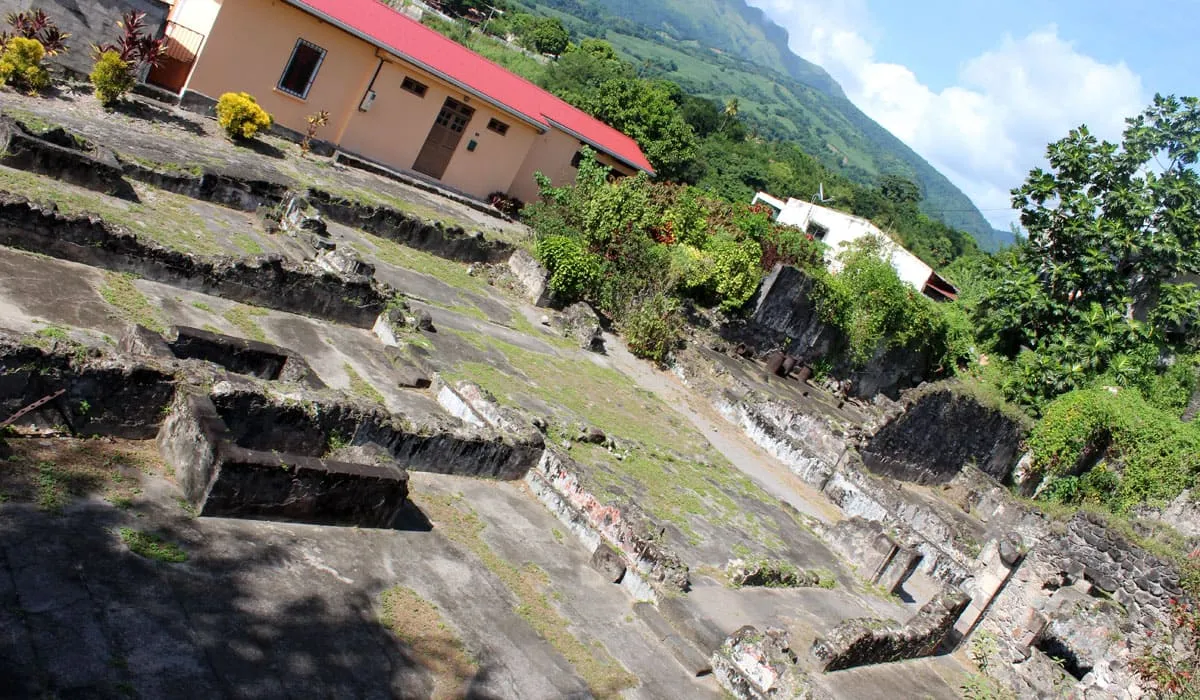
Over the years, the town of Saint-Pierre has retained traces of the terrible eruption of Mount Pelee in 1902. The entire town destroyed by the volcano was partly rebuilt on the ruins left behind.

These ruins have either served as the foundations of houses or are still visible in today's landscape. Visiting the ruins of Saint-Pierre is not easy, as there is no real signposting and the local population is not necessarily familiar with the symbols of the ruins.

If you want to visit, ask the elders you meet along the way, who are generally more familiar with the history of the place. Alternatively, visit the local tourist office, where you'll find a map showing the history of the ruins.

If you'd like to visit, ask the elders you meet along the way, as they're usually more familiar with the history of the area. Alternatively, visit the local tourist office, where you'll find a map showing the history of the ruins.

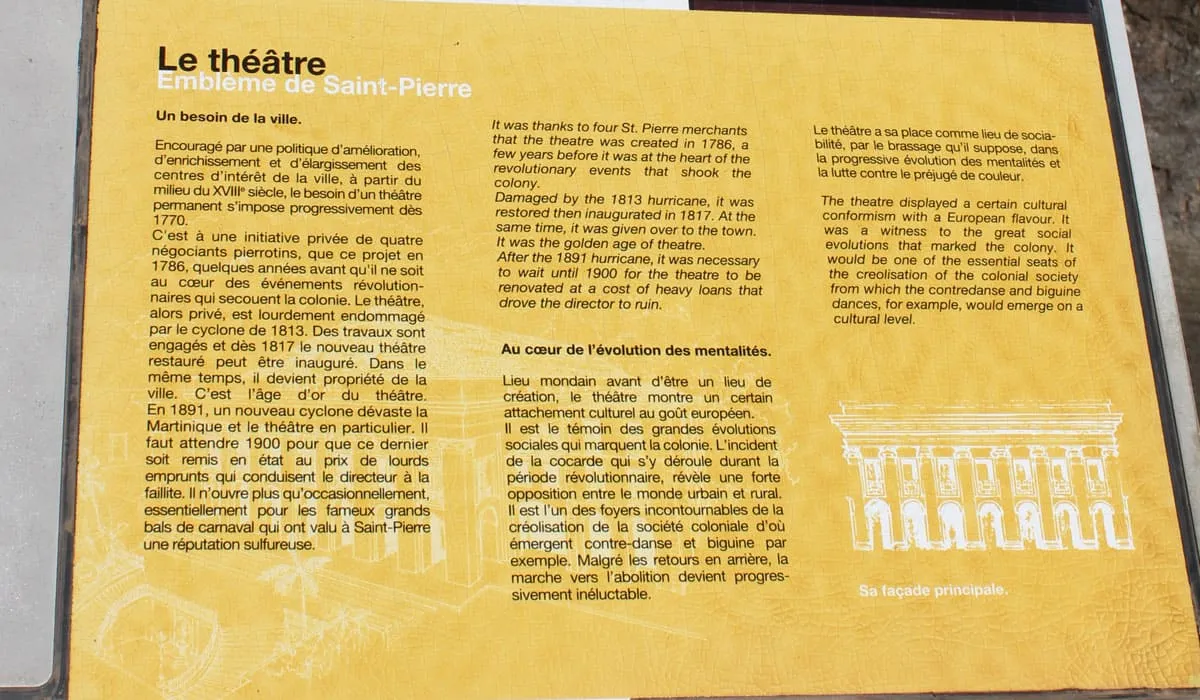
Among the ruins, don't miss symbolic places such as the Cyparis dungeon (a prisoner who survived the eruption), the ruins of the old theater, the fort's church, the bridge over the Roxelane (which withstood the eruption), the ruins of the Fig Tree (former warehouses and stores) ,or the "Monte au Ciel" street.

Photo gallery
Ruins of Saint-Pierre
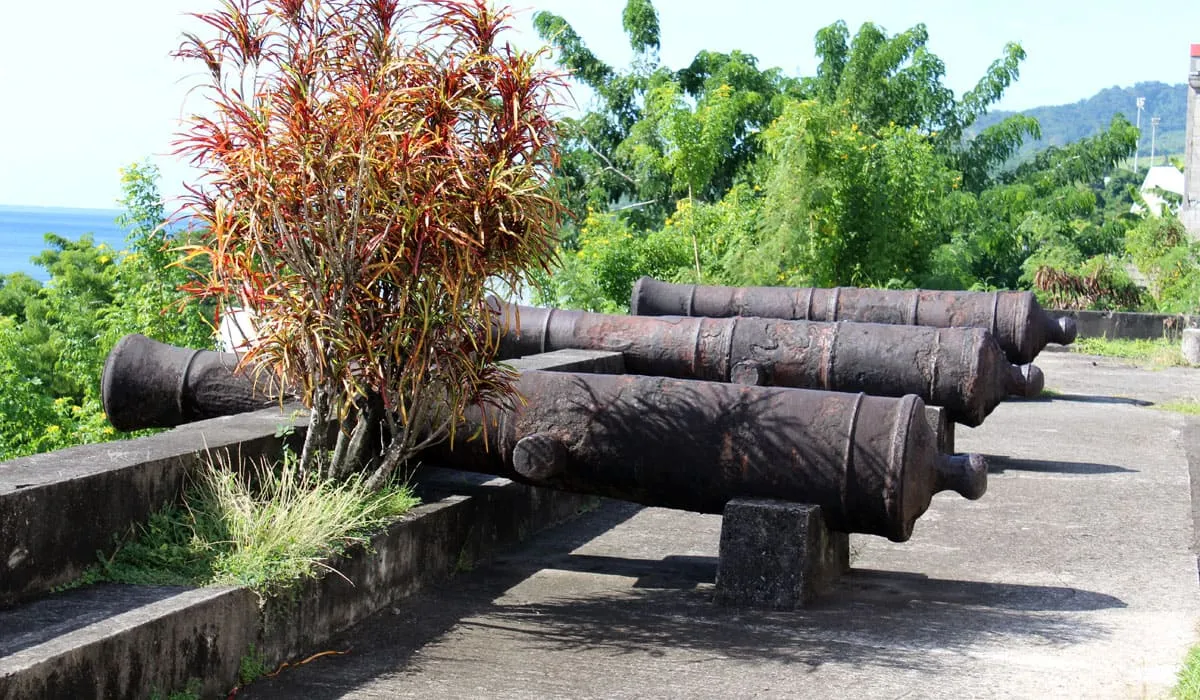
Cannons from the old fort
Entrance to the ruins of Saint-Pierre
Site information sign
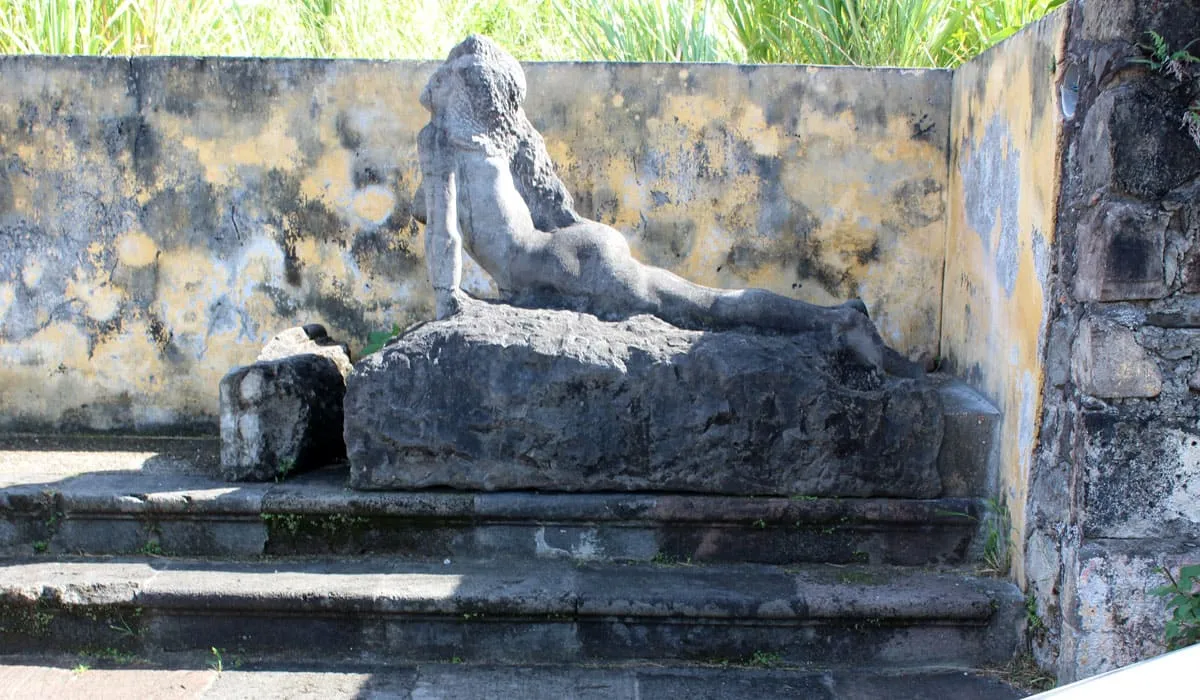
Little Mermaid from the old Saint-Pierre theatre
Street in front of the ruins
Site information sign
Cannons from the old fort
Ruins of Saint-Pierre

Martinique Zoo

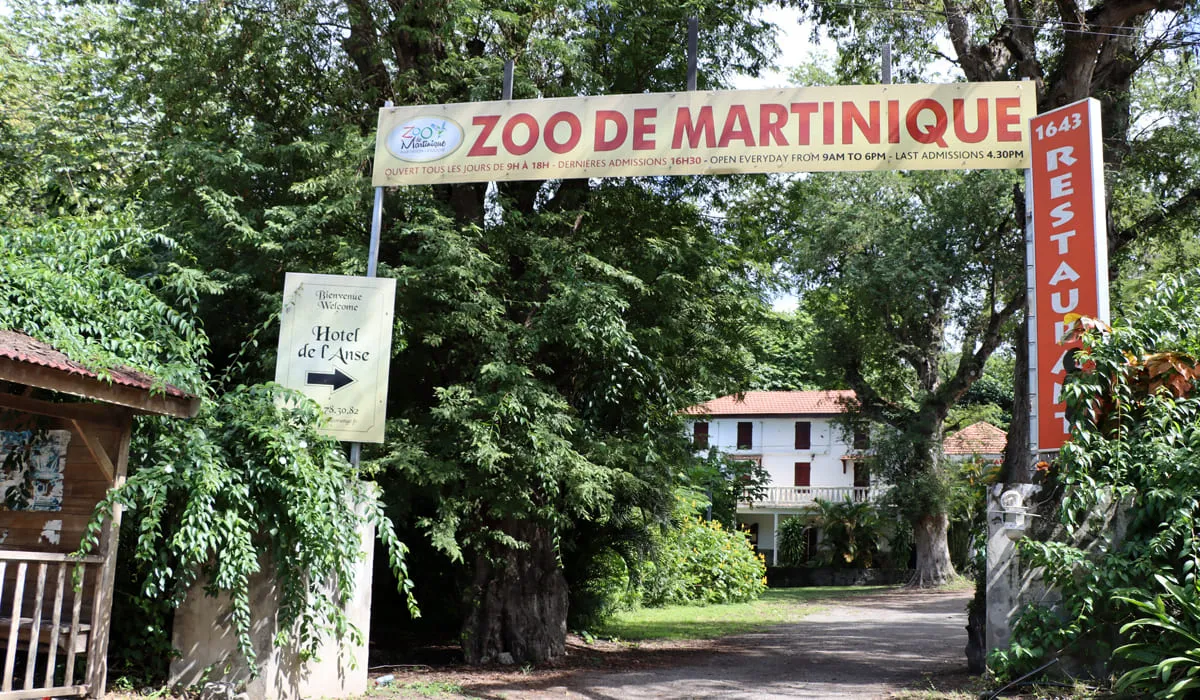
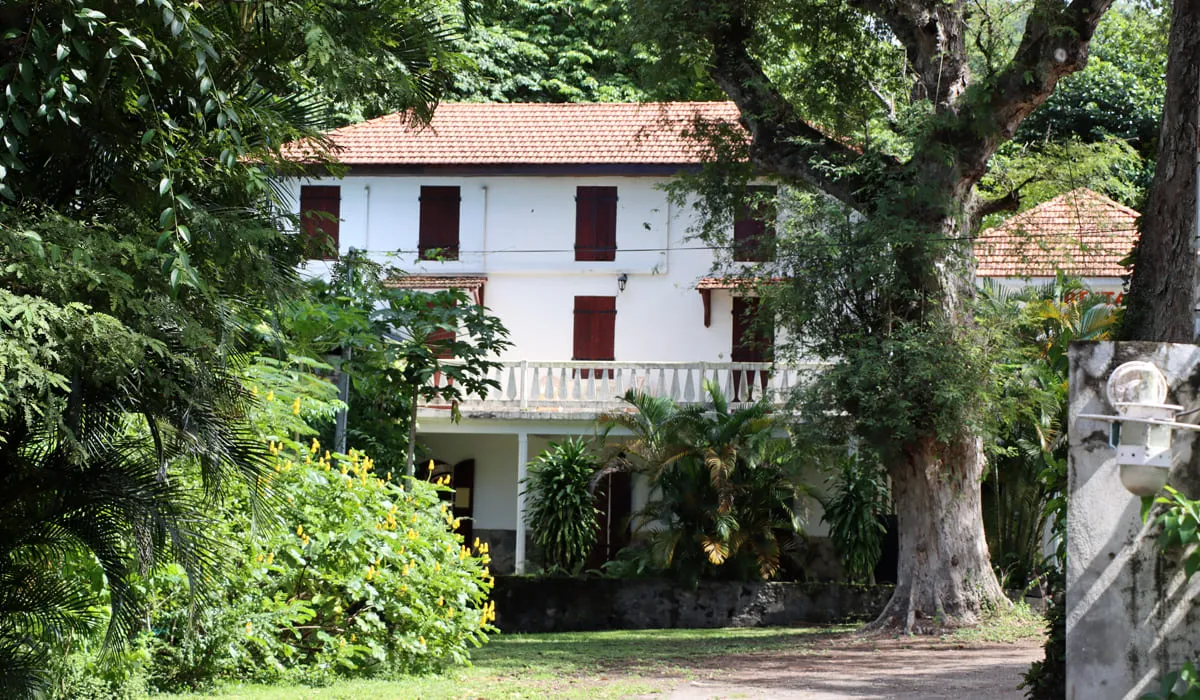
Located near the beach Anse Turin in the Habitation Latouche, founded in 1643, that is already home to Botanical garden and Jardin des Papillons (butterfly Garden), the Martinique Zoo opened on July 17, 2014.

Hundreds of animals like monkeys, jaguars, pumas, lorikeets, great anteater, raccoons are already present or planned inhabit these places for your viewing pleasure. In the midst of the ruins of the house renovated Latouche, dated 1643, that visitors can walk through a didactic trail to discover the animals and why not interact with them ? About 1 hour and a half is necessary to ride and have a family moment.

Photo gallery
Entrée du zoo de Martinique

Maison du Bagnard

The Maison du Bagnard is a house built by Médard Aribot, a Martiniquan sculptor, upon his return from the penal colony in 1960. He is said to have lived there until his death in 1973. It is an ornamented wooden house, painted white and blue, facing the Rocher du Diamant.

Médard Aribot was a renowned and talented sculptor. He was reportedly sentenced to life at the penal colony. Several explanations are given for the reasons behind his conviction. According to local accounts, the cause was his sculpture of Colonel Coppens, which was brandished and mocked by the crowd during an electoral riot in 1925.

Colonel Coppens, whose real name was Maurice de Coppens, was the owner of a sugar factory in Le Diamant who, in 1925, preferred to have the crowd fired upon rather than risk losing the election. Several people were killed, including Colonel Coppens himself during the riot.

Another “official” explanation attributes Aribot’s conviction to numerous thefts he was said to have committed. After several years in the penal colony in French Guiana, he was released in 1945 following the definitive closure of the penal camps. He returned to Martinique in 1953 and is believed to have lived in the Maison du Bagnard until his death in 1973.

The Maison du Bagnard will soon undergo renovation after winning a fundraising campaign dedicated to its restoration. It is listed as a Historic Monument.

Photo gallery
Maison du Bagnard
Maison du Bagnard
Maison du Bagnard
Maison du Bagnard

Tombeau des Caraïbes

Located at 5 km north of Saint-Pierre, the Tombeau des Caraïbes (Tomb of the Carib Indian) owes its name to the fact that according to legend, the Carib Indian would have preferred to skip past this cliff and commit suicide rather than be enslaved by the French.

Nearby is the Mémorial du Tombeau des Caraïbes. The sculptor Chantal Hippocrate was inspired by this legend and sculpted 34 totems of the number of municipalities in Martinique and placed them around a rock painted in white. On these totems, poetic dedications were inscribed.

Photo gallery
Statuette du tombeau des Caraïbes