
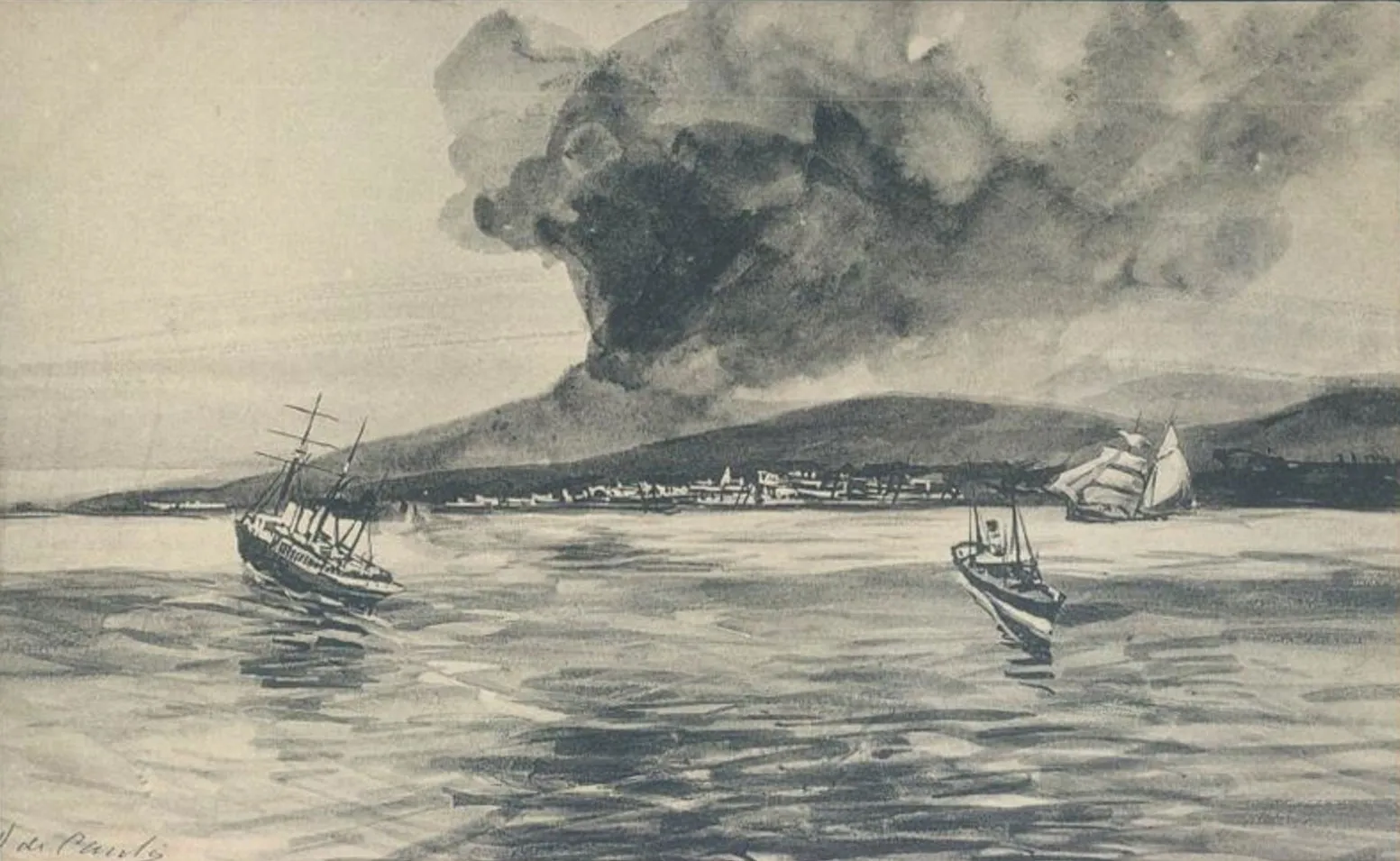
If you had been in the city on the morning of May 8, 1902, you would most likely have ignored the warnings of Mount Pelée's eruption.
Who could have believed that Little Paris, or the Paris of the Antilles, this dynamic replica of the French capital, this colonial power that had developed thanks to its port, would be in ruins by midday?
The same was true of its 28,000 inhabitants. None of them thought it possible, nor did they imagine the scale of the disaster.
The story of Saint-Pierre is similar to that of the sinking of the Titanic, which took place 12 years after the eruption of Mount Pelée. Let's take a look back at the history of Saint-Pierre, the unsinkable city that was reduced to ruins on the evening of May 8, 1902.
Martinique was populated by Caribs when Christopher Columbus landed on June 15, 1502. A century later, when French colonists led by Pierre Belain d'Esnambuc landed in Martinique on September 1, 1635, it was these same Caribs who were still inhabiting the island.
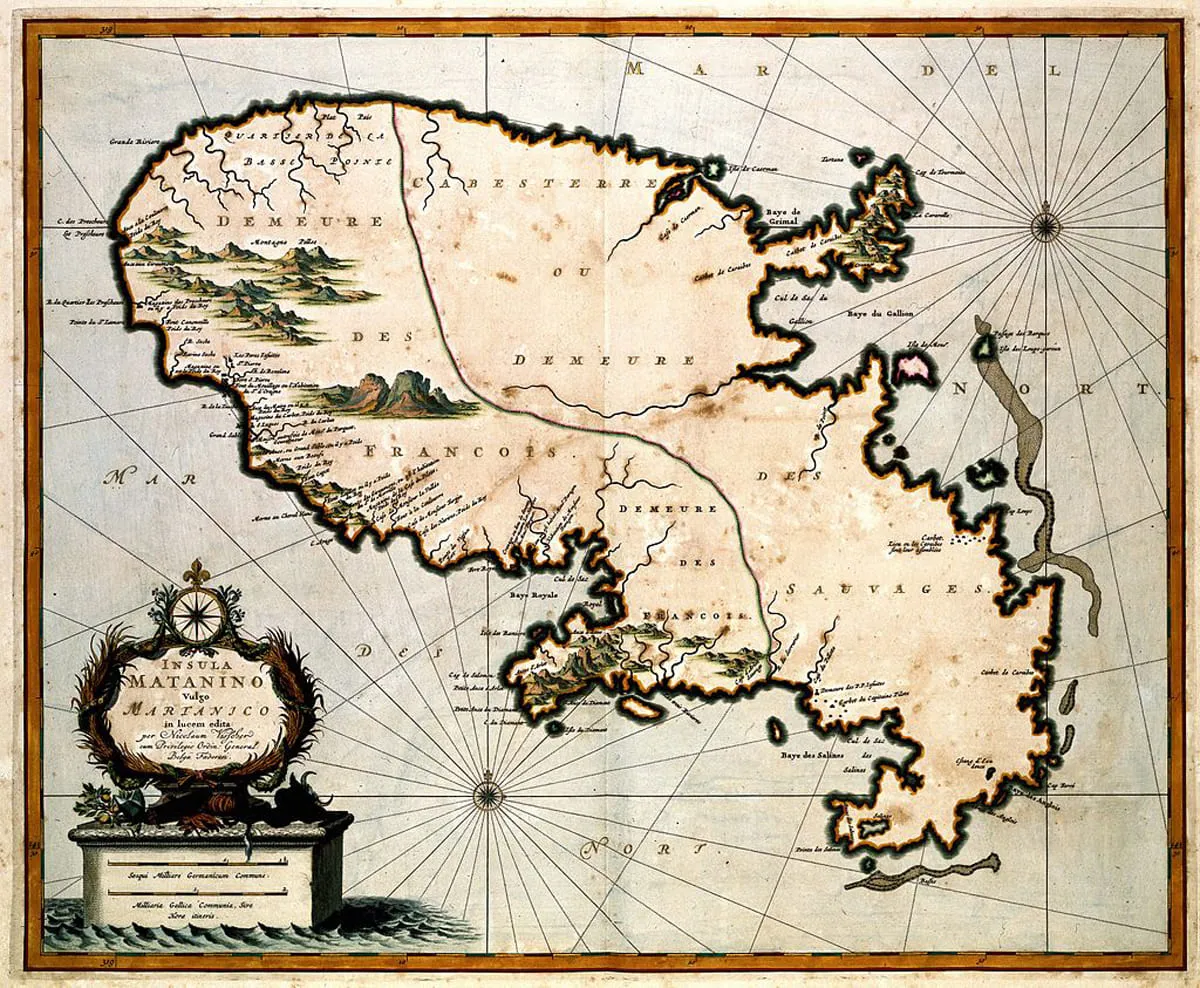
The French settled at the foot of Mount Pelée, in an area stretching as far as Carbet. They built a fort to protect themselves from external threats (the Dutch, English, and Spanish, who coveted and fought over the islands in the area) and internal threats (the Caribbean people were hostile to these new arrivals from Europe). They named the fort Saint-Pierre, after the upcoming feast day.
This fort would later be used twice to attack the Caribs, who threatened the relative harmony that reigned on the island. Martinique was divided into two parts of almost equal size, with the colonists settling on the Caribbean coast and the Caribs settling on the Atlantic coast (see map).
Little by little, Saint-Pierre was built. Houses, where the colonists lived, were constructed, and the church in the Fort district was built to provide a place of worship on site. Jesuits were called in to preserve Christian traditions and teach Christian precepts to the unconverted inhabitants, the Caribs.
A convent was built to house them next to the Fort Church, which was attended by the colonists.
A hospital was also built. The land was divided among the colonists, who grew various crops for export (coffee, cocoa, sugar cane) or barter (tobacco, initially a bartering commodity, then a crop for export).
European settlers were encouraged to come and settle in Martinique. Either they had sufficient financial resources and could buy a plot of land, or they came as indentured servants to work on existing plantations for a period of three years.
At the end of their contract, they had three options: the first was to sign up for another three years, the second was to return to mainland France free of charge, and the last was to purchase a plot of land measuring approximately 25 hectares that they could also farm. Many chose the latter option.
The Saint-Pierre region quickly became the richest area in Martinique thanks to the sugar and slave trade. A cargo port was built to accommodate ships that would load products for export and unload products from mainland France and slaves from Africa. Ships from all over the world landed and loaded products manufactured in Martinique.
From mainland France in particular came food products such as cheese, wine, peas, etc., building materials, and men who came either to offer their expertise in certain fields or to work on the plantations. Many businesses sprang up in the city, which became the economic and social capital of Martinique and, on an even larger scale, the capital of all the Antilles.