History
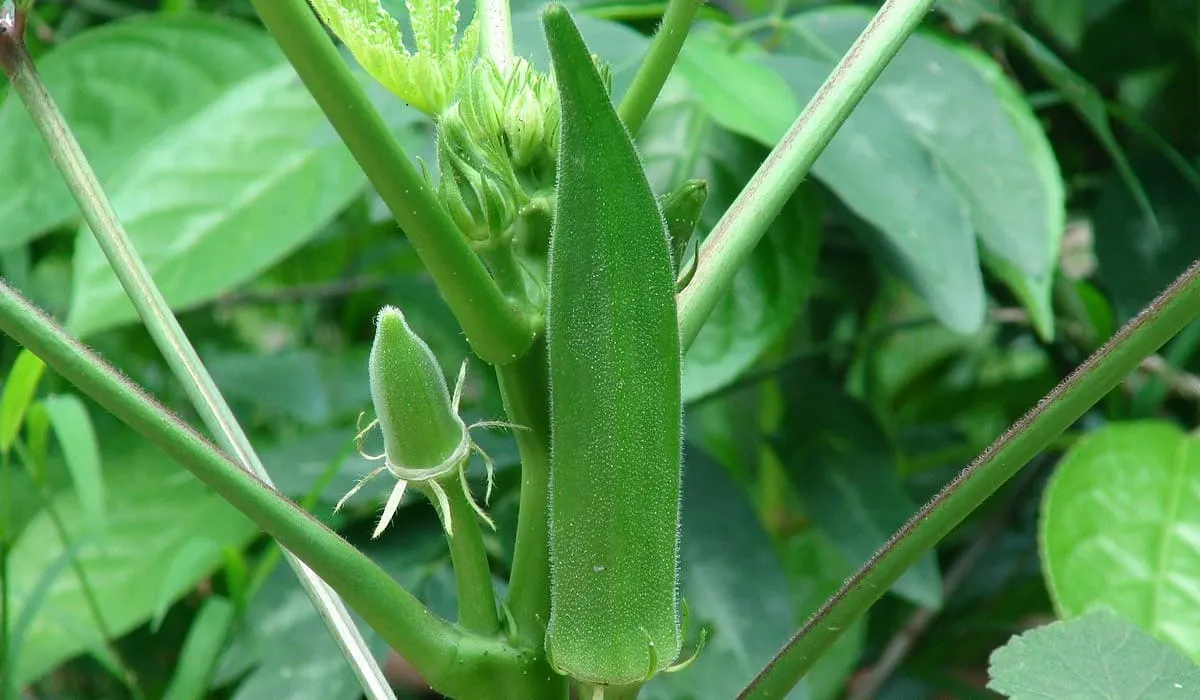
Okra, whose scientific name is Abelmoschus esculentus, is a vegetable from the Malvaceae family, produced by an herbaceous plant native to Africa. It is believed to have arrived in the Americas and the Caribbean during the period of slavery, transported on slave ships from Africa. For a long time, it remained a food reserved exclusively for enslaved people. Today, it is found throughout the tropics.
Varieties
There are 15 varieties of okra worldwide (Clemson Spinless, Puso, Pop 12, Red Rockek, Paysan, Hire, Indiana, Okra, Emerald, Essoumtem, F1 Volta, F1 Madison, F1 Lima, F1 Kirène, F1 Sahari).
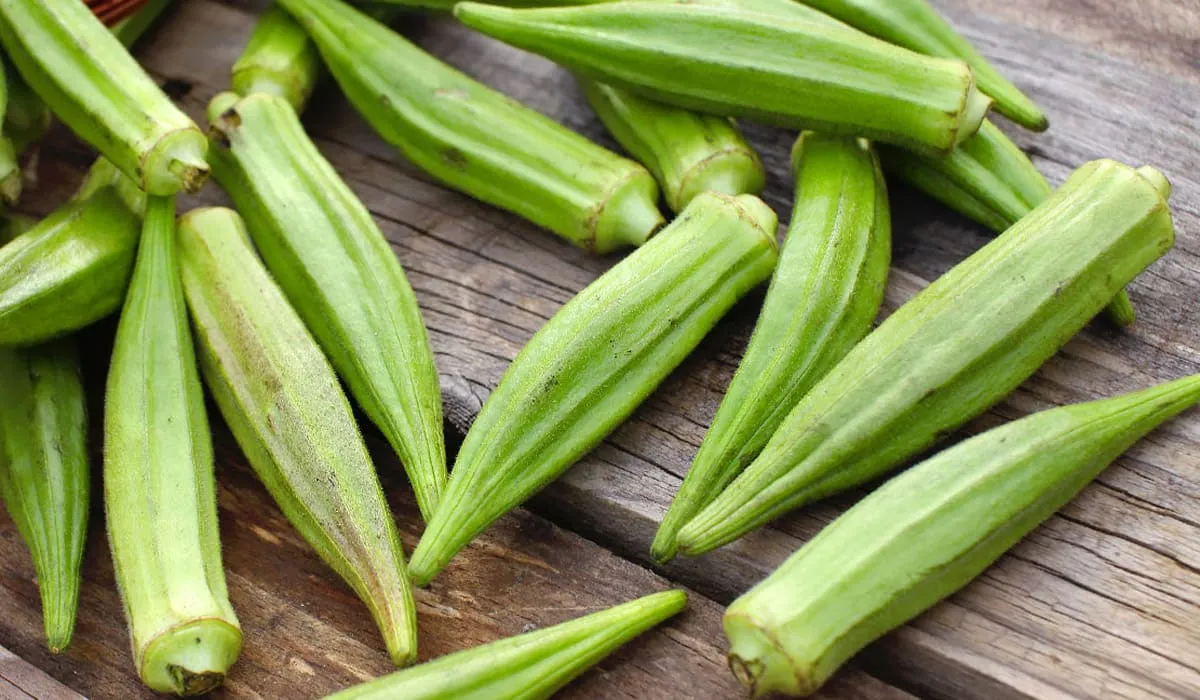
In Martinique, the main varieties grown are Emerald (with smooth, non‑ribbed pods) and Okra.
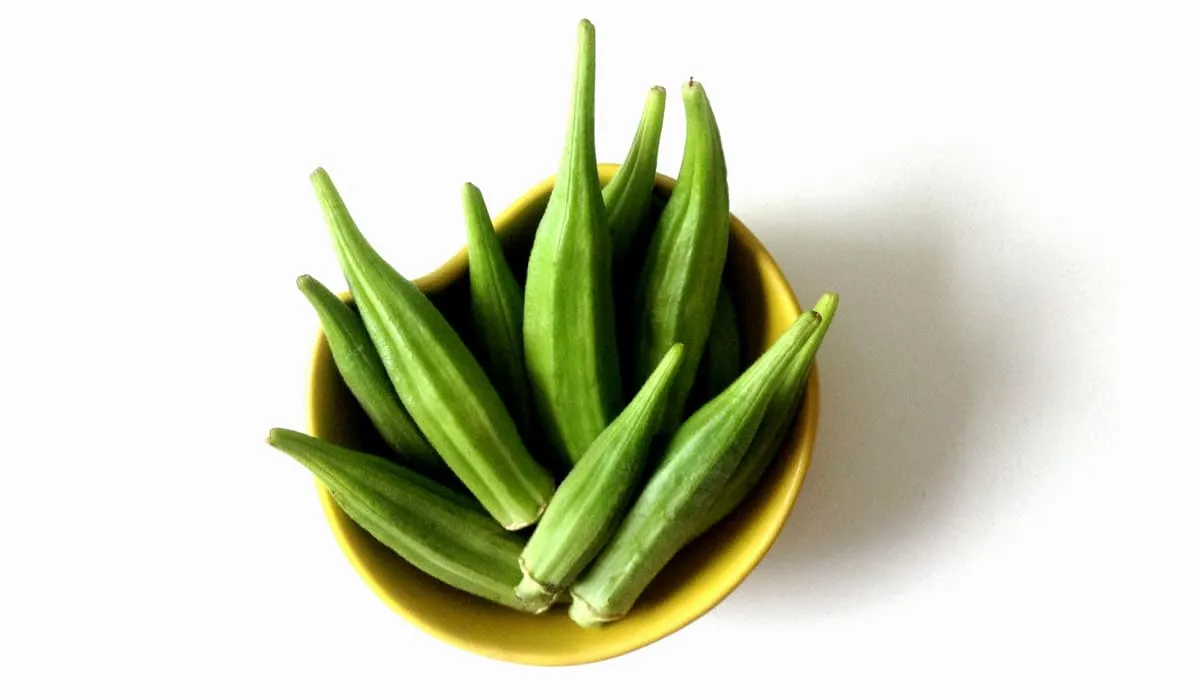
The fruit is 8 to 25 cm long, green, angular, elongated, pointed, and slightly hairy.
Medicinal properties
When cooked, okra becomes slimy, but this mucilage helps promote intestinal transit. It is also anti‑inflammatory, antiseptic, laxative, and anti‑diabetic. It is said to help treat urinary incontinence and to support digestion and childbirth.
Its leaves, fruits, and seeds are used to treat various ailments and to increase blood volume.
Okra is also used to reduce fever: simply roast the dry seeds, grind them into a powder, boil for a few minutes, and give children one to three tablespoons.
For constipation, cut fresh okra into small slippery pieces, boil it, and drink the preparation.
Okra can be planted and harvested year‑round. There is no true season.
Uses
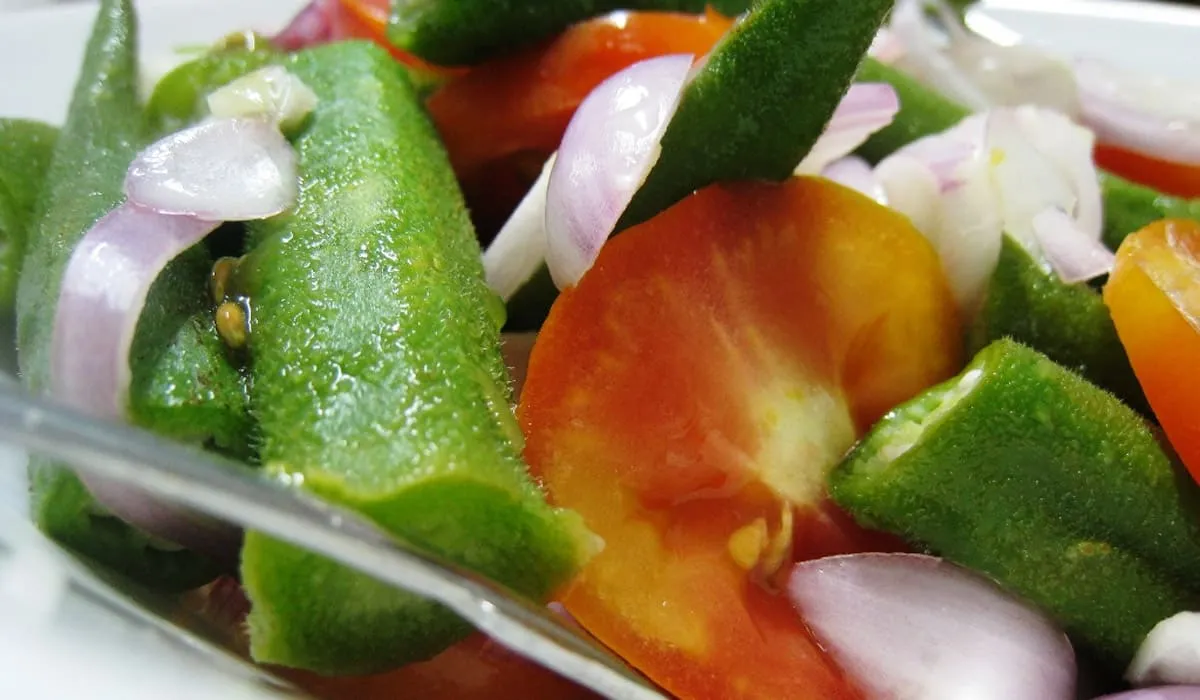
Okra can be eaten raw or cooked. It is used both as a vegetable and as a condiment. It pairs very well with tomatoes, onions, peppers, and eggplant. In Martinique, it is mostly eaten cooked.
It is also eaten sliced and seasoned with vinaigrette. Okra can be used to thicken soups or stews.
It can also be cut into rounds and added to sauces, especially chicken sauces.