History
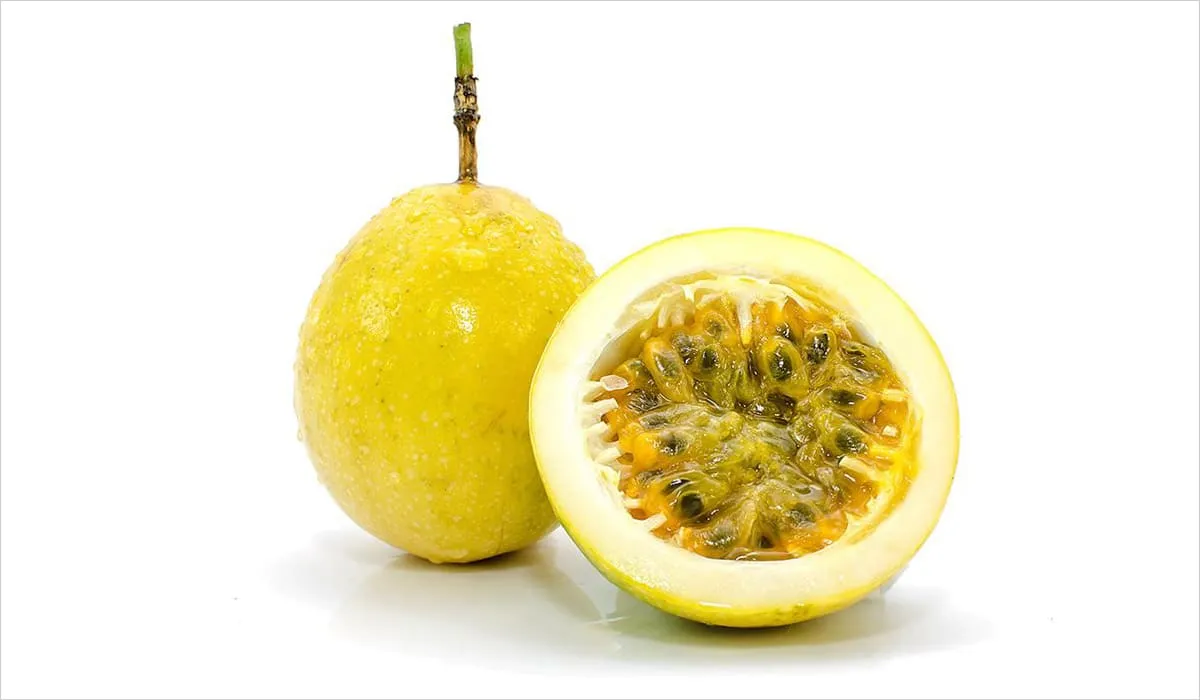
Passion fruit, also known as “passion fruit,” “grenadilla,” or “pomme goyave,” has the scientific name Passiflora edulis forma flavicarpa and is believed to originate from South America, particularly southern Brazil.
It may have been brought to the island by the Arawaks or the Caribs at an unknown period. One species, pomme liane, is endemic to the Lesser Antilles and therefore would not have been introduced to the island.
Varieties
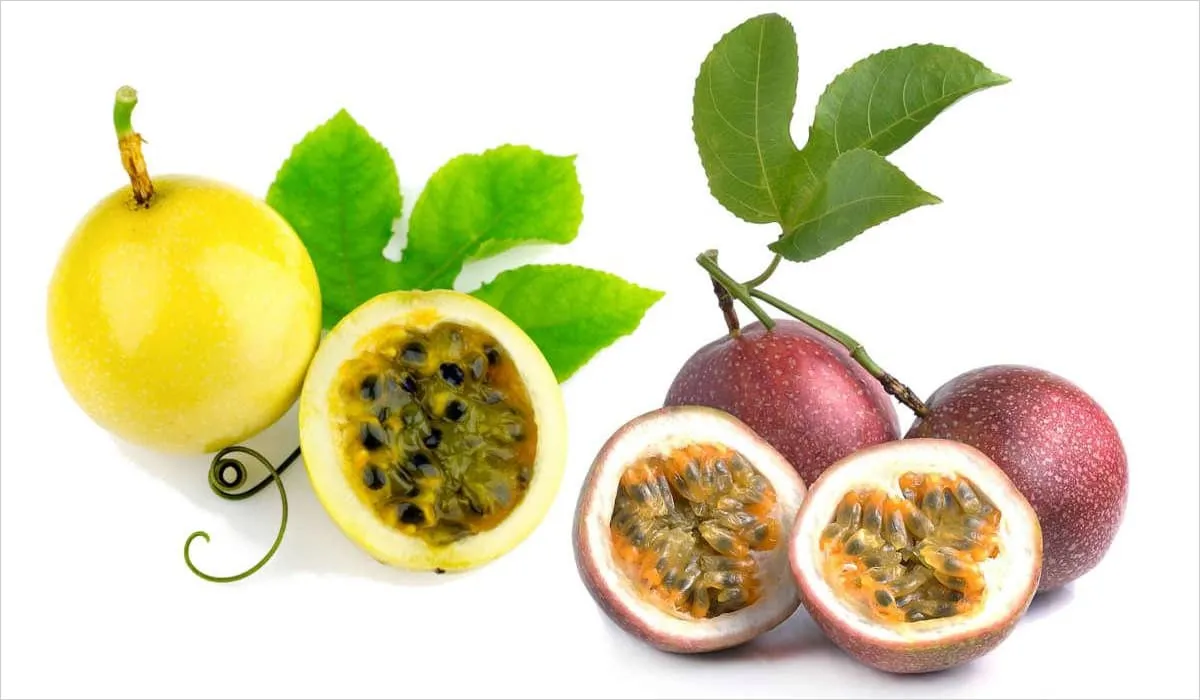
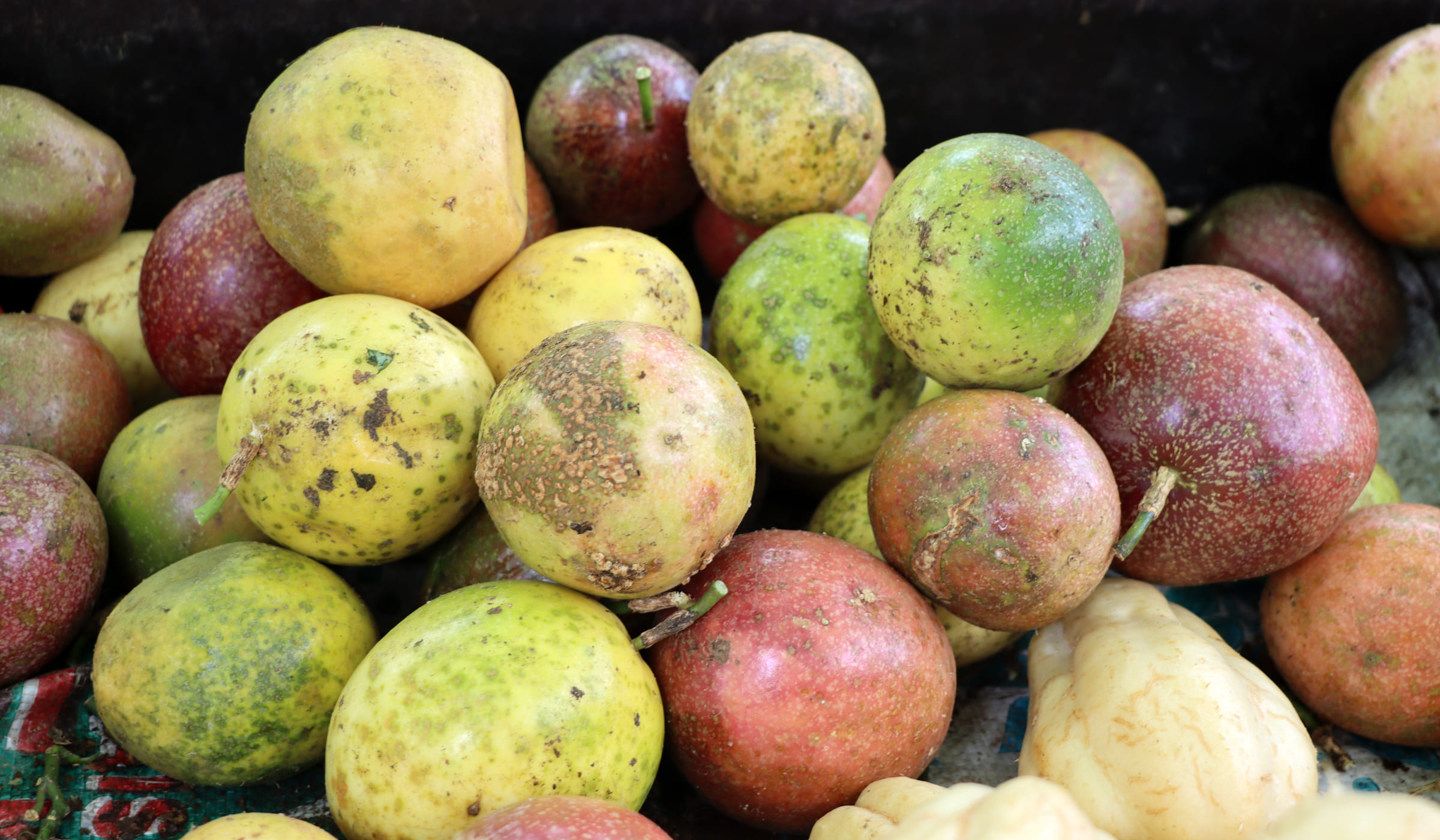
There are several varieties of passion fruit around the world, and various types are found in Martinique:
- Purple passion fruit (Passiflora edulis)
Native to South America and the Lesser Antilles, it produces matte yellow‑orange fruits with smooth green or sometimes yellow skin, slightly fuzzy and fairly soft. It is the most common variety on the island. Its aroma is very distinctive. It is eaten raw, in juice, syrup, punch, or candied. - Sweet calabash (Passiflora maliformis)
Native to northern South America, it is cultivated for its light yellow fruits with smooth, thin, and very hard skin. The yellowish, acidic, and fragrant pulp produces a drink with a grape‑like flavor. - Giant grenadilla (Passiflora quadrangularis)
Native to South or Central America, it was introduced into the French West Indies toward the end of the 19th century. It is recognizable by its winged, quadrangular stem and its very large oval fruit with thick skin, pale green turning yellow or even brown when ripe. Its pulp is used to make syrups and jams. The unripe fruit is cooked like a vegetable and has a cucumber‑like taste.
The plant grows as a vine with fragrant flowers known as “passion flowers.”
Medicinal properties
Passion fruit is rich in antioxidants. It is believed to help reduce asthma symptoms.
Uses
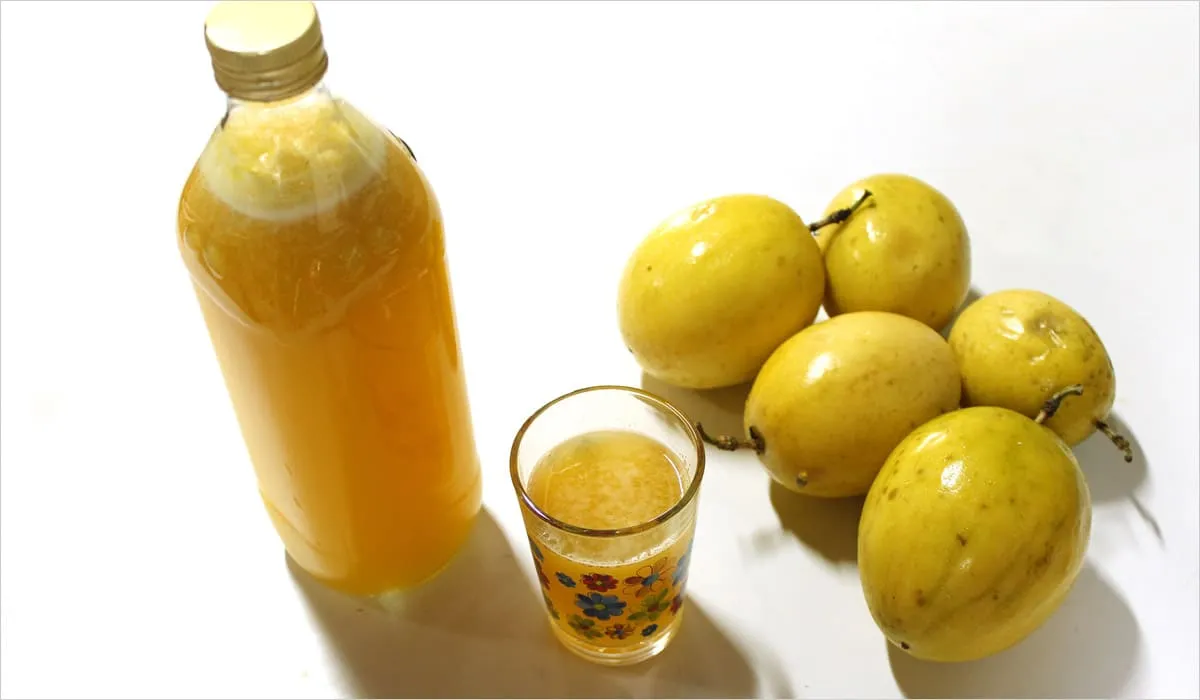
In Martinique, it is commonly found as juice or jam. Passion fruit is enjoyed naturally like a soft‑boiled egg: cut in half and eaten with a small spoon. Its flavor, both tangy and sweet, pairs well with fish dishes as well as fruit salads. Passion fruit is not eaten cooked.
The pulp is used to make syrups, jams, punches, infused rums, and various desserts such as panna cotta. The unripe fruit, when cooked as a vegetable, tastes like cucumber.