

A constantly changing political scene
Administratively, Martinique was divided into two districts, nine cantons, and 31 municipalities. It was administered by a governor representing the French government in the colony. His duties were numerous and important. He was assisted by a secretary general, a general producer, and a senior commander of the troops.
Two chambers were responsible for the smooth running of the colony: the General Council, which played a key role, and the Privy Council. The General Council played a very important role because it decided on the development of the colony and made important decisions. The Privy Council had only a simple legal role (consultation in the event of administrative disputes).
The political sphere was very turbulent at the time, and election campaigns were sometimes violent, involving embezzlement, fraud, fistfights, and duels between candidates. It was dominated at the time by the Radical Republicans, generally mulattoes cemented by the Schœlcherist heritage, and the Martinique Progressive Republican Party or the New Party led by Fernand Clerc, a powerful Béké factory owner, which signaled the return of the Creole whites to the political arena they had deserted since the restoration of the Republic.
By rallying a few mulattoes such as Osman Duquesnay, Clerc broke up the “Front des Républicains de couleur” (Front of Colored Republicans), which was divided between Deprogists and Hurardists, and took advantage of this to make and break alliances during various elections. François Clerc and his allies would enjoy significant victories in the municipal elections of 1904 and 1908, the latter of which would see the assassination of the Mayor of Fort-de-France, Antoine Siger.
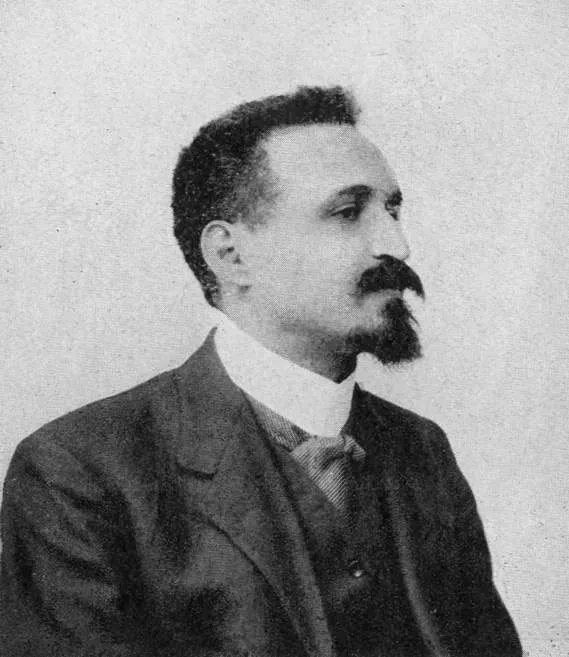
A third political force emerged, led by Joseph Lagrosillière, a mulatto lawyer who represented the Socialists in the city of Saint-Pierre before leaving for Saint-Pierre-et-Miquelon for four years. In 1906, he returned to Martinique and placed the Socialist Party in a dominant position on the local political scene.
Later, he would seal an alliance with the Radicals, who were then losing momentum, under the banner of the Entente Républicaine. This coalition would win the 1910 legislative elections with the victory of Victor Sévère in the south and Joseph Lagrosillière in the north.
This Entente was not to last, as each party that made it up felt that the alliance benefited one or the other more. These dissensions came to light in 1912, when Victor Sévère refused to join forces for the 1912 elections, while Amédée Knight, former mayor of Saint-Pierre, maintained the Entente. This split led to another political bombshell when Fernand Clerc joined Victor Sévère.
They would thus share the spoils in the 1914 legislative elections. Joseph Lagrosillère remained in the Entente, his main concern being to reestablish relations with the SFIO. In July 1913, he resigned from their parliamentary group in protest against their lack of support for “the ideas of emancipation and gradual assimilation of the indigenous peoples of the colonies, which are the very driving force of revolutionary France.” Since 1874, Martinique and Guadeloupe had been fighting to change their status from colonies to French departments.
Military context
On the Martinique side, a colonial infantry company, an artillery battery, and auxiliary services were responsible for defending the island. The troops were under the command of a colonial infantry lieutenant colonel, senior commander of the Antilles group of troops, who had under his command the director of health services, the director of artillery and military sub-intendant, and the director of logistics.
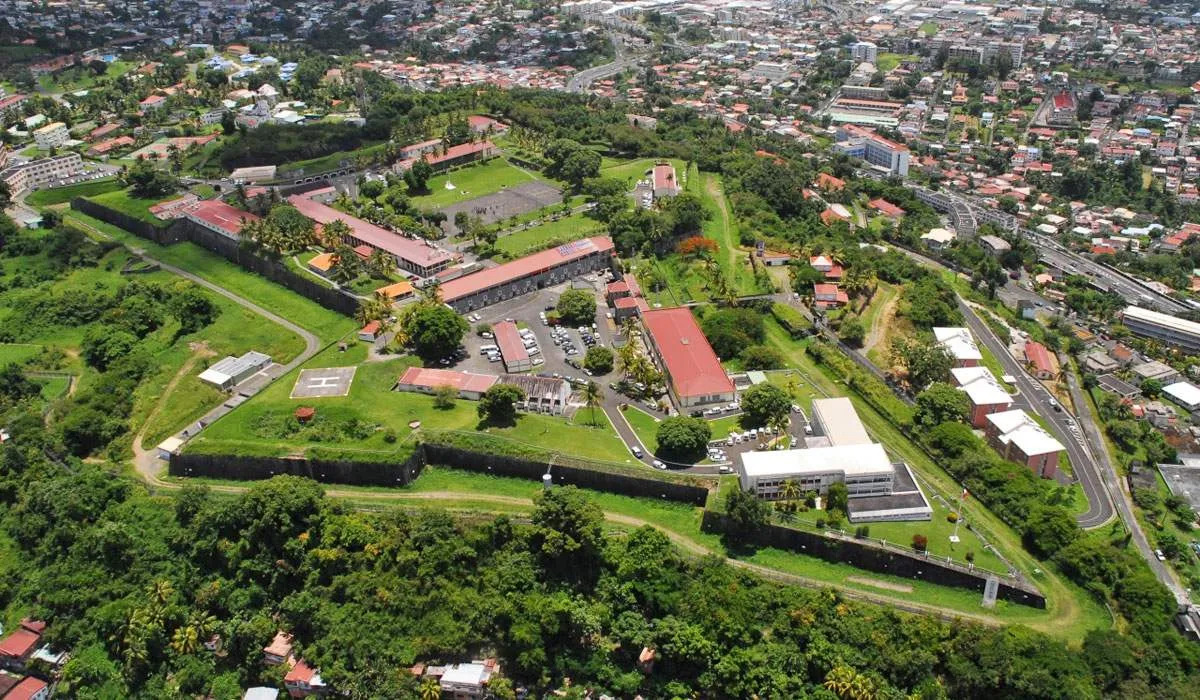
The island had numerous defensive positions, including several forts equipped with cannons, such as Fort Saint-Louis, Fort Desaix (photo above), Fort Tartension, and batteries at Pointe des Nègres and Pointe de la Vierge.
The presence of these quasi-metropolitan contingents in the colony served to accentuate France's presence. They were there to maintain order and ensure the safety of property and people. The reason why so few Martinicans served in the army was simply because military service did not exist in the colonies, despite strong demands from politicians. The latter had always demanded the right to perform military service and pay the blood tax, symbols of full assimilation.
When the military laws of 1889 to 1912, the numerous military laws that had come into being in metropolitan France were not applied to the colonies for financial and organizational reasons. The other major reason was that the Békés strongly opposed them, fearing for their safety and rejecting the idea of sharing barracks with Black people. Economically, too, because military service would deprive them of an important labor force, the immigration of “Koulis” had been stopped in 1885.
The reason why Martinicans were so keen to do their military service was because they saw the army as a school of equality where everyone, regardless of skin color, origin, or wealth, could be subject to the same discipline, bound by the same obligations, and treated in the same way. Furthermore, military service in the colonies also meant recognizing overseas citizens as full French citizens and part of the French nation.
For politicians, refusing to allow Martinicans to shed their blood for the Motherland meant that France did not consider them to be true French citizens.