Observatoire du Morne des Cadets
The Montagne Pelée Volcanological Observatory, located on Morne des Cadets, is responsible for monitoring volcanic and seismic activity and conducting…

Fonds-Saint-Denis, the smallest commune in Martinique, is a natural gem nestled in the heights of the Pitons du Carbet. Known for its pure air, vibrant flowers, and hiking trails like the Canal de Beauregard and Saut Gendarme, it welcomed survivors of the 1902 eruption. Beyond these two sites, several quieter rivers meander through the area. An agricultural commune, its residents grow a variety of fruits and vegetables amid lush greenery.
Fonds-Saint-Denis is a small inland commune in the north of Martinique. It’s likely one of the island’s communes with the most neighboring municipalities. Just look: to the north, it borders Saint-Pierre and Le Morne-Rouge; to the east, Marigot, Le Gros-Morne, and Saint-Joseph; to the south, Fort-de-France and Schœlcher; and to the west, Le Carbet and Le Morne-Vert!
Originally, Fonds-Saint-Denis was a district of Saint-Pierre. It’s believed that the first windmill in Martinique was built on the land that is now Fonds-Saint-Denis.
On February 17, 1845, Abbé Goux, then parish priest of Le Carbet, consecrated a small chapel dedicated to Saint Denis. Starting in 1854, the chapel—now much larger—received its own priest, Abbé Clausade, in 1861. After his death eight years later, several priests succeeded him until the area was officially established as a commune by the law of March 14, 1888.
The town hall was founded, and the first mayor was Jean-Marie Emmanuel de Rozan, who served until 1892. Pierre Pastour succeeded him and remained in office until 1907. At the turn of the century, the commune had nearly 1,500 inhabitants—more than today (640)!
In 1902, Odilon Darsières, then owner of the Chabert estate (his country residence), witnessed the eruption of Mount Pelée. Many residents fled Fonds-Saint-Denis after the second eruption on August 30, 1902. They sought refuge in Fort-de-France, settling in areas like La Médaille, Tivoli, and Colson. These neighborhoods were less populated and close to their original home. Despite limited resources and the sorrow of leaving behind all their belongings, they managed to build modest homes.
After the eruption of Mount Pelée, Fonds-Saint-Denis never regained its former population. It remained overshadowed by Saint-Pierre and Le Carbet.
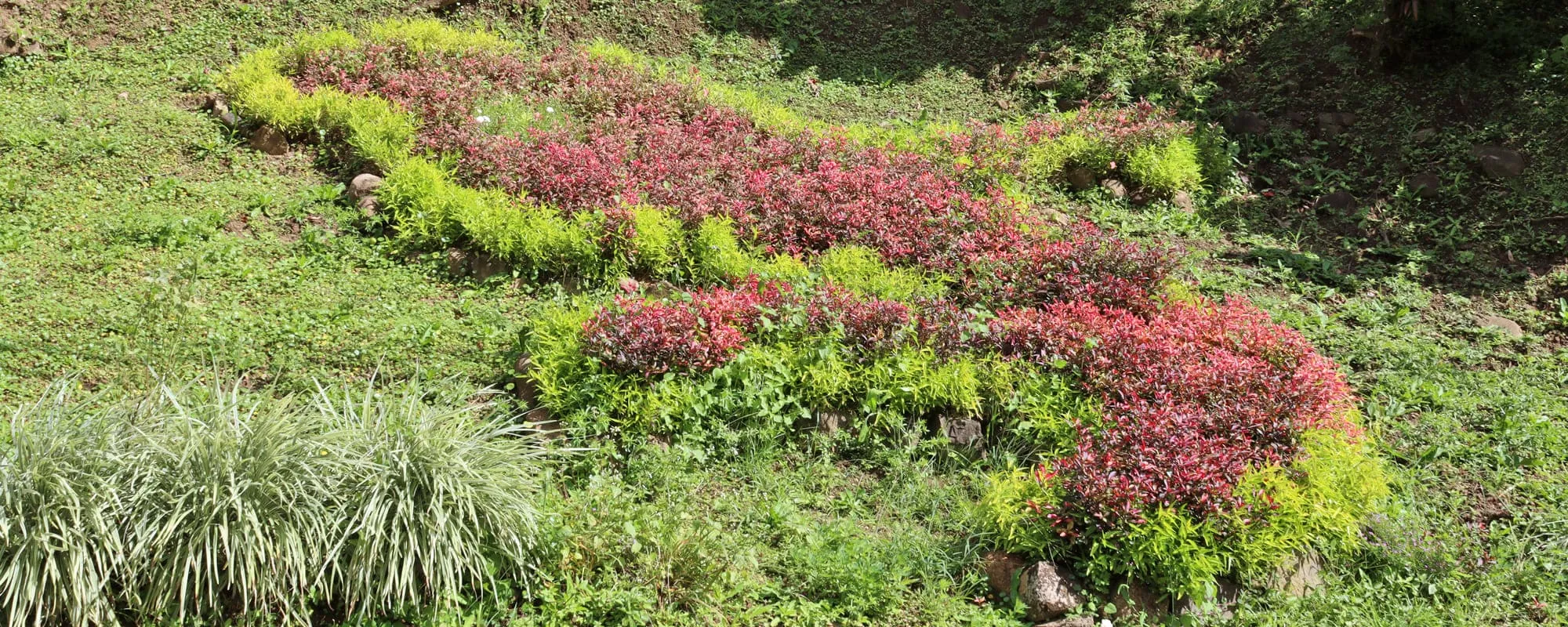
Today, Fonds-Saint-Denis is considered one of the most flower-filled communes on the island.
Alongside tourism, tropical agriculture is the main activity in Fonds-Saint-Denis. The plantations are teeming with birds—cicis, quiscales, hummingbirds—and feature:
The main districts of the commune are Beauséjour, Dorzon, La Croix, La Ferrey, Mannavit, Mont Béni, and Saint James.

The Montagne Pelée Volcanological Observatory, located on Morne des Cadets, is responsible for monitoring volcanic and seismic activity and conducting…

The “Saut Gendarme” waterfall owes its name either to the fact that it was a popular spot for gendarmes riding up to Saint-Pierre to cool off and water their horses, or to the fall of…
©AZMartinique.com 2026 all rights reserved