
• Anse Turin

    Le Carbet

    Presentation

    How can you resist the charm of Le Carbet during a stroll along Anse Turin beach? Paul Gauguin himself fell in love with it, leaving behind lasting memories of the island. With its view of Mount Pelée, its unique gray sand, and its proximity to Saint-Pierre, this beach is a must-see. Le Carbet also charms visitors with its Neisson distillery and Habitation Latouche, home to the Martinique Zoo—all treasures to discover in this charming town.

  • History

    The commune of Le Carbet is located on the Caribbean coast in the north of Martinique. To the south of Carbet lies the commune of Bellefontaine, to the east Morne-Vert and Fonds-Saint-Denis, and the north Saint-Pierre.

    Le Carbet owes its name to the large huts where the Caribbean Indians used to gather. Today, the carbet is a large hut, a model of collective housing in the West Indies.

    Le Carbet is the part of Martinique that saw the island go from being unknown on European maritime maps to becoming a Caribbean island. It was in Le Carbet, on June 15, 1502, that Christopher Columbus is said to have landed during his fourth and final voyage to the “West Indies.”

    It was also in Saint-Pierre that the buccaneer Pierre-Belain d'Esnambuc took possession of the island with a hundred men. He placed his nephew, Du Parquet, there, who built a brick house near the river, and a chapel dedicated to Saint James was consecrated around 1645.

    Between 1666 and 1667, the English made several attempts to capture Martinique via the commune of Carbet. It must be said that the rapid development of the town of Saint-Pierre aroused enormous envy among both the English and the Dutch. All English attempts were quickly contained by the French, who defended the island with all their might, seeing its enormous potential for development.

    Even today, you can still see the holes left by English cannonballs in the cliff at Anse Turin, scars from these fierce battles.

    The other major event in the history of Carbet was the 1822 slave revolt. On October 12, 1822, armed slaves decided to massacre all the whites and free people of color they encountered. They planned to leave Carbet and head for Saint-Pierre. But their revolt was discovered, and the plot was reported to the masters, who managed to quell the movement in a single day.

    The 20 leaders were executed in the public square. Several residents of Le Carbet witnessed the executions.

    Le Carbet was one of the first parishes in Martinique and was also one of the first areas to become deeply rooted in the Catholic religion.

    The town grew thanks to its proximity to the city of Saint-Pierre, its markets, and the presence of several sugar refineries, agricultural estates, and rum distilleries.

    Unfortunately, the eruption of Mount Pelée on May 8, 1902, put the brakes on the economic growth of the commune of Le Carbet. Hard hit, it took several decades to recover from its total destruction. In addition, the decline of the sugar economy and the shift to rum distilling at the expense of sugar severely affected the town's economy.

    Economy

    Today, Le Carbet is primarily an agricultural town. Fishing and market gardening play a key role. But tourism is not far behind.

    It has several historic sites that are attractive to tourists and those who want to learn more about Martinique in one of its oldest and most influential towns.

    Neighborhoods

    The main districts of the municipality are Anse Latouche, Beauregard, Bel Event, Bout Bois, Dariste, Duvallon, Four, Godinot, Gros Coulirous, la Berlin, la Cafeiere, Lajus 1, Lajus 2, Lajus 3, le Coin, le Fromager, le Trou, Longvillier, Morne Aux Boeufs, Morne Gabillon, and Petite Rivière.

List of places to visit

beaches

  • Anse du Carbet

    The beach of Anse du Carbet or Plage du Coin is known for being the one on which Christopher Columbus landed on June 15, 1502. It is also the place that marks the beginning of colonization in…

  • Anse Turin

    Anse Turin beach is one of the few black sand beaches in Martinique. Its sand bears witness to Martinique's volcanic past, which dates back nearly 24 million years. If you get there early, you'll be able to…

historic sites

  • Canal des esclaves

    The Canal des Esclaves (slaves canal) also called Canal de Beauregard is a place to hike on the heights of Carbet to the Fonds-Mascret neighborhood of Fonds-Saint-Denis. Built in 1760,…

  • Jardin botanique

    The botanical garden of Carbet "Habitation Latouche" is one of the oldest habitation of Martinique. Founded in 1643, it extended at this period over an area of ​​15 hectares. For over two…

  • Jardin des papillons

    200 meters after the tunnel of Carbet towards Saint-Pierre, the Jardin des Papillons (Garden of butterflies) is a haven of greenery which mixed flora, fauna and music. Like the…

  • Martinique Zoo

    Located near the beach Anse Turin in the Habitation Latouche, founded in 1643, that is already home to…

museums

  • Gallery of history and Sea

    At the History and Sea Gallery (Galerie d’Histoire et de la Mer), discover the entire history of Native American, Arawak, and Caribbean settlement, set against the backdrop of…

  • Paul Gauguin Heritage Interpretation Center

    Five months! This is the duration of stay of the painter Paul Gauguin (1848-1903) in Martinique, the island he had already visited as a sailor…

distilleries
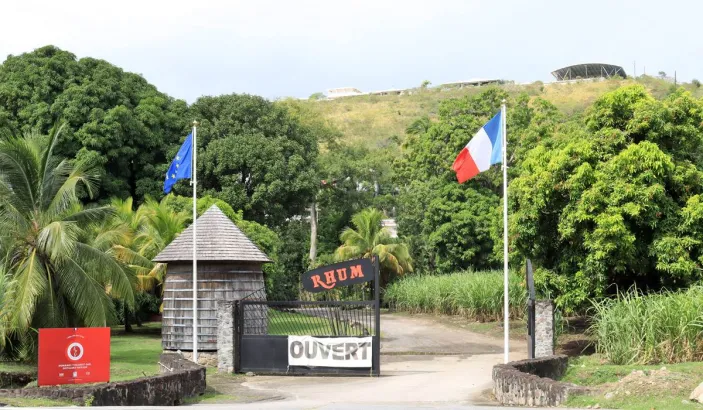
  • Habitation Neisson

    Unlike other distilleries and rum producers in Martinique, which have more than a century of history, the Neisson distillery was founded in the 20th century. In 1932, brothers Adrien and…

  • J.Bally

    Known by all rum lovers, J. Bally distillery has been producing a quality product recognized throughout the world for several centuries.

    In the 18th century, Baron de Lajus bought a small sugar refinery…

More information

  • Le Carbet logo
    Le Carbet
    Mayor:
    Jean-Claude Écanvil
    Zip code:
    97221
    Number of inhabitants:
    3,663 inhab. (2022)
    Surface area:
    36,00 km² (13.90 m²)