Îlet Petite Martinique
Îlet Petite Martinique is an uninhabited islet in the commune of Le Robert. It is located near Pointe Melon.
It covers an area of around 5 hectares. It rises 34 meters above sea…

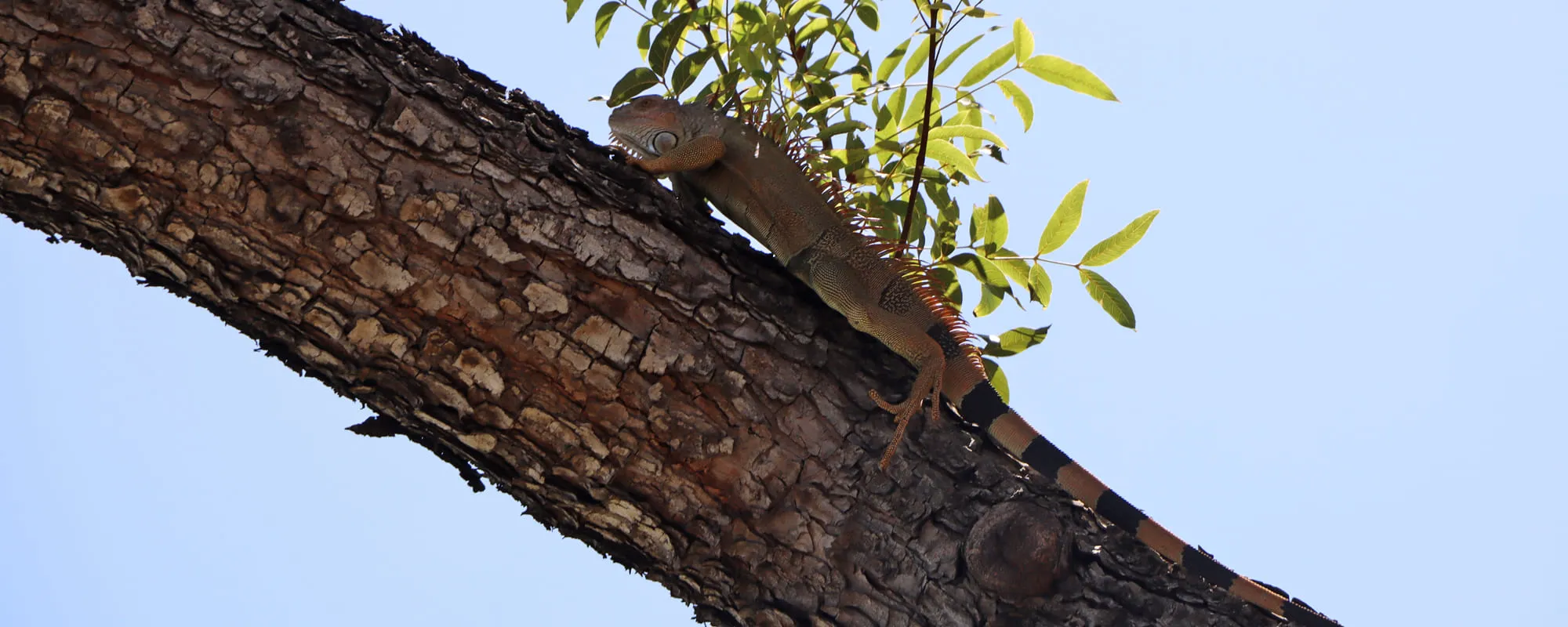
Nine! That’s the number of islets dotting the coastline of Le Robert. These natural gems are the town’s main tourist draw. Some are protected, while others remain accessible by boat or kayak. The most famous—Îlet Chancel, also known as Iguana Islet—is home to a population of endemic iguanas, a symbol of Martinique’s rich biodiversity. Beyond its natural beauty, Le Robert is also a strategic economic hub, thanks to its proximity to Le Lamentin, making it a key activity center on the Atlantic coast.
Le Robert is a commune located on Martinique’s central Atlantic coast, north of Le François, east of Le Lamentin, and south of La Trinité and Gros-Morne.
In 1687, the district known as Cul-de-Sac Robert was part of the parish of La Trinité. At the time, travel between towns was primarily by sea.
The parish was officially founded in 1694 by Father Labat, with support from the Governor General, Count de Blénac. It was originally named “Cul-de-Sac.”
The origin of the name “Le Robert” remains uncertain. It may have come from a baptized Carib chief who lived in the area, where Indigenous peoples had long resided.
Indeed, Caribs were still living in Le Robert when Father Labat established the parish. In his 1694 travelogue Voyage to the Isles of America, he recounts meeting a Carib family:
This Point is a cape forming the eastern edge of Robert’s Cul-de-Sac. A Carib who lived there either took its name or gave it his own... We ran aground our boat and entered the Carbet of Sieur La Rose... The Carib was Christian, as were his wife and their ten or twelve children...
Le Robert later became the stage for several notable events:
The commune of Le Robert was officially established in 1837, when municipalities replaced parishes. Its first mayor was Louis Louveau-de-Laguigneraye.
Historically, Le Robert’s economy was rooted in agriculture and artisanal fishing. Today, it also boasts a strong tourism sector.
The town’s sugarcane fields, once operated by the Usine du François, are now home to banana plantations and small-scale vegetable farming that supplies fresh produce to local markets.
Agrotourism is gaining momentum, with plantations like An Grivay-la welcoming visitors.
Le Robert has increasingly shifted toward service industries, with notable economic growth. It’s a hub for both small businesses and larger commercial ventures, including:
Local boaters enjoy access to a marina and a small commercial port.
But the crown jewel of Le Robert’s tourism appeal? Its stunning islets—accessible by kayak or boat, especially the traditional Ti-Canots. These include:
The main districts of the commune are Augrain, Augrain Nord, Augrain Sud, Beauséjour, Berthou, Bois Désir, Bois Neuf, Bois Potheau, Bois Zombi, Bonneau, Boutaud, Bresson, Brice, Café, Cannelle, Chapelle Villarson, Chère Épice, Coulisse Mignot, Coulisse Mont Vert, Duchêne, Ermitage, Fond Brûlé, Fond Cacao, Fond d'Or, Fond Duchêne, Four à Chaux, Galette, Gaschette, Hauteur Fond Nicolas, Hauteur Four à Chaux, Hauteur Pontalery, l'Heureux, la Cadet, la Charles, la Digue, la Dirozo, la Haut, la Moïse, Lacroix, Lazaret, Lecomte, Lestrade, Marlet, Mena, Monnerot, Mont Vert, Morne Galbas, Moulin à Vent, Pointe Fort, Pointe Hyacinthe, Pointe Jean Claude, Pointe la Rose, Pointe Lynch, Pointe Rouge, Pointe Royale, Pontalery, Providence, Raisin, Réunion, Reynoird, Sabine, Sable Blanc, Saint Christophe, Trou Terre, Voltaire, Yoyoye and Zabeth.
Îlet Petite Martinique is an uninhabited islet in the commune of Le Robert. It is located near Pointe Melon.
It covers an area of around 5 hectares. It rises 34 meters above sea…
©AZMartinique.com 2026 all rights reserved