History
The Brazilian cherry, also called the Surinam cherry and scientifically known as Eugenia uniflora, is believed to be native to South America, particularly the regions of Uruguay, Brazil, and the three Guianas (French Guiana, Suriname, and Guyana). It later spread throughout all tropical and subtropical regions. In Réunion, the fruit is called “Pitanga.”
Varieties
The number of varieties is unknown, but it is believed to be quite large according to some sources.
Although it is often confused with the West Indian cherry (acerola), the two fruits have very little in common. The Brazilian cherry has a pit, is much more acidic, and contains fewer vitamins than acerola.
This shrub or ornamental tree spreads its slender branches up to 7 meters high and can grow at altitudes of up to 1,000 meters. Its ovate to lanceolate leaves are simple and opposite.
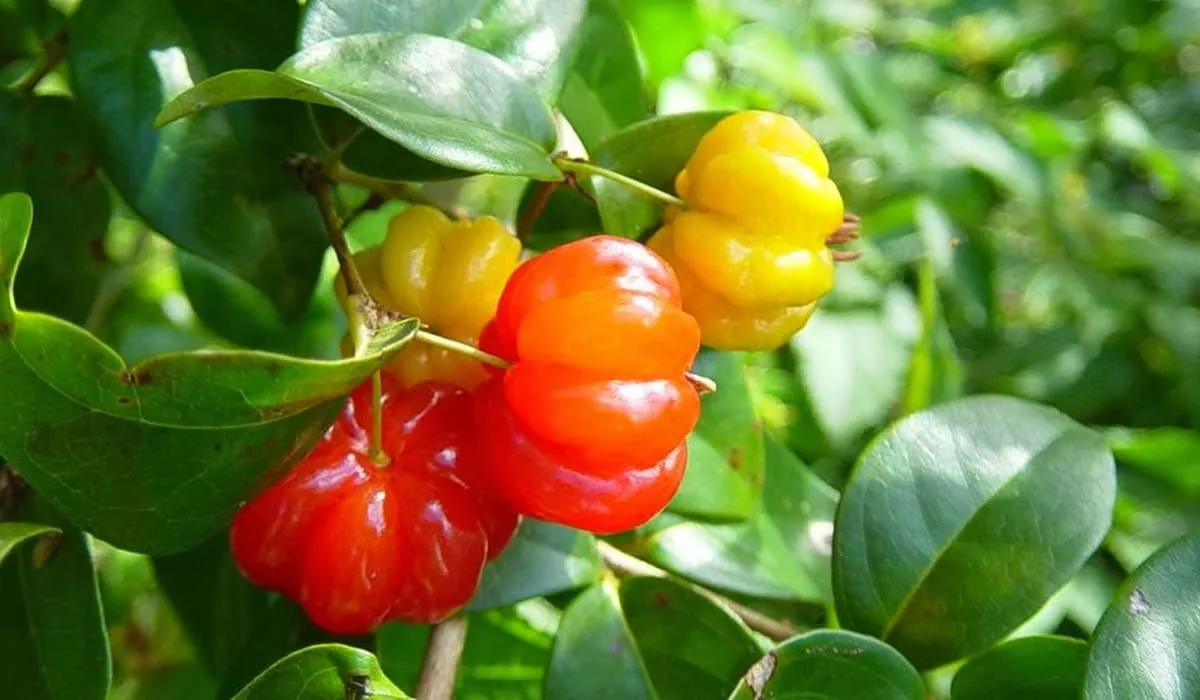
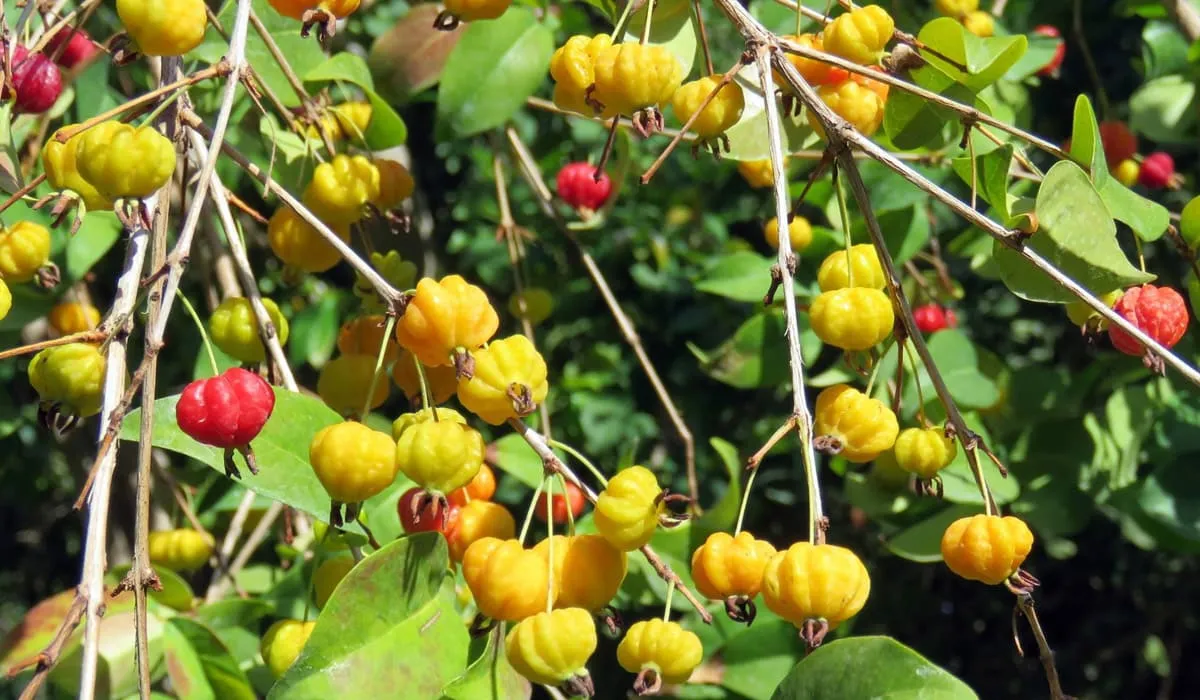
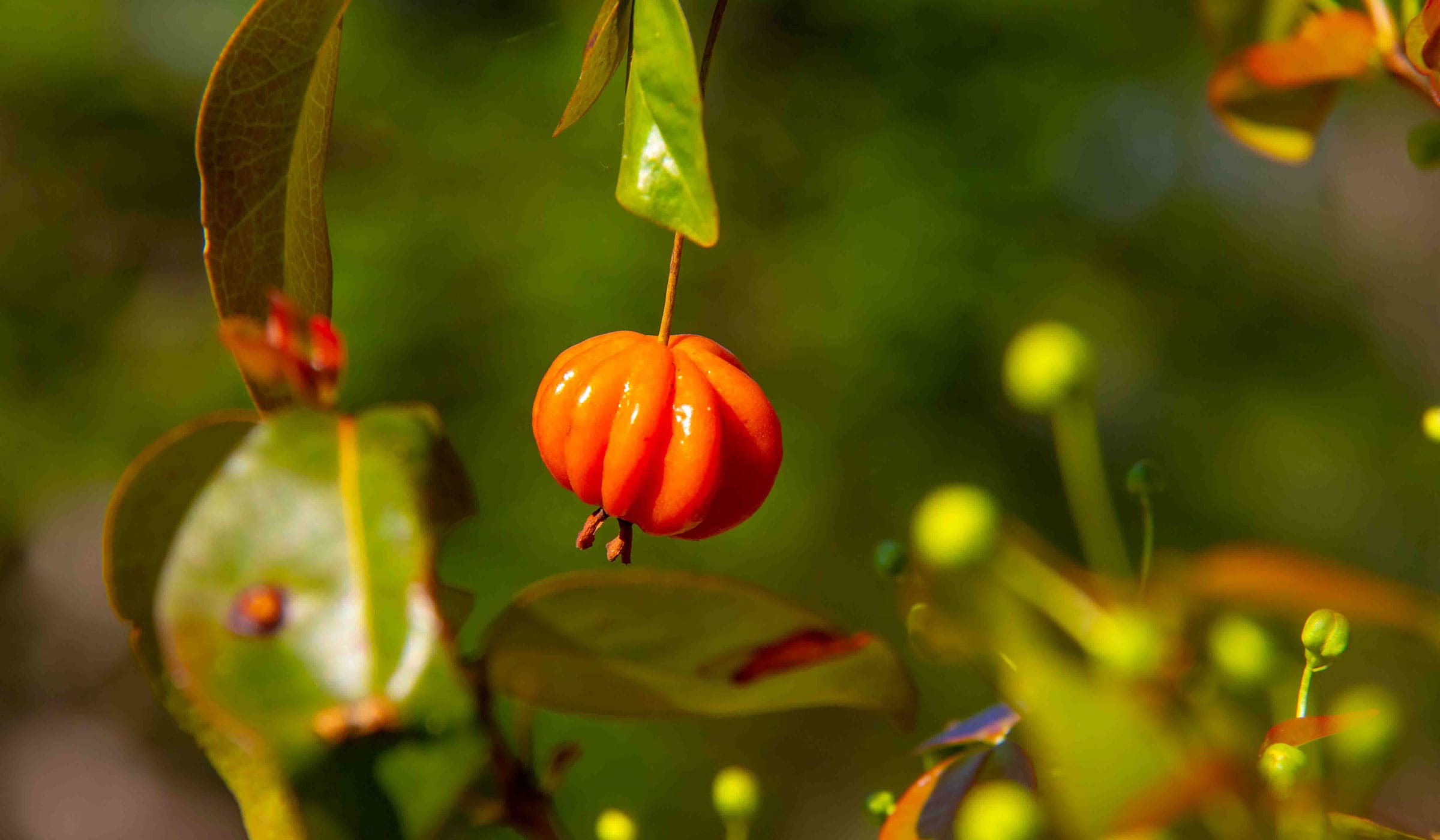
When young, the leaves have a reddish tint, then turn a glossy green. The white flower, solitary or in small clusters, produces a slightly flattened, hanging cherry with eight prominent ribs.
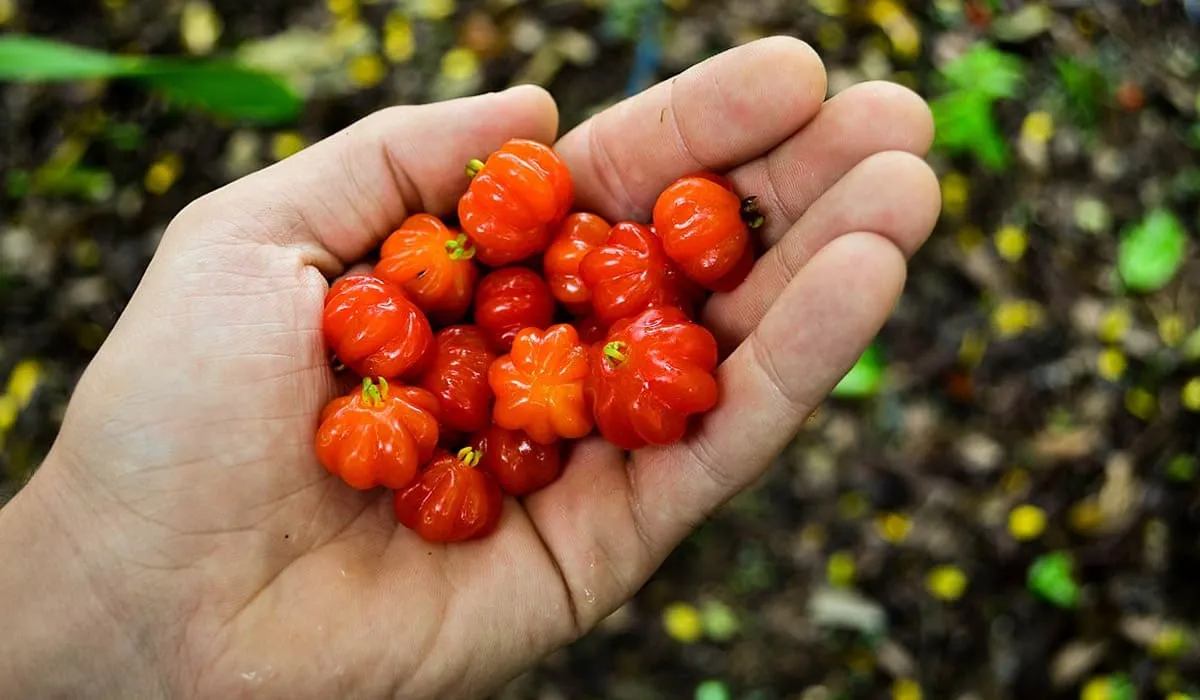
Its thin green skin turns bright scarlet when ripe, or even brown depending on the cultivated type. The soft, juicy pulp has a slight bitterness mixed with acidity. It contains a large seed.
Fruit production occurs from October to December.
Medicinal properties
To relieve flu symptoms, body aches, or headaches, it is often recommended to prepare a decoction made from young cherry leaves (“cœur de cerise”), lemongrass leaves, and cinnamon.
Uses
In Martinique, the Brazilian cherry is usually eaten raw, but it can also be made into juice, jam, or jelly.
In Brazil, its fermented juice is used to make wine, vinegar, or liqueur. Once the fruit is stripped of its ribs, sprinkled with sugar, and chilled, it loses its sharpness and can be used like a strawberry.
Its young leaves can be combined with lemongrass and cinnamon to make a decoction to relieve flu symptoms, body aches, or headaches.