
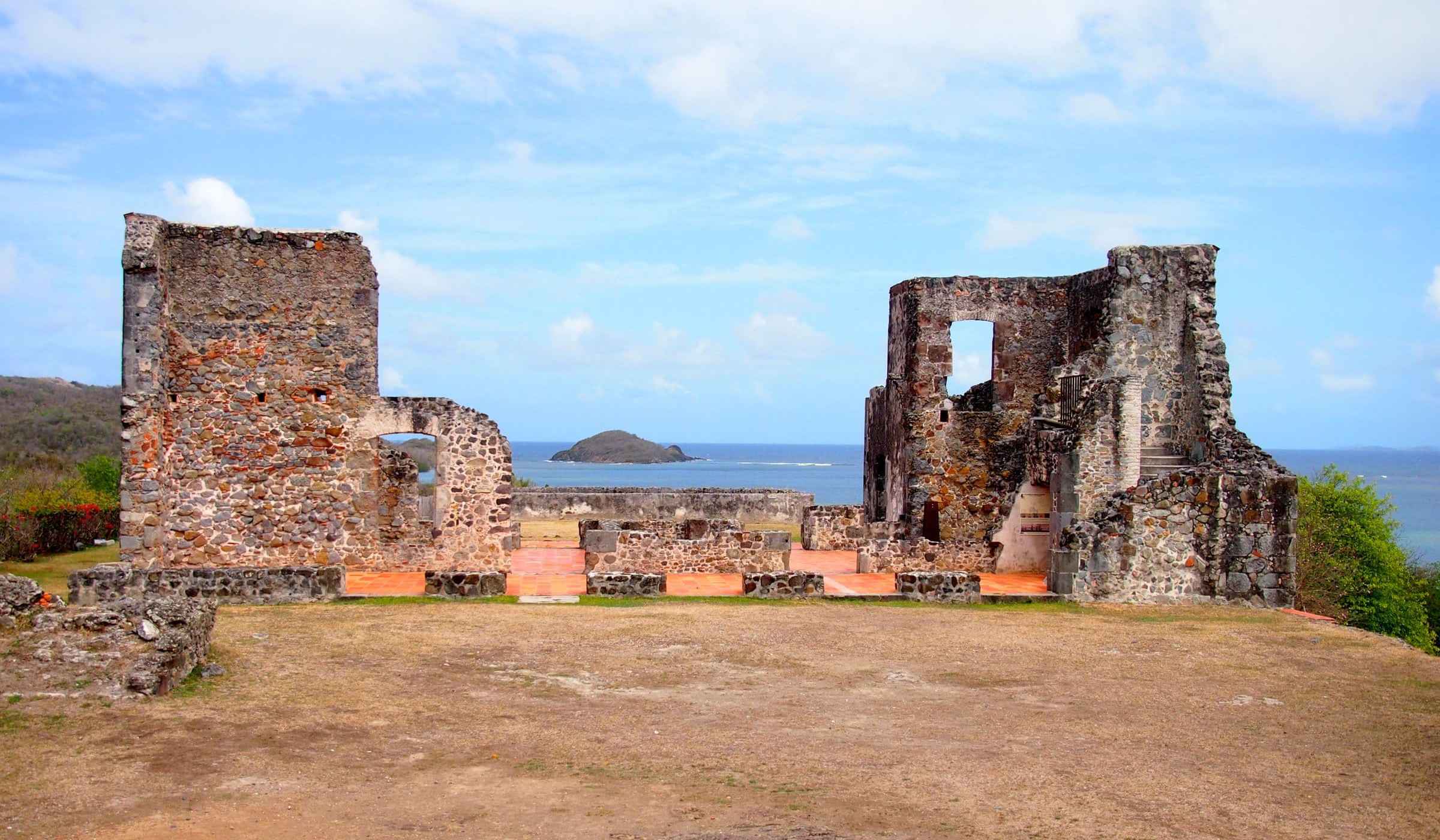
Château Dubuc (Dubuc Castle) was once the possession of the Dubuc family, a wealthy lineage from Dieppe in Normandy who settled in the town of Trinité in the mid‑17th century.
In 1657, Pierre Dubuc, a Norman, arrived in Martinique. After leading several successful expeditions against the Carib Indians, he was granted by other settlers a concession in the area of Trinité and Tartane, where he settled in 1671 and built his power.
Balthazar, his younger brother, established himself at the Caravelle on the Spoutourne Plantation. His son, Louis Dubuc du Galion, later built a residence initially called Habitation Caravelle, which eventually became known as Château Dubuc.
The plantation was not only a site of sugar production but also a hub for smuggling and the trafficking of enslaved people. The presence of warehouses, safes, and wharves in this isolated location strongly suggests that illicit trade was carried out there.
By 1770, the Château Dubuc was gradually abandoned, following the devastating cyclone of 1766 and the mismanagement caused by the Dubuc family’s involvement in various battles against the English.
Today, the castle lies in ruins and forms part of the nature reserve managed by the Parc Naturel Régional de la Martinique. It is a secure site and has been listed as a historical monument since 1991. Château Dubuc ranks among the three most visited sites in Martinique. In addition to the ruins, a micro‑museum recounts the troubled history of this place.


