History
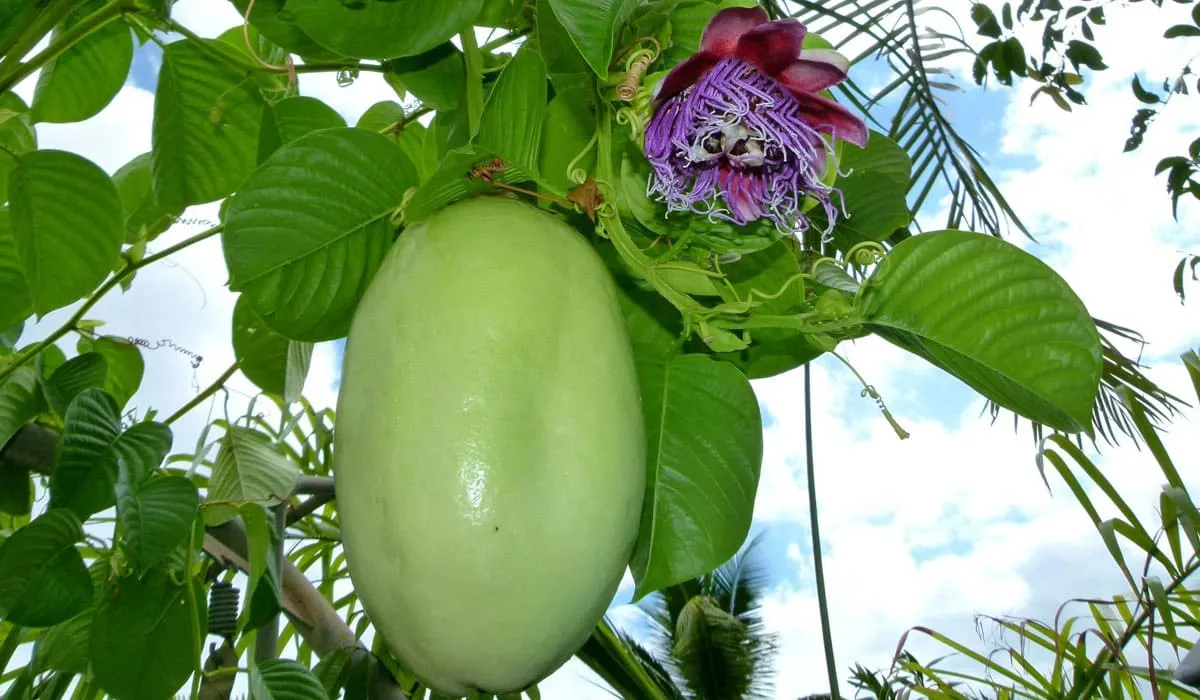
The giant grenadilla, whose scientific name is Passiflora quadrangularis, is the fruit of a tropical vine. It is also called the giant passionfruit. It originates from South America or Central America. Its mostly wild cultivation existed in ancient times in a region stretching from Mexico to Brazil and Peru.
It is believed to have first arrived in the English-speaking Caribbean, notably in Barbados, around 1750. Its introduction into the French West Indies likely dates from the late 19th century. Today, the giant grenadilla is found throughout the tropical regions of the world.
Varieties
There are many varieties of giant grenadilla, and the total number is unknown. In fact, the giant grenadilla is considered a variety of passion fruit. It also hybridizes easily with smaller species.
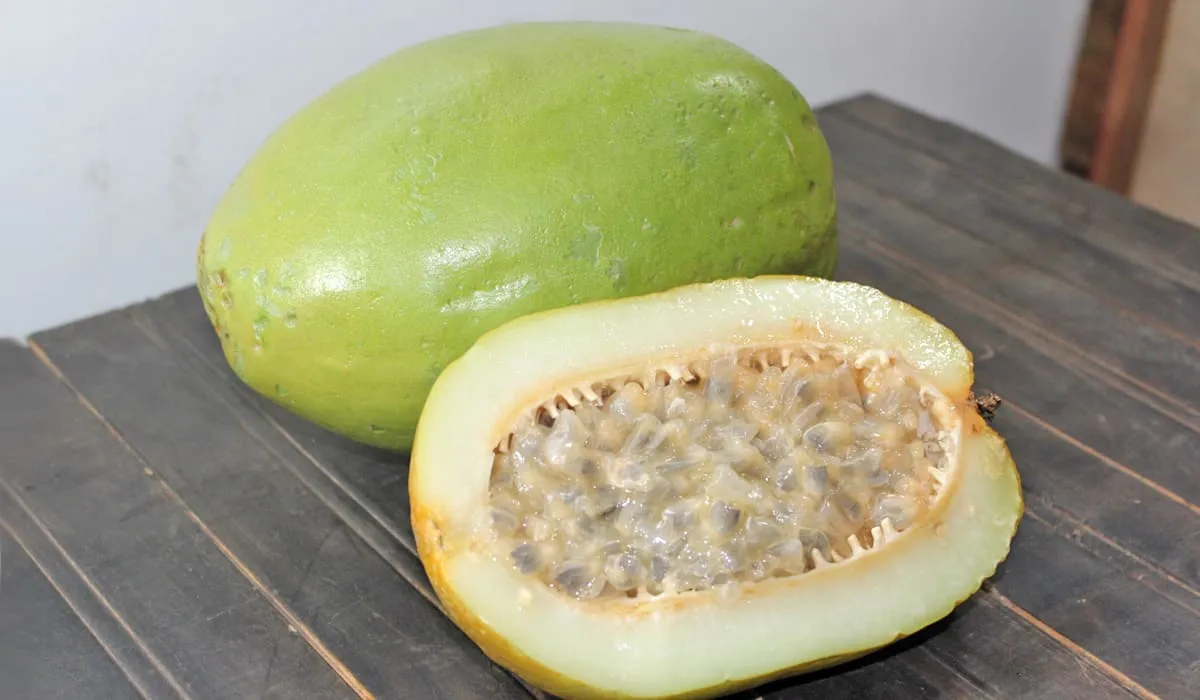
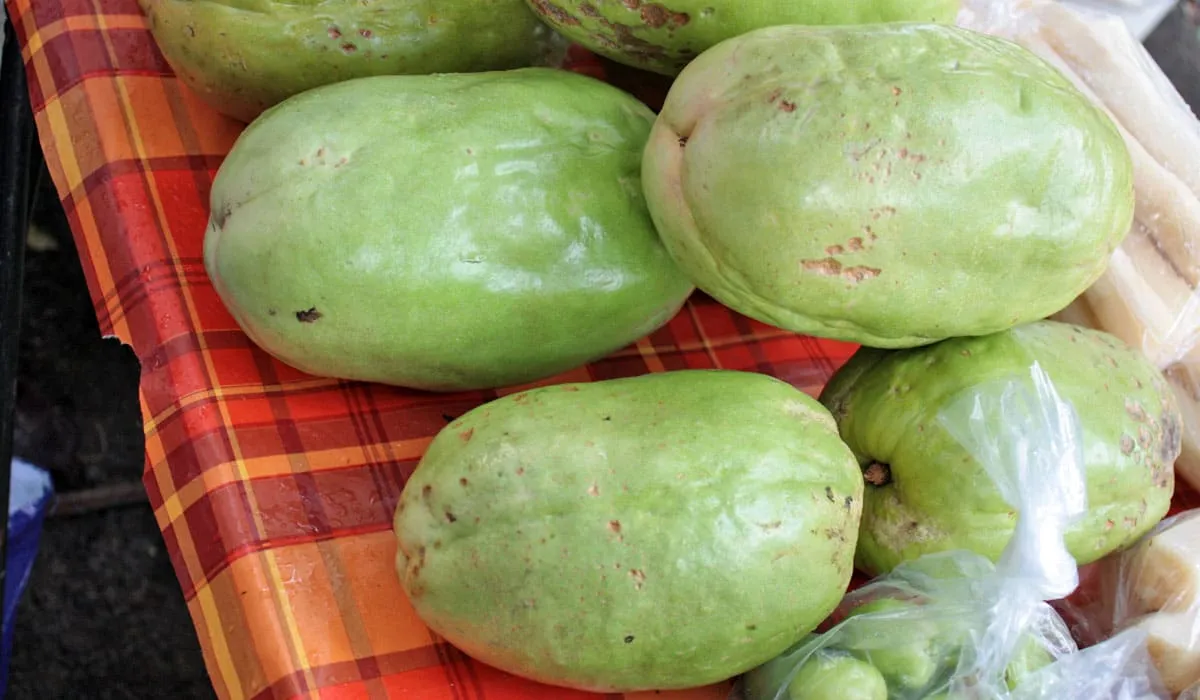
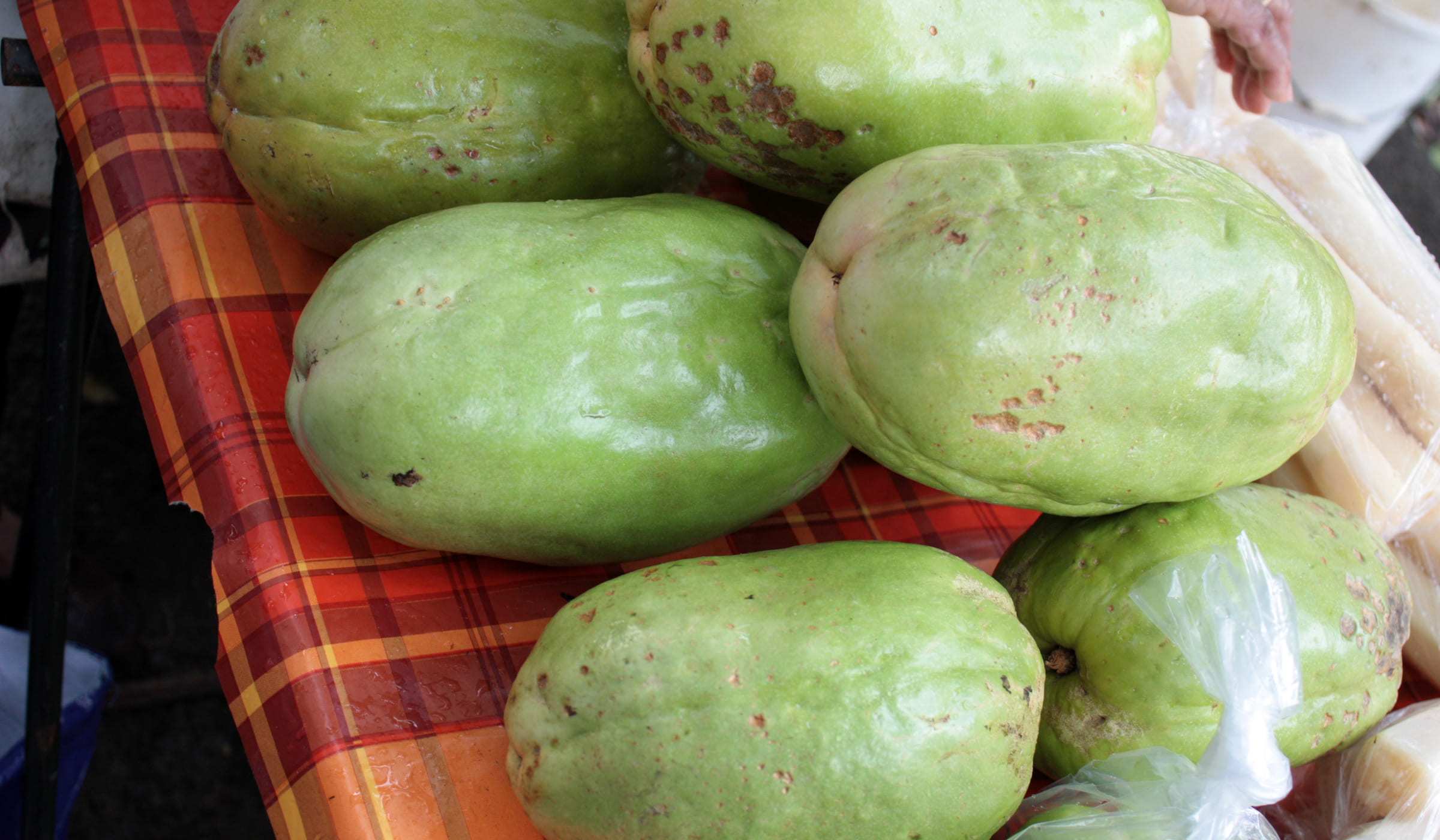
It is a fairly large fruit, measuring 12 to 15 cm wide and 10 to 30 cm long, oval in shape, and pale green, bright yellow, or even brown when ripe, depending on the variety. Its skin is thick.
The vine grows rapidly; it is large, coarse, herbaceous but woody at the base, arising from a fleshy root that thickens with age. It climbs trees to heights of 10–15 m, and even up to 45 m in Asia. It has thick stems with four prominent winged angles, and axillary tendrils up to 30 cm long, flanked by leaf‑like stipules, oval or lanceolate‑oval, 2 to 3.5 cm long, sometimes slightly toothed.
The alternate leaves are broad, oval or oblong‑oval, 8 to 15 cm wide and 10 to 20 cm long, rounded or heart‑shaped at the base.
The solitary, fragrant flowers, up to 13 cm wide, have a bell‑shaped calyx. The five sepals are greenish or reddish‑green on the outside and white, pink, or purple on the inside. They have five white and pink petals, and a two‑tiered crown of filaments—purple and white below, blue in the middle, and pinkish‑blue above—surrounding the typical complex of pistil, style, and stigmas.
The flowers can also be used for decorative purposes.
Medicinal Properties
In the tropics, the fruit is used to prevent or relieve scurvy, a disease caused by vitamin C deficiency, and also to soothe stomach ailments.
The pulp is used as a sedative to relieve nervous headaches, asthma, diarrhea, dysentery, neurasthenia, and insomnia.
According to some studies in Latin American countries, the giant grenadilla may help regulate sleep, fight migraines, protect bones, combat anemia, reduce cholesterol, regulate intestinal transit, and may also support weight loss.
A decoction of the leaves is used as a vermifuge (a remedy that expels intestinal worms) and is applied in baths for skin conditions.
Leaf poultices are applied for liver problems.
The powdered root, when mixed with oil, is used as a soothing poultice.
Uses
In Martinique, giant grenadilla pulp is used to make juice, syrups, and jams. The unripe fruit is cooked like a vegetable and has a cucumber‑like flavor.
In Florida, it is used to make wine.