
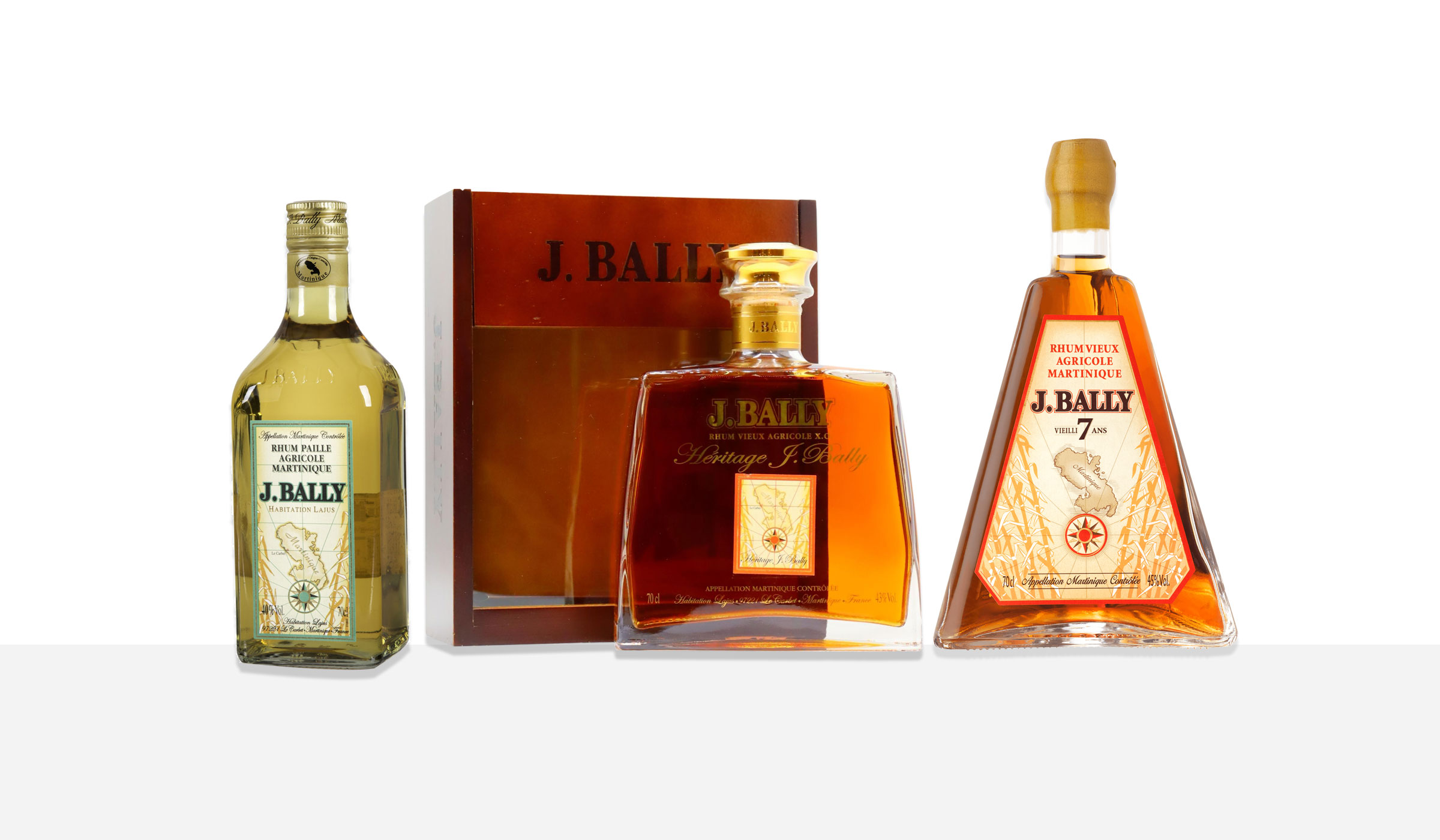
Known by all rum lovers, J. Bally distillery has been producing a quality product recognized throughout the world for several centuries.
In the 18th century, Baron de Lajus bought a small sugar refinery with a water mill, built in 1610. Spared following the eruption of Mount Pelee, the estate was nevertheless seized by the authorities.
Renowned among rum enthusiasts, the J. Bally distillery has been producing a high-quality spirit recognized worldwide for several centuries.
In the 18th century, Baron de Lajus acquired a small sugar refinery equipped with a water mill, originally built in 1610. Although spared during the eruption of Mount Pelée, the estate was later seized by the authorities.
In 1917, Jacques Bally—an engineer trained at the École Centrale des Arts et Manufactures—purchased the property at a time when rum production was flourishing. He transformed the sugar refinery into a distillery, applying his technical expertise to build a new distillation column and install a value machine himself.
This modernization of equipment was accompanied by a revaluation of the land. Bally consolidated the fragmented plots and rebuilt the Habitation Lajus. In 1930, he introduced the iconic pyramidal bottle that would make the brand famous across the globe.
Inspired by techniques used in the production of fine spirits, Bally began aging his rums in barrels as early as 1924—a visionary move that positioned him as a pioneer of aged rum.
After World War II, one of Jacques Bally’s sons joined him, and together they continued to improve the distillery’s facilities.
In 1976, Bally rum began to be produced by Saint James using its Creole column, although part of the aging process continued in Bally’s original cellars.
In 1987, the brand and its Creole column were relocated to the Simon distillery. Then in 1996, when the Rémy Cointreau group took over, all Bally production was transferred to the Saint James distillery, where the rum benefited from a highly specialized production process. The equipment was modernized, yet part of the aging still takes place at the Carbet distillery. The methods developed by Jacques Bally have been carefully preserved: production occurs during the driest season, and the rum is aged exclusively in oak barrels.
Today, the J. Bally brand produces only 250,000 liters per year, making it a rare and artisanal rum of grand cru quality. Aged rum remains the house’s specialty, with subtle notes of vanilla and dry wood that give it a distinctive flavor.
The original site is currently closed to visitors.