Habitation Saint-Étienne

Habitation Saint-Étienne, or H.S.E., is a distillery built to replace an old sugar mill, La Maugée, covering more than 400 hectares from Gros-Morne to Saint-Joseph.

In 1882, the distillery was bought by Amédée Aubéry, a young captain of industry who became one of the iconic figures of the Martinican economy. Towards the end of the 19th century, faced with the sugar crisis, it was converted into a distillery, like many sugar plantations of the time.

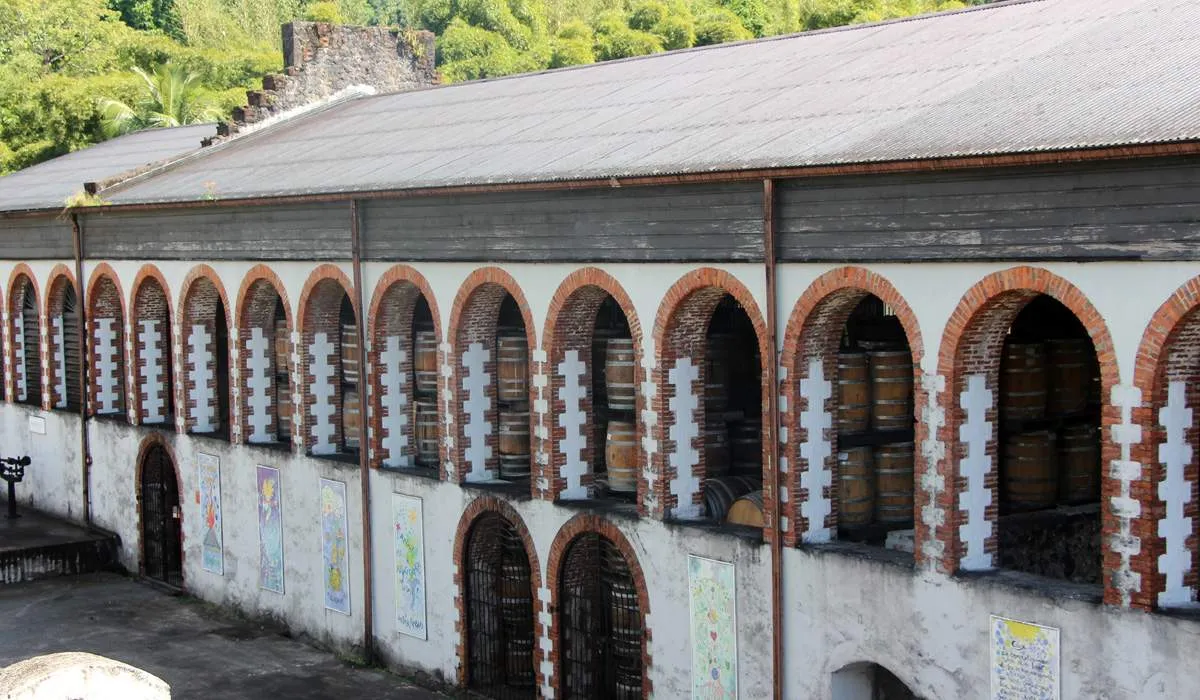
Amédée Aubéry expanded the factory and gave it a remarkable façade with 28 arched windows, ensuring optimal ventilation of the building. He modernized the entire facility to maximize rum production efficiency.

In 1909, the distillery was bought by the Simonnet family, who developed the business until its decline in the late 1980s. In 1994, Yves and José Hayot took over the operation, relaunched the Saint-Étienne brand, and undertook the restoration and enhancement of the architectural heritage of the property.

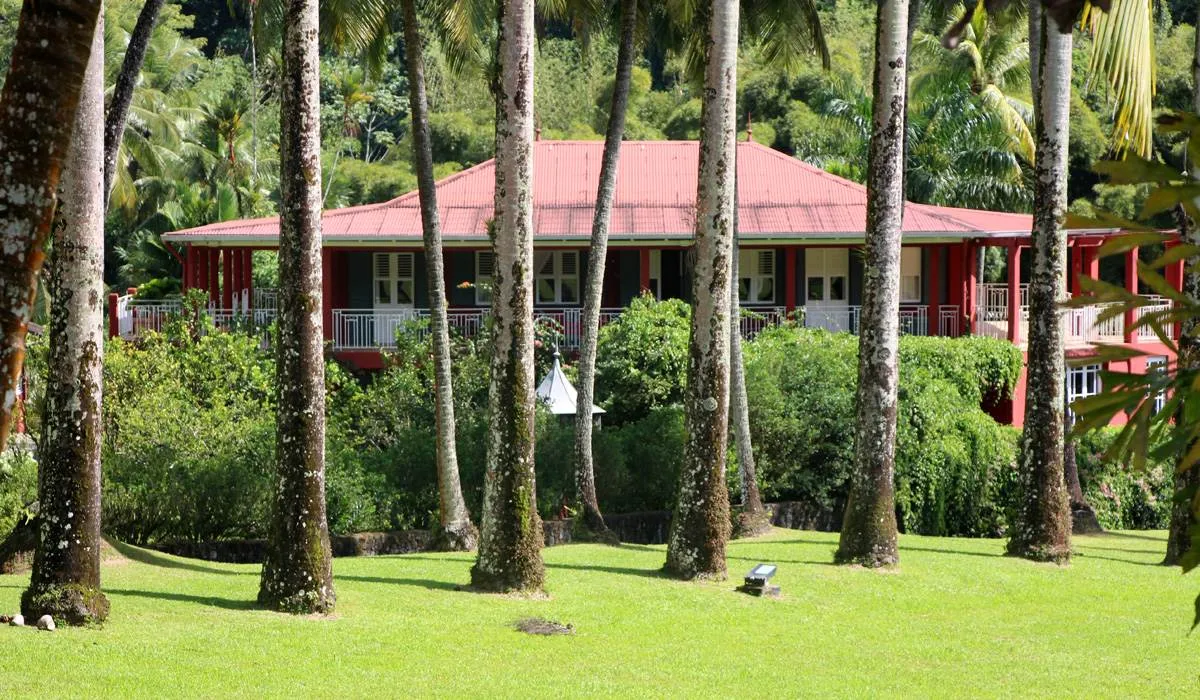
Today, although rum distillation no longer takes place (since 1988), it continues to produce rums, known as HSE rums. Its preserved architectural ensemble is one of the best examples of the housing system in Martinique, offering a glimpse into life in the 19th century. The master's house and the former slave huts, later used by paid workers, have survived for two centuries and are open to visitors.

The site is listed in the Supplementary Inventory of Historic Monuments (I.S.M.H.). During the tour, you can see how HSE rum is produced, including the barrel storage system and bottling process, before tasting the rums made on site. Numerous exhibitions are held there throughout the year.
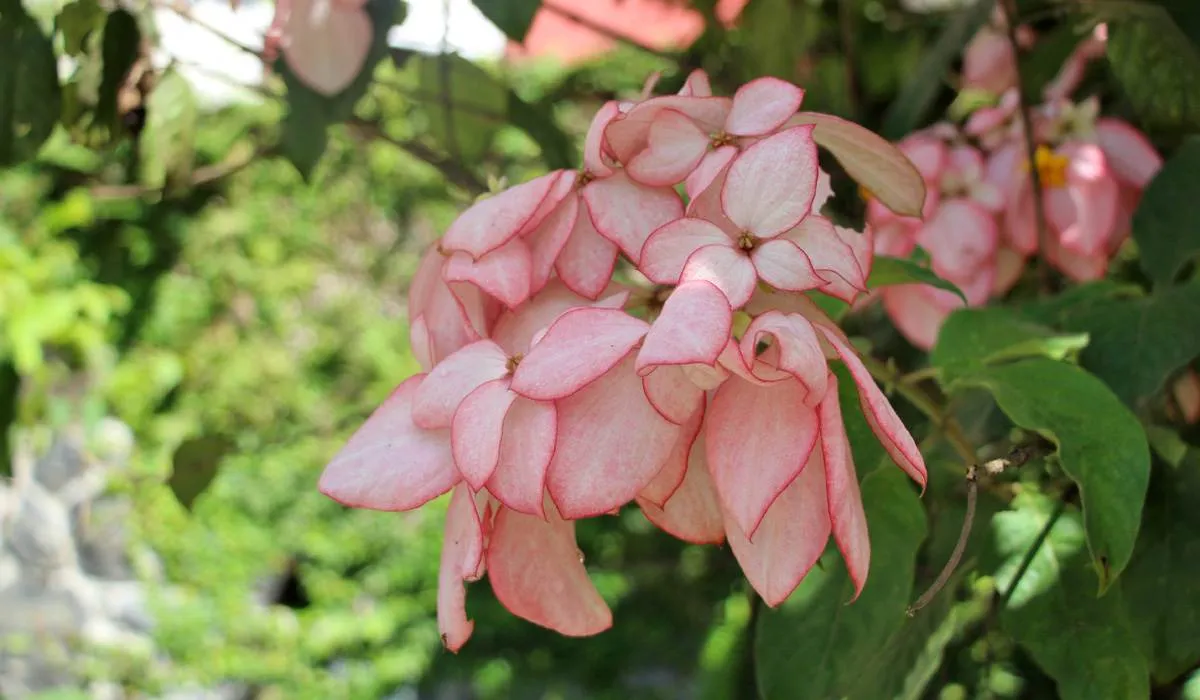
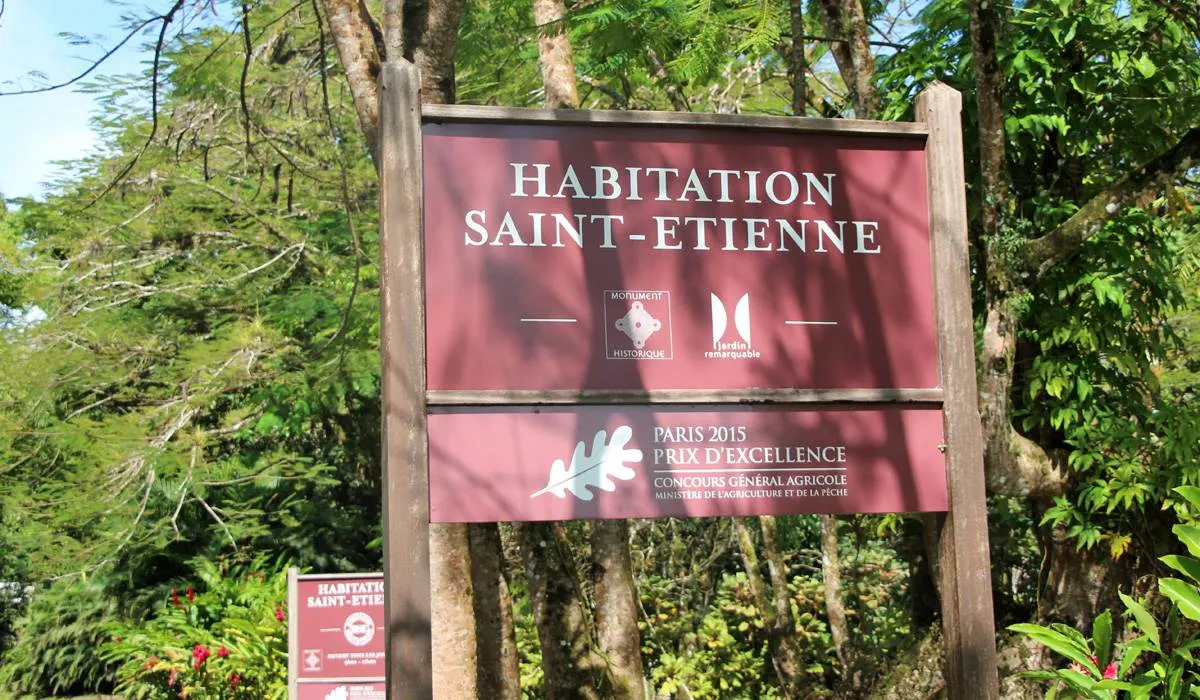
Photo gallery
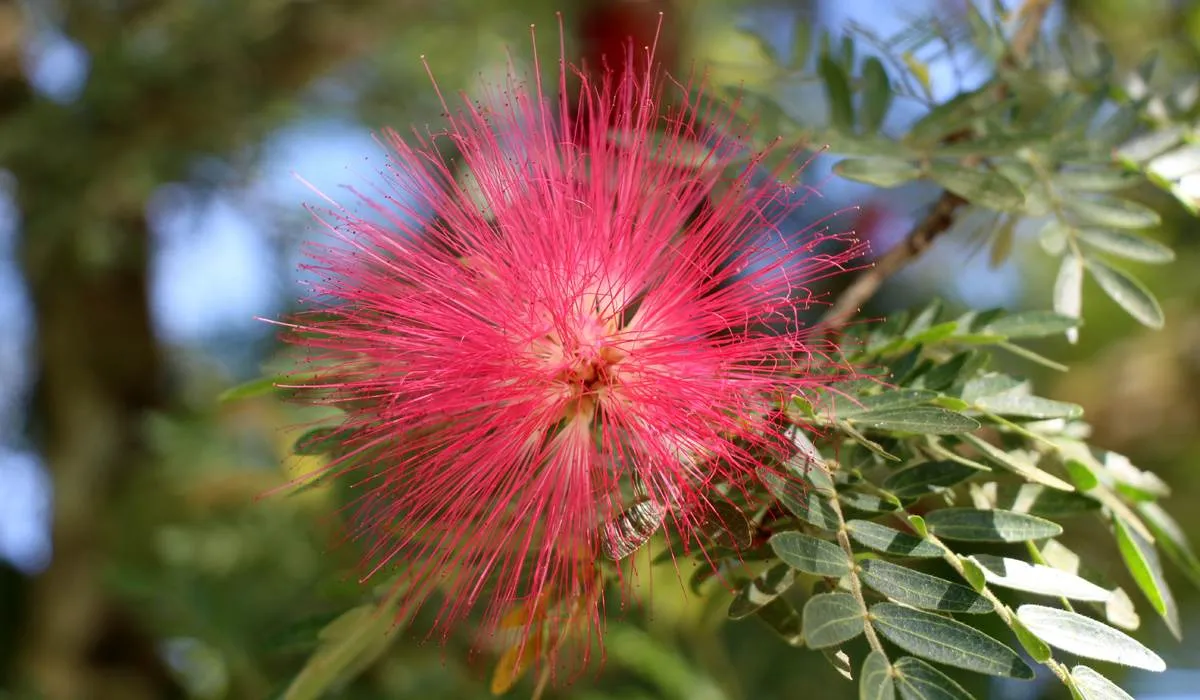
Pink flowers at Habitation Saint-Étienne
Entrance to the Habitation Saint-Étienne
Red flower at Habitation Saint-Étienne
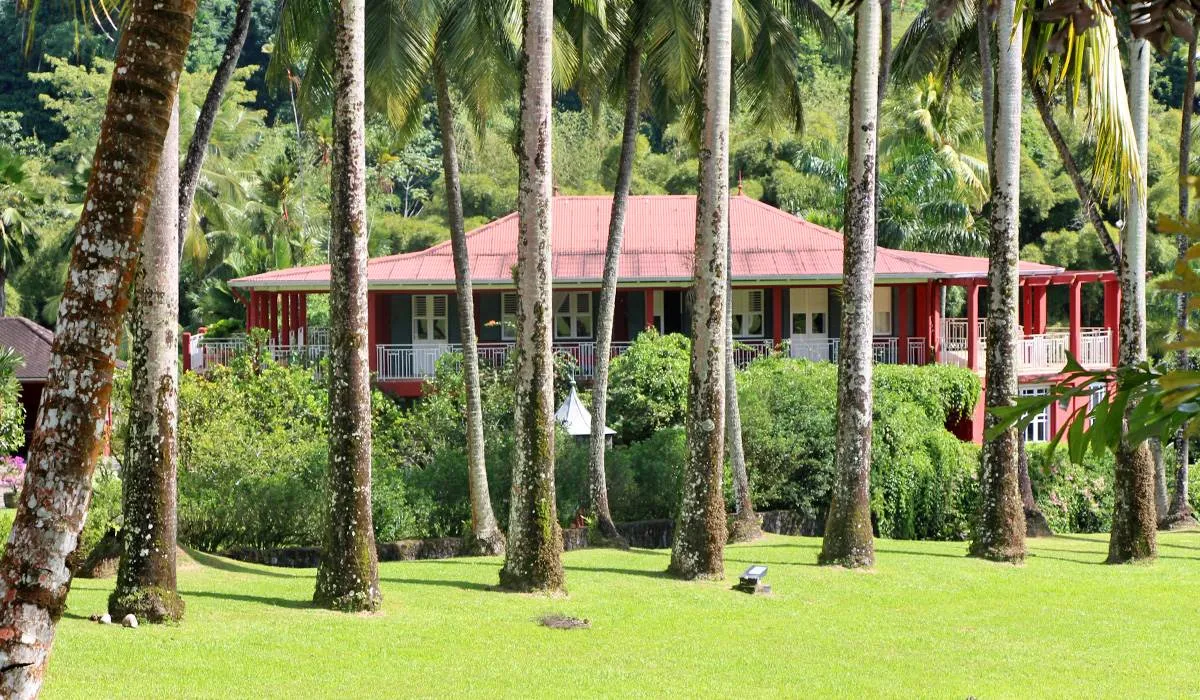
Main house at Habitation Saint-Étienne
Production of aged rum at Habitation Saint-Étienne

Musée de la Pagerie

The Musée de la Pagerie is the birthplace, in 1763, of Marie-Josèphe Rose Tascher de la Pagerie, who later became Empress Josephine de Beauharnais. Today, the building is a museum entirely dedicated to her life and legacy.

The guided tour takes you through the ruins of the estate, which was damaged by several cyclones. You’ll see her childhood bed, portraits, and letters said to have been sent to her by Napoleon. The visit also includes the reception area, a botanical garden, the ruins of the sugar mill, her birth house, the cane press, and the “manioquerie,” a space where cassava was traditionally processed.

It was in this house that she learned of her future marriage to Napoleon Bonaparte, whom she wed in 1796. Two mayors of Trois-Îlets sought to honor this iconic figure born in their town: in the 1930s, Mayor Gabriel Hayot created a first museum near the church where she was baptized. Then, in 1944, Mayor Robert Rose-Rosette acquired the property where the museum now stands.

To get there, head to the town of Trois-Îlets. Once in front of the Trois-Îlets golf course, follow the signs to the Musée de la Pagerie.

Photo gallery
Musée de la Pagerie
Musée de la Pagerie
Musée de la Pagerie
Musée de la Pagerie
Musée de la Pagerie
Musée de la Pagerie
Musée de la Pagerie
Musée de la Pagerie
Musée de la Pagerie
Musée de la Pagerie
Musée de la Pagerie
Musée de la Pagerie
Musée de la Pagerie
Musée de la Pagerie

Habitation Pécoul

Habitation Pécoul is a large Creole-style house whose entrance is embellished by an avenue of palm trees. Formerly called "Habitation Basse-Pointe", Habitation Pécoul was originally owned by Claude Pocquet then Director General of the Company of Senegal to the Isles, militia captain, Advisor to Sovereign Council of Martinique, in the second half 17th century.

According to Father Labat, it "was off twelve hundred was not about three miles high" Subsequently, it was later cut to length for the benefit of several owners until 1745. It was then sent to owners Paris throughout the 18th century and acquired in 1777 by Jean François Pécoul, overseer of the son of the house owner and Habitation La Montagne in Saint-Pierre. He will give it its final name.

The main house was already the center of the spatial organization around which shone the boxes for workers and industrial buildings. The youngest son of Jean François Pécoul, Auguste François, became a member of the Martinique in 1848. His daughter, Augusta, married to Henry Origny settled on his son's company Home, François Louis of Origny in 1920.

It is she who will restore the assembly in its current form. Habitation Pécoul and facades, have been classified historical monuments in 1981. In 2002, the property has come all patrimonial formed within Groupe Bernard Hayot by Habitation Clément and Habitation la Sucrerie. Habitation Pécoul is between Habitation Moulin l'Etang in the west et l'Habitation Chalvet in the east.

It is accessed through a large driveway with coconut trees. The property lies on a land strip and has a total area of ​​about 176 hectares. It is located about 500 meters from the sea. The main house is the center of the domain.

The site is still fed by diversion canals of Rivière Poquet (river) water provide a stunning pool in the heart of a tropical garden. Outbuildings, boxes of workers and the gardens are located north of the house.

The colonial style house and its beautiful surroundings that can be visited during the European Heritage Days.

Photo gallery
Habitation Pécoul
Habitation Pécoul
Habitation Pécoul
Habitation Pécoul
Entrée de l'Habitation Pécoul
Panneau site Monument Historique

Habitation Clément

Habitation Clement is THE place to visit absolutely from Martinique. Throughout its history, what it represents for Martinique's past and present, this symbolic place will immerse you in the heart of the history of Martinique. Habitation Clement is a former sugar plantation. In 1996, it was classified as a historical monument. The property, on an area of ​​approximately 300 hectares, is called Domaine de l'Acajou.

Originally called "Habitation Acajou" by its first owners, Louis Hodebourg Desbrosses and Simon de Bassigny, Habitation housing was bought in 1887 by the Mayor of François, Homere Clement. Homere Clement was a descendant of a freed slave. First, he cultivates sugar cane, which he sells to the factory of François. Then, in 1917, following an order, he was allowed to build a small distillery.

When he died in 1923, his son Charles, an engineer who graduated from the École Centrale des Arts et Manufactures in Paris and the Institut Pasteur, took over the business and worked to improve the quality (fermentation and distillation) of agricultural rums. He created the Acajou brand in the 1930s and Clément in the 1940s.

The company prospered until the 1980s before experiencing economic difficulties. It was bought by the Bernard Hayot Group in 1986. It was then that it definitively took the name “Habitation Clément” in tribute to the family that had made it prosper.

In 1991, following the Gulf War, it was a meeting place of prestige between the President of the French Republic at the time, François Mitterrand, and the President of the United States, George Bush.

Today, it is divided into three parts:

  • the former Clément rum distillery, which is now a museum,
  • the Clément rum aging cellars, which are still in use, and
  • residential buildings, some of which are open to visitors.

You can also see many tropical plants and trees over an area of ​​17 hectares. The tour is free but paid and is done through audioguides freely distributed at the beginning of the visit.

Photo gallery
Habitation Clément
Habitation Clément
Oak barrels at Habitation Clément
Habitation Clément Pond
Little train at Habitation Clément
Habitation Clément Container
Sugar cane field at Habitation Clément
Palm trees at Habitation Clément
Reception desk at Habitation Clément

Schoelcher Library

Located opposite the Savane de Fort-de-France, the Schœlcher Library (Bibliothèque Schoelcher) is a glass and iron building that combines Roman-Byzantine, Art Nouveau, Egyptian, and Neoclassical influences. It is the most visited building on the island.

It was built under the direction of architect Pierre-Henri Picq in 1887. It was first presented to the Parisian public, then dismantled and transported by ship to be rebuilt on the island six years later. It owes its name to Victor Schœlcher, the Under-Secretary of State for the Navy and Colonies, who pushed the government of the Second Republic to sign the abolition of slavery in April 1848.

Victor Schœlcher wanted the abolition of slavery and the emancipation of its population to be accompanied by access to culture for all.

In 1883, he donated 10,000 books to Martinique, which formed the initial collection of the library. Most of these books were lost in a fire in 1890. The library was rebuilt and now has 130,000 books, some of which are unique. The building has since been classified as a historic monument. It is owned by the Collectivité Unique de la Martinique.

Photo gallery
Schœlcher library
Schœlcher library
Schœlcher library
Schœlcher library