
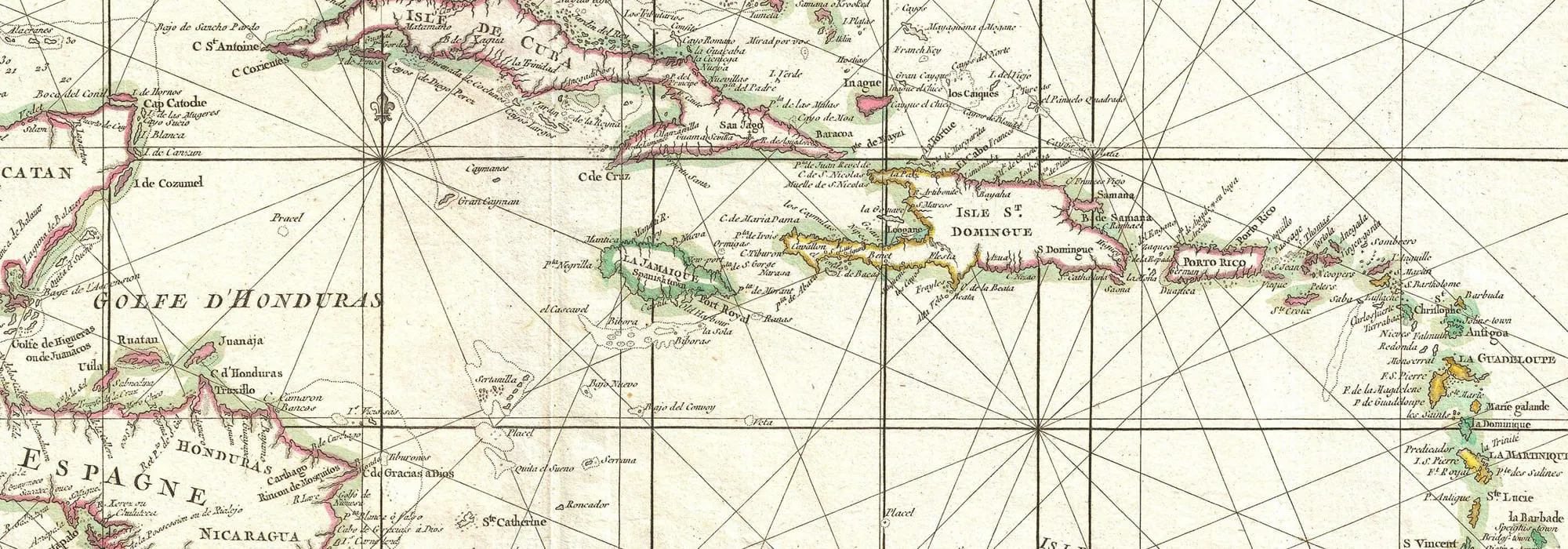
Colonization of the Caribbean islands by the European powers
1496: The Spaniards set up facilities on the island of Hispaniola
1508: The Spaniards set up facilities in Puerto Rico
1515: The Spaniards set up facilities in Cuba
1554: The Dutch plunder Santiago in Cuba
1555: The French plunder Havana
1586: Santo Domingo is returned to the British
1595: British capture San Juan
1605: The British drove the Dutch from Saint Lucia, who had arrived around 1600
1625: The British landed in Barbados to colonize the island
1628: The Dutch capture the Spanish silver fleet in Cuba
1634: The Dutch capture Curaçao
1635: The French acquire Martinique and Guadeloupe
1655: British capture Jamaica at Spain's expense
1655: The French occupy half of the island of Hispaniola, which they baptize Haiti
1797: Trinidad is taken from the Spanish by the British after about a century of Spanish possession.