

France in crisis despite the Front Populaire
In France, the economic situation was less dire than in other European countries, but the public remained dissatisfied with the government’s response to the crisis. Governments came and went, and it was the Front Populaire, a coalition of all left-wing factions that succeeded in satisfying the French people on economic issues. In 1936, following a massive strike movement, significant social gains were secured with the signing of the Matignon Agreements (a 40-hour workweek, two weeks of paid vacation, recognition of union rights, and a wage increase).
However, these measures were not enough to resolve the financial difficulties, and the French public criticized the Léon Blum government for its passivity, its lack of a clear policy, and its lax response to the various acts of aggression by neighboring nationalist governments. Furthermore, the various left-wing parties that made up the government could not agree on the strategies to adopt in response to events in Europe.
In 1937, the Front Populaire government was overthrown. Édouard Daladier of the Radical Party returned to power.
The economic situation in Martinique
In Martinique, the situation during the interwar period was different. During World War I, rum production was at its peak. Demand had been very high in mainland France, and the industry was booming on the island to the point that rum became its leading export.
This overproduction of rum for the mainland was due to its use as a reward to boost troop morale in the damp, cold trenches, in hospitals and pharmacies as a disinfectant, and even given to the sick and amputees to ease their pain, as well as for the manufacture of explosives.
Sugar is no exception. Although cane sugar had lost some of its importance at the beginning of the 20th century with the advent of sugar derived from sugar beets, it became the go-to source due to the French countryside being ravaged by war.
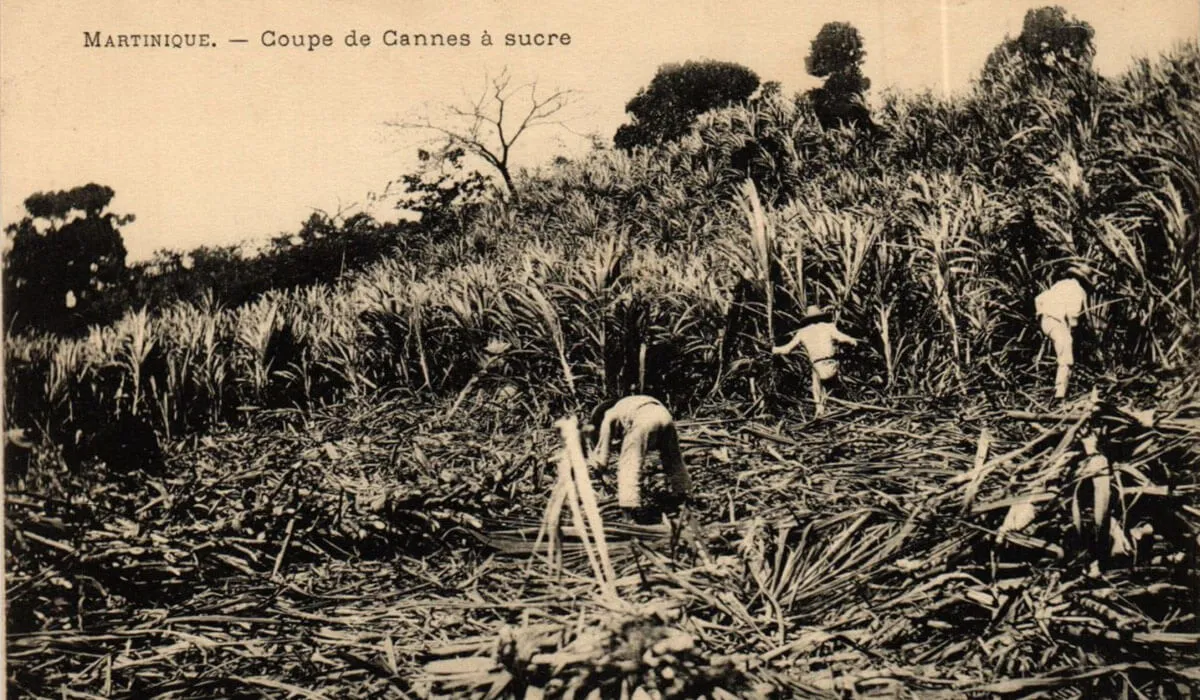
The agricultural sector was thus the island’s largest employer, with sugarcane as its flagship product. However, this economic upturn did not benefit farmworkers at all, who endured long days in the fields for meager wages. Following several strikes in 1922, the workers secured a small increase in their daily wages. But tensions remained high.
Between 1920 and 1939, demand for cane sugar dropped drastically, and many small planters were forced to close their operations. Indeed, colonial sugar once again faced competition from beet sugar, and the government decided to lower the quota for sugar imported into metropolitan France. Many cane cutters were laid off and found themselves unemployed. Labor disputes and strikes multiplied in rural areas
For planters, bananas then became a fallback and a preferred option, given that since 1931, a protectionist law had guaranteed the colonies protection in the domestic market against foreign competition.
It should be noted that local employers were granted an exemption, and the social legislation enacted in metropolitan France under the Matignon Agreements by the Léon Blum government did not apply to the Antilles.